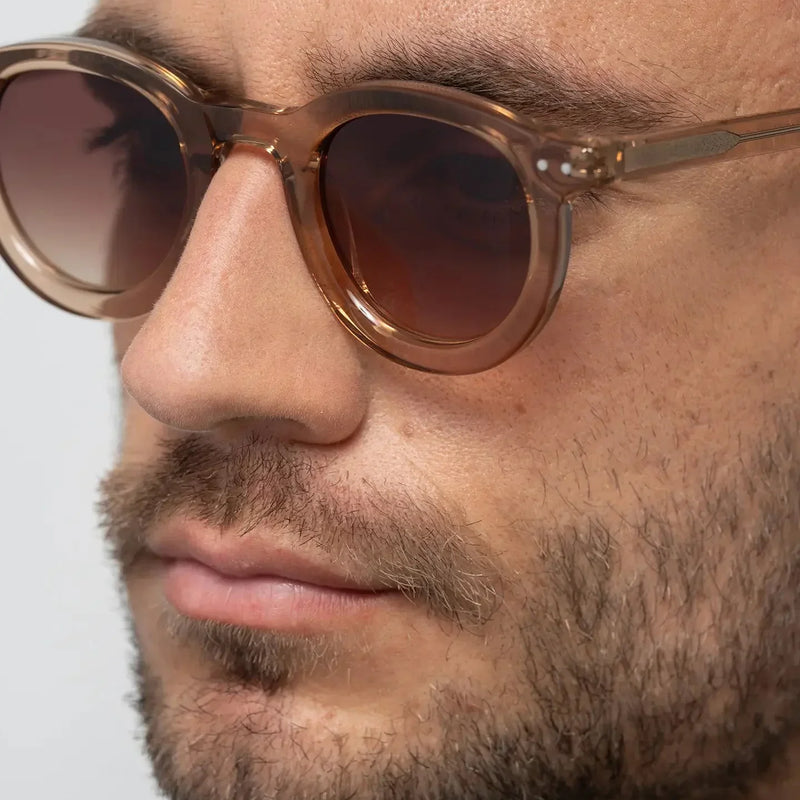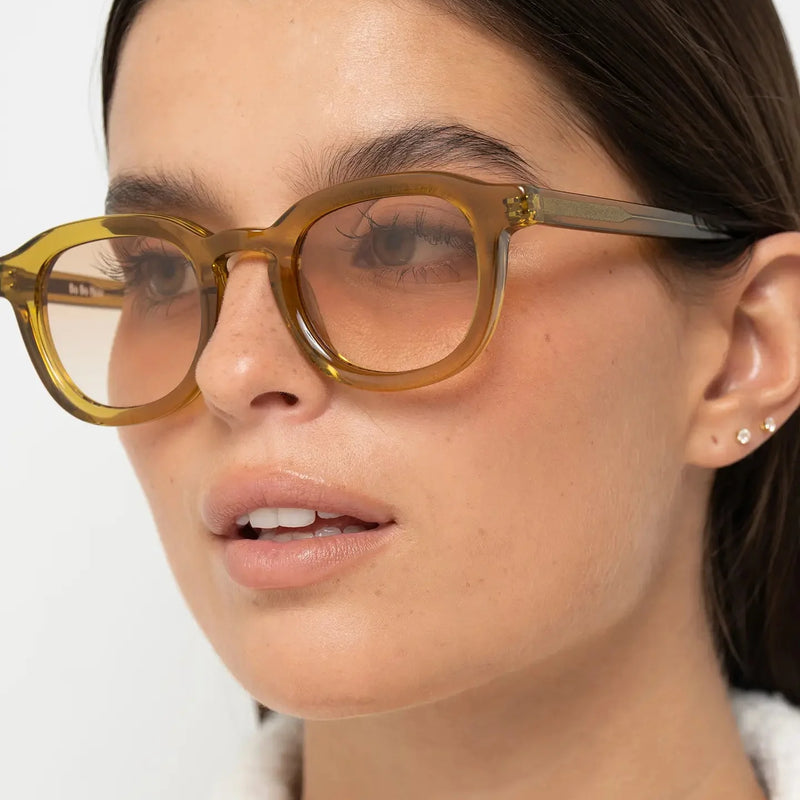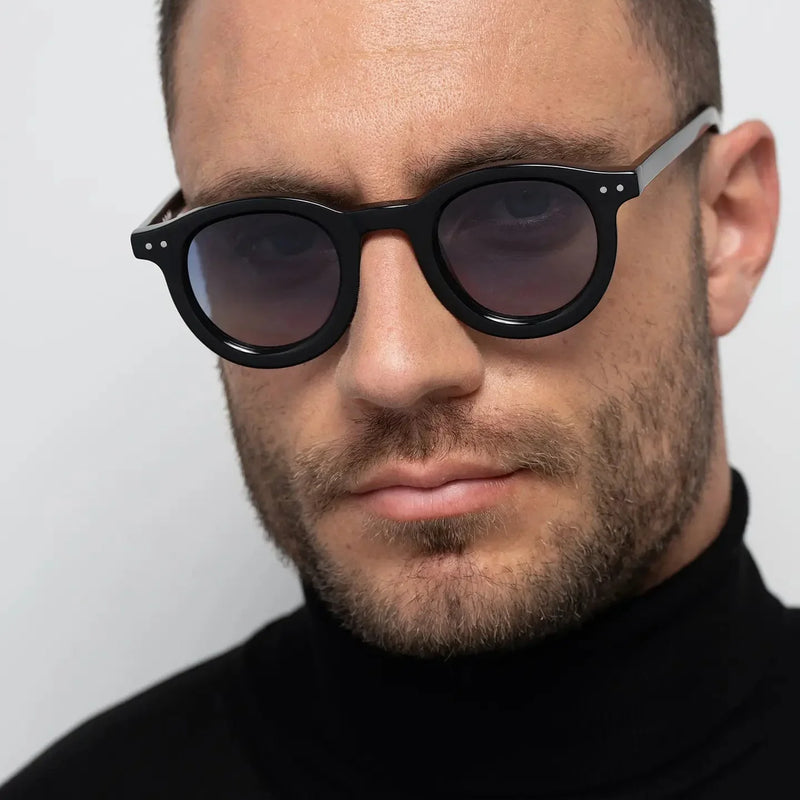
Some sunglasses instantly feel right.
Others may be fashionable, expensive or beautifully made, yet they never seem to flatter your face in quite the same way.
The difference is rarely your face shape alone. It is the relationship between your facial proportions and the way the frame distributes visual balance.
Flattering sunglasses do not hide your features or completely transform your appearance. They guide attention towards your eyes, introduce structure where it is needed and create a more harmonious relationship between your forehead, cheekbones, nose and jawline.
This is why two people with similar face shapes can look completely different wearing the exact same sunglasses.
If you want to understand why this happens, start with our guide to Why Do Some Sunglasses Suit Me Better Than Others?.
Quick Answer

The most flattering sunglasses create visual harmony by balancing your facial proportions, keeping the eyes as the natural focal point and introducing enough structure without overwhelming your features.
People often believe flattering sunglasses are about finding the perfect frame shape. In reality, they are about creating the right relationship between every facial feature.
Why Your Eyes Should Always Be the Focal Point

When we meet someone, our eyes instinctively look towards one place first.
The eyes.
This is one of the strongest principles in visual perception and one of the main reasons certain sunglasses immediately feel flattering.
A well-balanced frame supports the eye area instead of competing with it. Rather than hiding your expression, it frames it.
If the sunglasses become the first thing people notice, the visual balance is often lost.
People rarely remember the exact shape of your sunglasses. They remember your expression. The best eyewear strengthens your expression instead of replacing it.
Facial Harmony Matters More Than Face Shape

Face shape guides are helpful, but they rarely tell the complete story.
What makes sunglasses flattering is the relationship between all your features, not simply the outline of your face.
Eye spacing, eyebrow position, forehead height, cheekbone definition, nose width and jawline all influence how a frame is perceived.
That is why two people with an oval face can suit completely different sunglasses.
The most flattering frame is the one that creates harmony between the features you already have.
Flattering sunglasses do not follow fixed rules. They create visual balance through proportion, geometry and restraint.
Why Frame Geometry Has More Impact Than Frame Shape

Most people describe sunglasses as round, square or rectangular.
Those categories are useful, but they only explain part of the story.
What truly determines whether sunglasses look flattering is frame geometry: the relationship between width, height, curves, angles and proportion.
Two rectangular frames may look completely different on the same person because their geometry creates different visual balance.
Great eyewear is designed around proportion, not labels. Geometry influences perception before people consciously notice the frame shape.
Visual Weight Creates Facial Definition

One of the biggest reasons sunglasses look flattering is visual weight.
Visual weight is the amount of presence a frame creates once it sits on the face.
It is created by acetate thickness, lens proportions, colour and frame depth. Too little visual weight can make facial features appear undefined. Too much can make the sunglasses dominate the face.
Light visual weight
Creates subtlety but may reduce definition.
Balanced visual weight
Frames the eyes while maintaining harmony.
Heavy visual weight
Creates presence but must stay proportional.
Why Lens Height Influences Your Expression

Lens height is often overlooked, yet it has one of the greatest influences on how flattering sunglasses appear.
Balanced lens proportions strengthen the relationship between your eyes, eyebrows and cheekbones.
Very shallow lenses can make the face appear longer and reduce emphasis around the eyes. Very deep lenses can overwhelm smaller features if they are not matched with suitable frame width.
Why Balance Always Outperforms Drama

Many people believe dramatic sunglasses automatically create a stronger look.
In practice, the most flattering eyewear is rarely the most dramatic.
Balance creates a stronger and more lasting impression than exaggeration.
Well-designed sunglasses add structure where needed, soften transitions where appropriate and guide attention naturally towards the eyes.
If you want to explore this principle further, read How Sunglasses Change Facial Balance.
Why the Best Sunglasses Enhance Your Natural Expression

The most flattering sunglasses do not create a completely different version of you.
They simply allow your best features to become more noticeable.
Well-balanced frames reinforce your natural expression by bringing subtle definition to the eyes, eyebrows and upper face without overpowering them.
Instead of becoming the centre of attention, the frame supports your facial features and allows your expression to remain authentic.
This balance is one of the reasons timeless eyewear often feels more attractive than trend-driven designs.
People connect with faces through expression, not accessories.
The best sunglasses enhance your expression rather than replacing it.
Why Controlled Contrast Creates Better Facial Harmony

Contrast is one of the most powerful tools in eyewear design.
The goal is not to maximise contrast, but to control it.
Frames that are too dark, too thick or too visually dominant can distract from your features, while frames with too little contrast may fail to provide enough definition.
The most flattering sunglasses achieve a balance where your face remains the focus and the frame simply reinforces its natural structure.
If you're interested in how frame colours influence this balance, explore Black vs Tortoise Sunglasses.
Good contrast creates definition.
Controlled contrast creates harmony.
Why Visual Flow Makes Sunglasses Feel Effortless

One of the least discussed principles in eyewear design is visual flow.
Visual flow describes how naturally your eyes move across the frame, the lenses and your facial features without interruption.
When the bridge, lens shape and temples follow a coherent design language, the sunglasses feel effortless to wear because nothing appears visually disconnected.
This continuity is one of the defining characteristics of refined eyewear.
When every line of a frame works together, people notice your face first and the sunglasses second.
Bo Bo Noir Silhouettes Designed Around Facial Harmony

Every Bo Bo Noir silhouette is developed around the same design philosophy: proportion before decoration.
Jane creates crisp architectural definition through disciplined rectangular geometry.
Narr balances soft curves with structured proportions, making it one of the most versatile silhouettes for everyday wear.
Triboulet introduces richer acetate tones and generous lens proportions to create warmth without sacrificing definition.
William demonstrates how confident round eyewear can remain refined through carefully controlled visual weight.
The best silhouette is never the one that attracts the most attention.
It is the one that allows your own features to feel naturally balanced.
When comparing two pairs of sunglasses, step away from the mirror.
Look at your whole face from a normal conversation distance.
If your expression feels clearer, your eyes remain the focal point and the frame feels naturally integrated, you've probably found the more flattering pair.
Common Mistakes That Make Sunglasses Less Flattering

Finding flattering sunglasses isn't about following rigid style rules.
More often, it's about avoiding the small decisions that disrupt facial harmony.
Many people choose frames based on trends, celebrity endorsements or brand recognition, even though these factors have very little influence on how flattering sunglasses actually look.
The most common mistakes include:
- Choosing oversized frames that hide the eyes.
- Ignoring bridge fit and how the frame sits on the face.
- Selecting acetate that creates excessive visual weight.
- Following trends instead of your own facial proportions.
- Focusing only on face shape while ignoring eye position and cheekbone structure.
- Choosing sunglasses that attract attention instead of creating harmony.
"If sunglasses are fashionable, they'll automatically look flattering."
Fashion trends change every season.
Balanced proportions remain flattering for years.
How to Evaluate Sunglasses Before You Buy

Instead of asking whether sunglasses are fashionable, ask how they change your facial balance.
The best frames usually create subtle improvements rather than dramatic transformations.
Look at your eyes first.
They should remain the natural focal point.
Check the overall balance.
The frame should support your facial proportions instead of dominating them.
Pay attention to visual weight.
The acetate should feel proportional to your facial features.
Step away from the mirror.
View yourself from normal conversation distance. This gives a far more realistic impression than standing a few centimetres from the glass.
Key Takeaways
- Flattering sunglasses create harmony rather than distraction.
- Your eyes should always remain the visual focal point.
- Frame geometry is more important than simple shape labels.
- Visual weight should complement your facial proportions.
- Lens height influences expression and facial balance.
- Controlled contrast creates more natural harmony.
- The best sunglasses enhance your features instead of hiding them.
Final Thoughts
The sunglasses that look most flattering are rarely the loudest or the most fashionable.
They succeed because every design decision works towards the same goal: creating balance.
Frame geometry, visual weight, acetate colour, lens proportions and bridge position all influence how naturally a frame integrates with your facial features.
When these elements work together, sunglasses stop feeling like an accessory and begin to feel like part of your natural appearance.
That is why truly flattering eyewear rarely goes out of style.
Frequently Asked Questions
Why do some sunglasses instantly look flattering?
Because their proportions naturally complement your facial features, creating balance around the eyes, nose and cheekbones.
Can flattering sunglasses make me look younger?
They can create a fresher appearance by improving facial balance, lifting visual attention towards the eyes and introducing clearer definition.
Why do my eyes disappear behind some sunglasses?
This usually happens when the frame has excessive visual weight, very dark lenses or lens proportions that reduce emphasis around the eye area.
Do flattering sunglasses depend on face shape?
Only partly. Eye position, forehead height, cheekbone structure, jawline and frame geometry often influence the result more than face shape alone.
Can oversized sunglasses still be flattering?
Yes, provided their width, lens depth and visual weight remain proportional to your facial features.
Why do balanced sunglasses always feel more natural?
Our brains naturally prefer visual harmony. Balanced proportions are processed more comfortably, making the entire face appear more cohesive.
Can frame colour affect how flattering sunglasses look?
Absolutely. Colour changes facial contrast and influences how strongly your features are defined.
What should I notice first when trying on sunglasses?
Your eyes. If the frame immediately becomes the centre of attention, it may not be creating the right balance.
How can I compare two pairs objectively?
Take a few steps back from the mirror or photograph yourself from conversational distance. The frame that feels quieter and more balanced is often the better choice.
What is the biggest secret behind flattering sunglasses?
They don't try to transform your face. They simply improve the balance that already exists.
👁 You May Also Like
If you're exploring how eyewear changes facial perception, these guides continue the same journey from different perspectives.
Why Do Some Sunglasses Suit Me Better Than Others?
Understand how facial proportions influence the way sunglasses look on you.
Read the article →
Why Do Expensive Sunglasses Look Better?
Discover how visual weight, acetate quality and geometry influence perceived quality.
Read the article →
How Sunglasses Change Facial Balance
Explore how eyewear redistributes attention across your facial features.
Read the article →
Sunglasses That Add More Definition
Learn how frame geometry and acetate thickness create stronger facial definition.
Read the article →
Explore the Bo Bo Noir Sunglasses Collection
Discover acetate sunglasses designed around proportion, balance and long-term wearability.
Explore the collection →