Livraison gratuite dans le monde • Retours sous 14 jours • Conçu au PortugalLivraison gratuite dans le monde • Retours sous 14 jours • Conçu au PortugalLivraison gratuite dans le monde • Retours sous 14 jours • Conçu au PortugalLivraison gratuite dans le monde • Retours sous 14 jours • Conçu au PortugalLivraison gratuite dans le monde • Retours sous 14 jours • Conçu au PortugalLivraison gratuite dans le monde • Retours sous 14 jours • Conçu au PortugalLivraison gratuite dans le monde • Retours sous 14 jours • Conçu au PortugalLivraison gratuite dans le monde • Retours sous 14 jours • Conçu au PortugalLivraison gratuite dans le monde • Retours sous 14 jours • Conçu au PortugalLivraison gratuite dans le monde • Retours sous 14 jours • Conçu au PortugalLivraison gratuite dans le monde • Retours sous 14 jours • Conçu au PortugalLivraison gratuite dans le monde • Retours sous 14 jours • Conçu au PortugalLivraison gratuite dans le monde • Retours sous 14 jours • Conçu au PortugalLivraison gratuite dans le monde • Retours sous 14 jours • Conçu au PortugalLivraison gratuite dans le monde • Retours sous 14 jours • Conçu au Portugal
Buying sunglasses you like today is relatively easy. Choosing a pair you will still want to wear five years from now is harder, because the decision has to survive more than the first impression. The frame needs to continue making sense on your face, with your wardrobe and within the level of visual expression you naturally enjoy.
That does not mean choosing the safest or least noticeable design. Learning how to choose sunglasses you'll still love in five years is really about separating lasting reasons from temporary ones. A bold round frame, substantial panto or coloured acetate can have excellent long-term potential when its proportions work for you and its character already belongs to your personal style.
The useful test is therefore not whether a frame looks “timeless” in isolation. It is whether its shape, scale, colour, visual weight and relationship with your wardrobe give you reasons to keep reaching for it after the novelty has disappeared. This guide breaks those decisions down so longevity becomes something you can evaluate before buying rather than something you discover years later.
If you want to explore the broader design principles first, What Makes Sunglasses Timeless? explains why enduring eyewear depends on more than choosing a conventional shape.
Long-term appeal is easier to judge when you look beyond trend language and ask whether the frame's underlying geometry, proportions and visual presence remain convincing on their own.
How do you choose sunglasses you'll still love in five years?
Choose sunglasses for reasons that are likely to remain relevant: proportions that work with your face, a shape whose visual effect you genuinely like, a colour that belongs with your wardrobe and enough comfort and versatility for repeated wear. A frame does not need to be neutral or understated to last stylistically.
Avoid choosing mainly because a silhouette, colour or size feels new. The stronger five-year candidate is usually the frame you would still want without the trend name, styling context or initial excitement surrounding it.
BBN insight
The opposite of trend-driven eyewear is not boring eyewear. Longevity comes from alignment, not invisibility. A distinctive frame can remain useful for years when its geometry suits your proportions, its visual weight matches the way you like to present yourself and its colour already has a natural place in your wardrobe.
Sunglasses do not become less useful only because they physically wear out. Sometimes the frame remains perfectly wearable but stops leaving the case because the reason for choosing it was too dependent on a particular moment: an unfamiliar colour looked exciting, an extreme proportion felt current or the styling around the product made the frame more appealing than it proved to be in everyday life.
Other frames disappear from rotation for more practical reasons. They may work with only a narrow part of the wardrobe, create more facial contrast than the wearer enjoys repeatedly or feel impressive for ten minutes but uncomfortable after several hours. None of these necessarily makes the sunglasses badly designed; they simply reveal a mismatch between the product and the role the buyer expected it to perform.
This is why long-term satisfaction starts before the purchase. Instead of asking only do I like these?, ask what exactly do I like about them, and is that reason likely to remain relevant? The more specific the answer becomes — proportion, colour, facial effect, comfort or wardrobe compatibility — the easier it is to distinguish durable preference from temporary excitement.
Temporary reason versus lasting reason
Before buying
A more useful question
“This shape is everywhere right now.”
“Do I like what this shape does to my facial proportions?”
“This colour feels new.”
“Does this colour work naturally with clothes I already wear?”
“The frame looks bold.”
“Do I enjoy this amount of visual presence often enough to repeat it?”
“I love how it looks in this styling.”
“Would I still want the frame with my own clothes, hair and everyday context?”
What are the three types of sunglasses longevity?
A useful five-year decision separates longevity into three different questions: physical durability, visual durability and personal durability. A pair has the strongest long-term potential when all three overlap, because remaining physically intact is not enough if you no longer enjoy wearing the design.
Physical durability concerns how the frame responds to normal repeated use and appropriate care. Visual durability asks whether the proportions, geometry, colour and overall design can remain convincing after the styling context around them changes. Personal durability asks whether the sunglasses continue to make sense for the way you dress and the amount of visual expression you actually enjoy.
This distinction prevents “timeless” from becoming a vague aesthetic label. A conventional black frame may have strong visual durability but weak personal durability if you never enjoy wearing black. Conversely, a distinctive coloured frame may have excellent personal durability if that colour already appears throughout your wardrobe. The longest-lasting choice is not necessarily the most neutral one; it is the one where product durability and personal relevance overlap.
Type of longevity
What it means
Useful question before buying
Physical
The frame remains suitable for normal repeated use when appropriately handled and cared for.
Do the material, construction and finishing feel appropriate for how often I expect to wear it?
Visual
The design remains convincing when its original trend or styling context changes.
Would I still like the geometry and colour if nobody described them as fashionable?
Personal
The frame continues to fit your wardrobe, features and preferred level of expression.
Does this feel like something I wear, rather than something I am trying temporarily?
Do timeless sunglasses have to look classic or understated?
No. Treating timelessness as a synonym for small, black or visually quiet frames confuses familiarity with longevity. A familiar design can certainly remain useful for years, but a more distinctive frame can do the same when its character comes from proportions and colours that genuinely suit the wearer rather than from novelty alone.
Consider the difference between distinctive and trend-dependent. A substantial round frame may be distinctive because its geometry creates a deliberate contrast with angular features. An olive panto may stand out because muted green belongs naturally with the wearer's earth-toned wardrobe. Neither depends on being invisible; both have a lasting reason for looking the way they do.
This gives long-term eyewear a more useful definition: timeless does not mean a frame never attracts attention; it means the reasons it works are stronger than the moment in which you bought it. That allows personal style to remain part of the decision instead of sacrificing character in the name of safety.
BBN perspective
Do not try to predict whether the entire fashion world will still approve of a frame in five years. Ask whether you will still have a reason to approve of it. Proportion, wardrobe compatibility and genuine preference are more controllable than future trends.
Why does proportion usually age better than a trend-driven shape?
Shape names are broad. Two rectangular frames can differ substantially in width, lens height, bridge position and acetate thickness, just as two round frames can create completely different levels of visual presence. What tends to determine whether the sunglasses continue to feel convincing is not the category alone but how those dimensions relate to your face.
A frame whose width creates useful balance has a reason to remain relevant even if fashion later favours narrower or wider silhouettes. The same is true of lens height and brow position: when those proportions integrate naturally with your features, they are doing more than reproducing the styling language of one season.
This is why a five-year purchase should begin with what the proportions accomplish. If the frame makes your face look more balanced in a way you consistently enjoy, the geometry has a personal function. If the main attraction is simply that the proportions feel unusually current, the purchase depends more heavily on the trend remaining emotionally relevant to you.
The proportion test
Ignore the shape label for a moment and look at four relationships: overall width, lens height, bridge position and the upper frame around the eyebrows. If those relationships already feel resolved on your face, the sunglasses have a stronger foundation than a frame chosen primarily because its silhouette is currently fashionable.
Which frame shapes have stronger long-term potential?
No single frame shape is automatically more timeless than another. Rectangular, panto and round sunglasses can all remain relevant for years when the geometry creates an effect you genuinely like on your face. What matters more is whether the shape has a lasting function for you rather than whether it currently appears in trend reports.
Rectangular frames can have strong long-term potential when their horizontal lines provide useful definition and the width remains proportionate. Panto frames offer a middle ground between curves and structure, which can make them adaptable across different wardrobes and styling contexts. Round frames can be equally durable when their curved geometry provides a counterpoint to more angular features and the scale feels intentional rather than novelty-driven.
The more useful question is therefore not which shape will still be fashionable in five years? but which shape creates a facial effect you are likely to continue valuing? Once that is clear, width, lens height, acetate thickness and colour determine whether the frame feels quietly balanced or deliberately expressive.
Shape
Why it can last
What can make it more trend-dependent
Rectangular
Creates useful horizontal definition and can remain convincing across different widths and lens heights.
Choosing an extreme width or very shallow lens only because that proportion is current.
Panto
Balances a curved lower lens with more structure through the upper frame.
Allowing exaggerated scale, colour or material to become the only reason you like it.
Round
Provides a lasting curved counterpoint when you genuinely prefer softer geometry.
Choosing an unusually small, large or exaggerated version mainly for novelty.
BBN insight
A familiar shape is not automatically a lasting shape, and a distinctive shape is not automatically temporary. Long-term potential comes from the relationship between the geometry and the wearer.
How does visual weight affect long-term wearability?
Visual weight describes how strongly sunglasses register on the face. Frame width, lens height, acetate thickness, opacity and colour all contribute to it, which means two frames with similar dimensions can feel very different once worn. A substantial black frame usually creates a stronger continuous boundary around the eyes than transparent acetate of comparable thickness.
For long-term wear, the important question is not whether bold or subtle eyewear ages better. It is whether the level of presence matches how you naturally like to dress. If you consistently use eyewear as a defining part of your appearance, a substantial frame can have excellent personal durability. If you repeatedly prefer quieter accessories, buying maximum visual weight because it feels exciting today may reduce how often you reach for the frame later.
This is also why reducing physical size is not the only way to make sunglasses easier to repeat. Keeping substantial proportions while choosing tortoise, muted colour or transparent acetate can lower visual density without removing the geometry you like. Long-term versatility comes from controlling presence, not automatically minimising it.
Substantial proportions do not automatically create maximum visual weight. Transparency can preserve bold geometry while reducing the continuous contrast of an opaque dark frame.
Can bold sunglasses still be a five-year purchase?
Yes. Bold sunglasses can have strong long-term potential when boldness is already part of your visual language. The risk is not that a frame attracts attention; it is that the attention comes from an element you enjoy only because it currently feels unusual or fashionable.
A useful test is to identify the source of the boldness. If you consistently like substantial acetate, stronger geometry or visible colour across different clothes and seasons, those preferences have evidence behind them. If the appeal depends mainly on the frame looking dramatically different from everything you normally wear, give the decision more scrutiny before treating it as a long-term purchase.
Which sunglasses colours are easier to love for years?
Black and tortoise have obvious long-term advantages because they already sit comfortably within many wardrobes, but that does not make them the only sensible five-year choices. Olive, burgundy and crystal acetate can also have strong personal durability when those colours connect naturally with clothing you already own and with the amount of facial contrast you prefer.
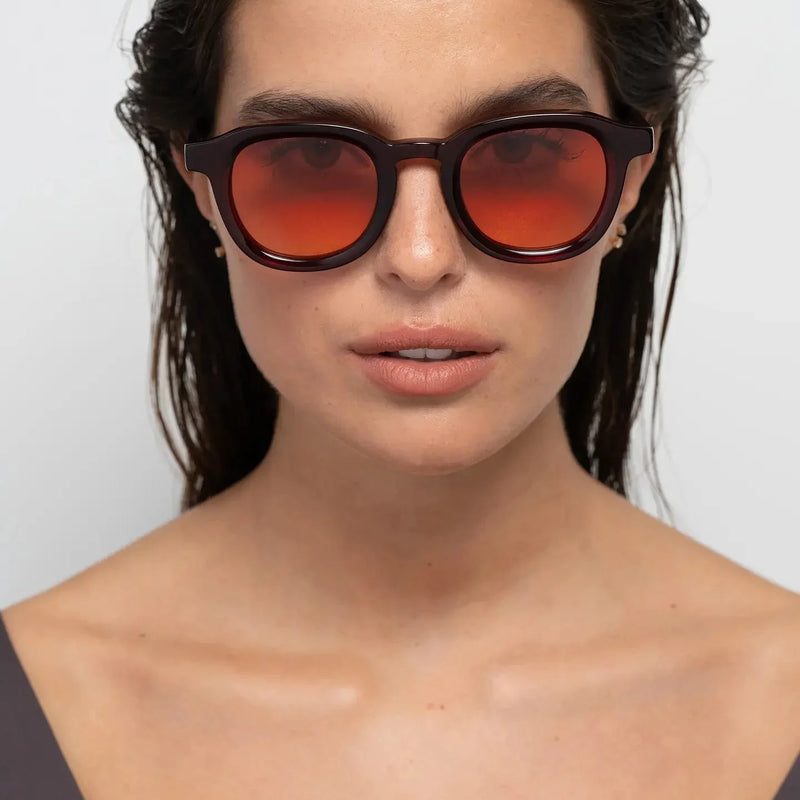
Black creates clear, continuous definition and works particularly well if dark accessories are already part of your style. Tortoise retains depth while introducing tonal variation and warmth. Olive can function almost like an earth-toned neutral alongside brown, cream, khaki, denim and grey, while burgundy offers deeper colour without requiring the brightness of red. Crystal takes a different approach by reducing opacity and allowing substantial geometry to feel visually lighter.
The best long-term colour is therefore not necessarily the most neutral one. It is the colour you can connect to enough of your real wardrobe without repeatedly having to build an outfit around the sunglasses. For a deeper explanation of how frame colour changes facial definition, see Why Dark Frames Create Stronger Facial Definition.
Colour
Long-term strength
Question to ask yourself
Black
Clear definition and easy integration with wardrobes already built around dark neutrals.
Do I genuinely enjoy strong facial contrast, or do I choose black only because it feels safe?
Tortoise
Warmth and tonal variation can make substantial acetate easier to repeat.
Do warmer patterned accessories already work naturally with my clothes?
Olive
Muted colour can behave like a neutral within earth-toned wardrobes.
Can I immediately name several outfits I already own that work with this shade?
Burgundy
Adds deeper colour identity without the intensity of a bright red frame.
Is deeper warm colour already part of my wardrobe or accessory choices?
Crystal
Allows visible geometry with lower opacity and softer facial contrast.
Do I want the shape to remain visible without creating a strong dark boundary?
Why does wardrobe compatibility matter more than theoretical versatility?
A frame can be described as versatile and still be wrong for your wardrobe. Theoretical versatility asks how many outfits a colour or shape could work with; personal versatility asks how many outfits you actually own that you would want to wear with it. For a five-year purchase, the second question is much more useful.
Before buying, picture the sunglasses with several ordinary combinations rather than one ideal outfit. Think about what you wear on an average weekday, at weekends and while travelling. If the frame works naturally across those situations, repeat wear becomes easier. If every mental image requires a specific jacket, colour palette or styling mood, the sunglasses may be better understood as a deliberate secondary pair rather than your most versatile option.
This does not mean every pair has to work with everything. A wardrobe can support both highly repeatable frames and more expressive alternatives. The important point is to buy the frame for the role it can realistically perform. Problems begin when a visually specific pair is purchased with the expectation that it will behave like a universal neutral.
The five-outfit test
Before buying, identify five outfits you already wear — not outfits you plan to buy — that work naturally with the frame. They do not need to be identical in style. The point is to establish that the sunglasses already have a place in your wardrobe rather than requiring your wardrobe to change around them.
How can you tell whether a frame reflects your personal style?
Personal style is easier to recognise through repetition than aspiration. Look at the clothes, shoes, watches, jewellery and eyewear you have actually used most over the last few years. Patterns usually emerge: stronger or softer shapes, dark or warm neutrals, visible or restrained accessories, cleaner or more expressive combinations.
A frame has stronger personal durability when it connects with those repeated choices. Someone who consistently wears substantial accessories may find a bold acetate frame easier to keep than a barely visible one, while someone whose wardrobe relies on quiet lines and low contrast may get more use from a visually lighter frame. Neither direction is inherently more timeless.
This is why buying for an imagined future version of yourself is risky. A frame can certainly help evolve your style, but a five-year purchase is stronger when it contains enough familiarity to feel natural alongside the person you already are. The best evidence for what you will repeatedly wear tomorrow is often what you have repeatedly chosen before.
A frame does not need to disappear to have long-term potential. Distinctive eyewear becomes easier to repeat when its shape, colour and visual presence already feel coherent with the wearer's broader style.
BBN perspective
Do not confuse versatility with neutrality. The most versatile frame in your collection is the one that works repeatedly with your actual wardrobe and preferred level of expression — even if another person would consider it distinctive.
How do you separate a trend from something you genuinely like?
The difficulty with trends is not that they are automatically short-lived. Trends can introduce you to shapes, colours and proportions that become permanent parts of your style. The problem is deciding whether you like the frame itself or the sense of newness surrounding it. Those two reactions can feel very similar at the moment of purchase.
One useful test is to remove the trend language. Instead of thinking of the sunglasses as “the new narrow rectangle”, “the bold round frame” or “this season's colour”, describe what you actually see: a frame with a particular width, lens height, geometry, acetate presence and level of contrast. Then ask whether those characteristics solve something you consistently want from eyewear.
Time also helps separate preference from novelty. If possible, revisit the frame after the initial excitement has faded and compare it with pieces you already wear repeatedly. A trend has stronger personal durability when you can explain why you like it without using the fact that it is currently fashionable as part of the explanation.
Remove the trend label
Instead of asking “Do I want this trend?”, ask: Do I like this width on my face? Do I like this amount of acetate? Does this colour belong with my clothes? Would I choose this geometry if I saw it again three years from now? The more answers that remain yes without the trend context, the stronger the long-term case becomes.
Is it a problem if the sunglasses are currently fashionable?
Not at all. A current frame can become a long-term favourite. The objective is not to avoid fashion but to avoid making fashion the only reason for the purchase. If a current silhouette also suits your proportions, wardrobe and preferred level of expression, its popularity today does not reduce its usefulness tomorrow.
This distinction also prevents overcorrecting towards overly safe choices. Buying something you feel indifferent about simply because it appears conventional is not a reliable route to longevity. You need enough character to keep enjoying the frame and enough personal relevance to keep wearing it.
How much do material, construction and comfort matter over five years?
Style longevity matters only if the sunglasses remain something you can realistically continue to use. Material, construction, fit and care therefore belong in the five-year decision alongside shape and colour. A frame you still find visually convincing has little practical value if you avoid wearing it because the fit never felt right for extended use.
Comfort should be assessed through the way the frame interacts with your own proportions rather than through appearance alone. Overall width, bridge relationship, temple position and the way the frame sits around the brow can all influence whether sunglasses feel natural enough for repeated wear. A photograph can help you judge geometry and visual weight, but it cannot establish exactly how a particular frame will feel on your face.
Care matters as well. Long-term ownership is helped by storing sunglasses appropriately, avoiding unnecessary pressure or heat and cleaning the lenses and frame correctly. The useful principle is simple: visual longevity, physical longevity and personal longevity need to support one another. A five-year purchase is strongest when you still want to wear the frame and have treated it in a way that allows you to do so.
BBN insight
Do not use appearance as evidence of comfort or durability. Product photographs can show proportion, colour and material presence; they cannot tell you exactly how a frame will fit your face or predict its condition after five years. Long-term confidence comes from evaluating each type of evidence for what it can actually tell you.
What are the biggest mistakes when buying sunglasses for long-term wear?
The first mistake is equating long-term wear with the safest possible design. Choosing black, small or conventional sunglasses does not guarantee that you will still enjoy them if those qualities never reflected your personal style. The second is the opposite: choosing an extreme proportion, colour or visual weight mainly because its novelty makes the purchase feel more exciting.
Another common mistake is evaluating the frame in isolation. Sunglasses live beside your hair, facial proportions, clothing and other accessories, so a design that looks compelling on a product page may have a very different role in your own wardrobe. Buying for an imagined future wardrobe creates similar uncertainty because it asks the sunglasses to fit clothes and habits that do not yet exist.
Finally, avoid asking one characteristic to answer the entire longevity question. A classic shape does not compensate for poor personal proportions, a versatile colour does not guarantee that you enjoy the visual weight, and a distinctive design is not automatically trend-dependent. The strongest long-term choice is usually the result of several good decisions aligning rather than one supposedly timeless feature.
Common mistake
Why it creates risk
Better approach
Buying the safest frame
Neutrality does not guarantee personal attachment or repeat wear.
Choose enough character to reflect how you genuinely like to dress.
Buying mainly for novelty
The attraction may weaken when the feature stops feeling new.
Identify a second reason based on proportion, colour or wardrobe fit.
Ignoring your wardrobe
The frame may require more styling effort than expected.
Test it mentally against several outfits you already wear.
Using shape alone
Frames within the same shape family can have very different proportions and visual weight.
Evaluate width, lens height, brow relationship, acetate and colour together.
What is the five-year sunglasses test?
The five-year test is a way to slow the buying decision down enough to identify whether the frame has several independent reasons to remain useful. You cannot know exactly what you will like five years from now, but you can look for evidence that the purchase is connected to preferences and habits that already repeat in your life.
Start by removing the year, trend name and styling around the product. Look only at the frame and ask what its geometry does to your face, whether its scale feels natural, how much visual presence it creates and whether the colour already works with your wardrobe. Then consider how often you would realistically choose that combination rather than whether you can imagine one perfect occasion for it.
A strong result does not require every answer to be conservative. It requires the answers to be specific and personally credible. A bold burgundy panto can pass the test more convincingly than a conventional black frame if burgundy, visible accessories and panto geometry already make sense within the way you dress.
The five-year sunglasses test
Remove the trend: would you still like the frame without knowing whether it is fashionable?
Check the proportions: does the width, lens height and brow relationship create an effect you genuinely prefer?
Check the visual weight: is this amount of frame presence consistent with how you normally dress?
Check the colour: can you connect it naturally to several clothes and accessories you already own?
Check the role: do you know when and how often you would realistically wear it?
Check the evidence: can you connect the choice to preferences you have repeated before?
Check the practical side: are the fit, construction, care requirements and intended use appropriate for repeated wear?
The more of these questions you can answer clearly, the less the purchase depends on novelty alone.
What if you cannot imagine your style five years from now?
You do not need to. Trying to predict your exact future wardrobe can create false confidence because personal style evolves. A better approach is to identify preferences that have already survived change: perhaps you consistently return to strong accessories, warm neutrals, clean geometry, rounded shapes or low-contrast colours even as individual clothes come and go.
Those repeated preferences are more useful evidence than trying to imagine a specific outfit in five years. The goal is not to freeze your style; it is to choose sunglasses with enough connection to your existing preferences that they can evolve with it.
Should your first pair be more versatile than your second or third?
Usually, the role of the pair matters more than the number. If you want one pair to cover most situations, broader wardrobe compatibility and a level of visual weight you enjoy frequently become especially important. If you already own sunglasses that perform that role, another pair can reasonably be more specific in colour, geometry or styling purpose.
The mistake is expecting every frame to perform the same job. A distinctive pair can have excellent long-term value when it has a clear place in your wardrobe, even if you do not wear it every day. Frequency and longevity are related, but they are not identical: a frame can remain valuable for years because it consistently performs a specific role well.
Distinctive does not necessarily mean short-lived. A substantial round silhouette can have long-term personal relevance when the geometry is intentional and the patterned acetate already works naturally with the wearer's style.
Is cost per wear useful when choosing sunglasses for the long term?
It can be useful as a way of thinking about repeated use, but only after you have made the more important decisions about fit, style and wardrobe compatibility. A frame does not become a better purchase simply because you intend to keep it for a long time; it needs to be something you genuinely reach for during that time.
Instead of trying to predict an exact number of wears, ask whether the sunglasses have enough realistic occasions in your life to justify their intended role. A frequently worn everyday pair and a less frequently worn expressive pair can both make sense over several years. The relevant measure is whether actual use matches the reason you bought them.
BBN perspective
Five-year confidence does not come from predicting fashion five years ahead. It comes from accumulating evidence in the present: the proportions work, the colour belongs, the visual weight feels natural, the frame has a realistic role and the preference is already yours.
Which Bo Bo Noir frames illustrate different long-term directions?
A five-year frame does not have to follow one aesthetic formula. The examples below illustrate different ways sunglasses can earn a lasting place in a wardrobe: familiar geometry with stronger definition, balanced panto structure with muted colour, substantial round proportions with patterned warmth, or visible geometry with lower opacity.
The purpose is not to identify one universally timeless pair. Use the criteria developed throughout this guide first, then compare the products according to the role you need them to perform. Principle should lead to product, not the other way around.
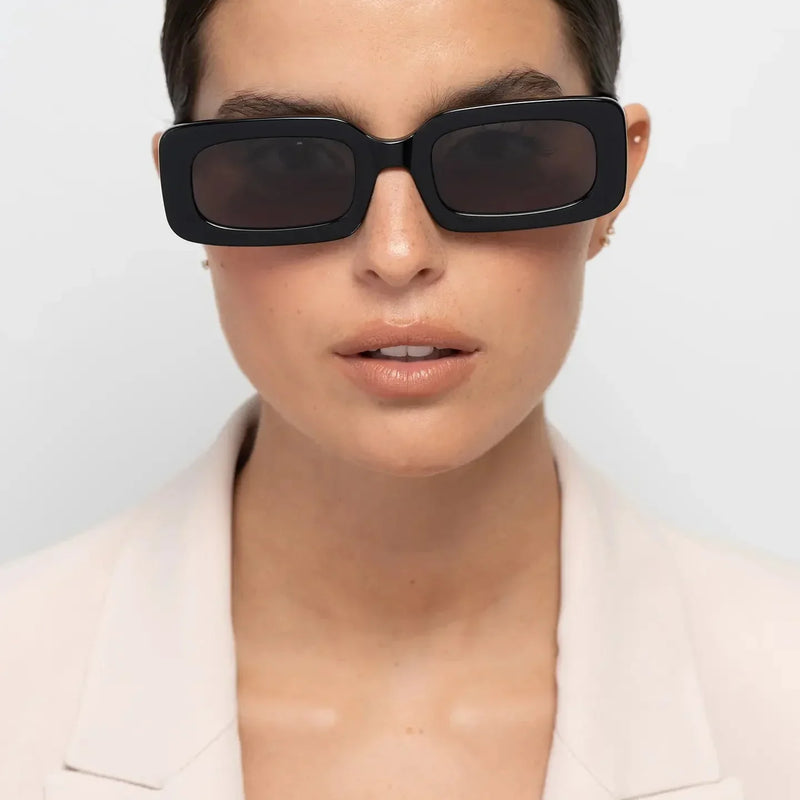
Jane Shiny Black — rectangular definition with a familiar neutral
Jane Shiny Black combines rectangular geometry with the continuous definition of black acetate. Its long-term case is strongest for someone who repeatedly prefers structured eyewear, stronger facial contrast and dark accessories rather than for someone choosing black simply because it is conventionally described as versatile.
Consider it if: horizontal definition and black acetate already feel natural within your style. Consider another direction if: you usually prefer curved geometry, patterned acetate or lower facial contrast.
Triboulet Olive — panto structure with an earth-toned neutral
Triboulet Olive shows why long-term colour does not have to mean black or tortoise. The panto geometry balances curves with upper-frame definition, while muted olive can connect naturally with wardrobes containing brown, cream, khaki, grey and denim.
Consider it if: earth tones already appear repeatedly in your wardrobe and you want visible colour without a highly saturated effect. Consider another direction if: you want stronger angularity or prefer the greater contrast of an opaque black frame.
A muted colour can have strong long-term potential when it already behaves like a neutral within the wearer's wardrobe. The important question is not whether olive is universally timeless, but whether it is personally repeatable.
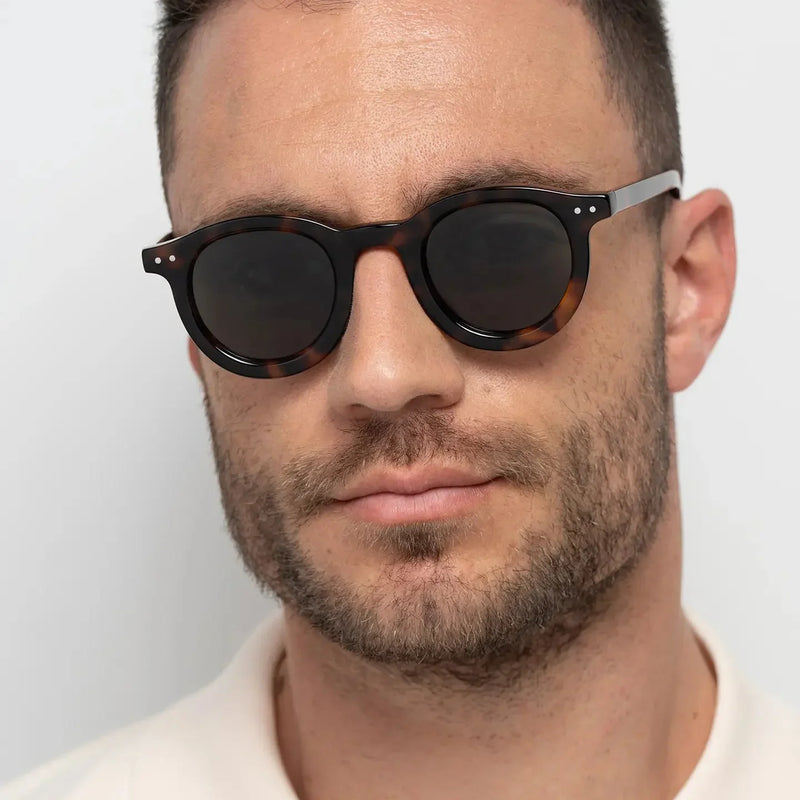
William Tortoise — substantial round geometry with tonal variation
William Tortoise represents a more visibly rounded direction. Its substantial geometry gives the frame presence, while tortoise introduces warmth and tonal variation rather than the continuous outline of solid black. The long-term case is therefore not that round sunglasses or tortoise are permanently fashionable, but that both characteristics may solve recurring preferences for the wearer.
Consider it if: you consistently enjoy curved eyewear, visible acetate and warmer patterned accessories. Consider another direction if: you prefer sharper horizontal structure or a visually quieter frame.
William Crystal Peach — substantial proportions with softer contrast
William Crystal Peach illustrates another route to long-term individuality. The round geometry and acetate presence remain visible, while the transparent finish reduces the continuous density of an opaque dark frame. This can make a substantial silhouette easier to repeat for someone who likes bold proportions but prefers softer facial contrast.
Consider it if: you want visible round geometry without the visual density of black. Consider another direction if: strong dark definition or a more conventional neutral is central to how you wear sunglasses.
How do these long-term eyewear directions compare?
These frames demonstrate why “timeless” is too broad to function as a product recommendation on its own. Jane Shiny Black prioritises rectangular definition, Triboulet Olive balances panto geometry with muted colour, William Tortoise combines substantial curves with patterned warmth, and William Crystal Peach keeps substantial geometry while lowering opacity.
Visible geometry with transparency and softer facial contrast.
You enjoy substantial proportions but want lower visual density.
Less suitable if you rely on dark eyewear for strong definition.
None of these directions wins universally. The better choice is the one whose defining characteristic — structure, muted colour, patterned warmth or transparency — already has evidence elsewhere in your personal style.
BBN insight
A useful product recommendation should explain both why a frame may remain relevant and why it may not be right for you. Long-term confidence comes from recognising the trade-off before buying, not discovering it afterwards.
What should you check before buying sunglasses you want to keep?
Before buying, reduce everything in this guide to a small number of checks. You are not trying to guarantee how your taste will develop over the next five years; you are looking for enough present-day evidence that the frame has reasons to remain useful after the initial excitement fades.
Proportion: do the width, lens height and brow relationship create an effect you genuinely like on your face?
Shape: do you value what the geometry does, independently of whether it is currently fashionable?
Visual weight: is the frame as visible or restrained as you normally like your accessories to be?
Colour: does it work with several clothes and accessories you already own?
Role: do you know where this pair fits within your real life and existing eyewear?
Personal evidence: can you connect the choice to preferences you have repeated before?
Practical wear: are fit, intended use and care requirements appropriate for how you expect to use the sunglasses?
Trend independence: would you still want the frame if its trend label disappeared tomorrow?
You do not need the most conservative answer to every question. You need answers that are coherent with one another. When the face, wardrobe, preference and practical role all point in the same direction, the purchase has a stronger foundation.
Frequently asked questions
How do I choose sunglasses that won't go out of style?
Do not rely on the shape label alone. Look for proportions that work with your face, a visual weight you genuinely enjoy and a colour that already fits your wardrobe. A distinctive frame can have strong longevity when those reasons remain useful after the trend changes.
What makes sunglasses timeless?
Timelessness is better understood as a combination of visual durability and personal relevance. The frame's geometry and proportions should remain convincing beyond one styling moment, while its colour and level of expression should continue to make sense for the wearer.
Do timeless sunglasses have to be black?
No. Black can have excellent long-term potential when you enjoy strong definition and regularly wear dark accessories, but tortoise, olive, burgundy and crystal can be equally durable choices when they fit your existing wardrobe and preferred level of contrast.
Are bold sunglasses likely to look dated?
Not necessarily. Boldness becomes more trend-dependent when novelty is the main reason for choosing it. Substantial acetate, visible colour or stronger geometry can remain personally relevant for years when those characteristics already belong to your style.
Which sunglasses shape is the most timeless?
There is no universally most timeless shape. Rectangular, panto and round frames can all have strong long-term potential when their proportions work with the wearer and the visual effect remains personally useful.
Are tortoise sunglasses a good long-term choice?
They can be. Tortoise introduces warmth and tonal variation, which can make substantial acetate less visually uniform than solid black. Its long-term usefulness depends on whether warmer patterned accessories work naturally with your wardrobe.
Can coloured sunglasses be timeless?
Yes. A colour has stronger long-term potential when it connects naturally with colours you already wear. Muted olive or deeper burgundy, for example, may be highly repeatable for one wardrobe and much less useful for another.
How many outfits should sunglasses work with before I buy them?
There is no fixed number, but identifying around five outfits you already wear is a useful practical test. It helps establish that the frame has an existing place in your wardrobe rather than requiring new clothes to make it work.
Should my everyday sunglasses be neutral?
Not necessarily. Everyday sunglasses need to be repeatable for you. If a distinctive colour or substantial frame already fits most of your wardrobe and preferred style, it may function as an everyday pair more naturally than a neutral frame you feel less connected to.
How can I tell if I genuinely like a sunglasses trend?
Remove the trend language and describe the frame through its width, geometry, colour, material presence and contrast. If you can still explain why those characteristics work for your face and wardrobe without referring to fashion, the preference has a stronger personal basis.
What makes a pair of sunglasses worth keeping?
Sunglasses worth keeping are not necessarily the quietest, safest or most conventional pair you can find. They are the frames whose reasons for working remain useful: proportions that continue to feel balanced, geometry you genuinely enjoy, colour that belongs with your wardrobe and a level of visual presence that feels like part of your style rather than a temporary experiment.
Thinking in terms of physical, visual and personal longevity makes the decision clearer. The frame needs to remain suitable for repeated use, its design needs to stand independently of the moment in which you discovered it, and you need enough personal connection to keep choosing it. No single “timeless” shape or colour can guarantee all three.
Five years is therefore not something you need to predict. Use what you already know about yourself: the proportions you prefer, the colours you repeat, the accessories you actually wear and the role the sunglasses need to perform. The strongest long-term purchase is not the frame least affected by fashion; it is the frame least dependent on fashion for its reason to belong to you.
Choose for the years after the first impression
Compare shape, colour and visual weight across the Bo Bo Noir sunglasses collection, then use the five-year test to identify the frames that already have a reason to belong in your wardrobe.
Bénéficiez de 10 % de réduction sur votre achat ! Inscrivez-vous à notre newsletter.Bénéficiez de 10 % de réduction sur votre achat ! Inscrivez-vous à notre newsletter.Bénéficiez de 10 % de réduction sur votre achat ! Inscrivez-vous à notre newsletter.Bénéficiez de 10 % de réduction sur votre achat ! Inscrivez-vous à notre newsletter.Bénéficiez de 10 % de réduction sur votre achat ! Inscrivez-vous à notre newsletter.Bénéficiez de 10 % de réduction sur votre achat ! Inscrivez-vous à notre newsletter.Bénéficiez de 10 % de réduction sur votre achat ! Inscrivez-vous à notre newsletter.Bénéficiez de 10 % de réduction sur votre achat ! Inscrivez-vous à notre newsletter.Bénéficiez de 10 % de réduction sur votre achat ! Inscrivez-vous à notre newsletter.Bénéficiez de 10 % de réduction sur votre achat ! Inscrivez-vous à notre newsletter.Bénéficiez de 10 % de réduction sur votre achat ! Inscrivez-vous à notre newsletter.Bénéficiez de 10 % de réduction sur votre achat ! Inscrivez-vous à notre newsletter.Bénéficiez de 10 % de réduction sur votre achat ! Inscrivez-vous à notre newsletter.Bénéficiez de 10 % de réduction sur votre achat ! Inscrivez-vous à notre newsletter.Bénéficiez de 10 % de réduction sur votre achat ! Inscrivez-vous à notre newsletter.