Choosing sunglasses is often treated as a matter of style. But in reality, it is a matter of proportion.
The right frame does not change your face. It aligns with it.
This is why some sunglasses feel instantly natural, while others never seem to sit quite right, even if they look good on their own.
If you want to understand the fundamentals first, start with our guide on how sunglasses should fit.
WHY FACE SHAPE MATTERS MORE THAN STYLE

Your face already has structure. Width, height, angles, softness. Sunglasses either work with that structure or against it.
Most people choose frames based on trend or aesthetic alone. The result is often a frame that looks good in isolation but feels wrong when worn.
The difference between a good frame and the right frame is not visual preference. It is balance.
HOW TO IDENTIFY YOUR FACE SHAPE
You do not need a complex method.
Look at three elements:
- Forehead width
- Cheekbone width
- Jawline definition
Then observe the overall outline. Is it soft, angular, elongated or balanced?
This gives you enough clarity to make better decisions.
BEST SUNGLASSES FOR ROUND FACE

Round faces tend to have softer contours, minimal angles and similar width and height.
The goal is not to change the face. It is to introduce contrast.
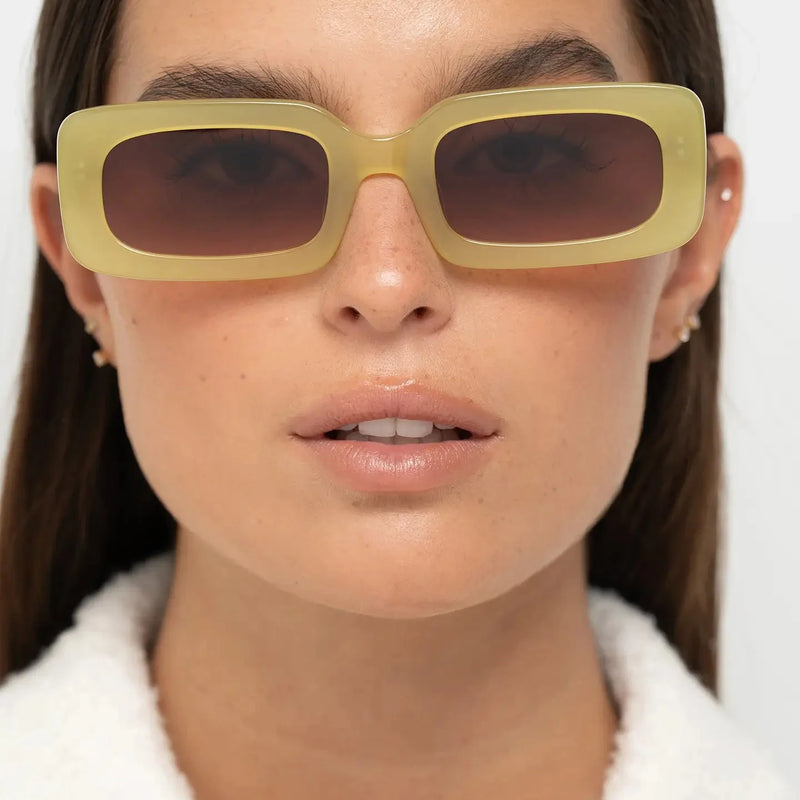
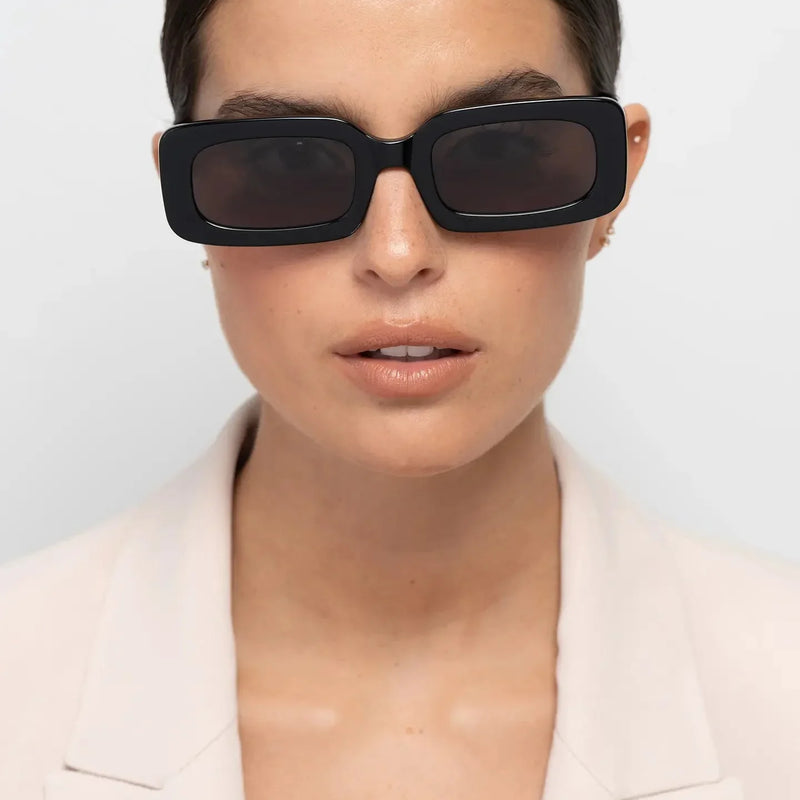
Structured rectangular frames create definition by adding angles that the face naturally lacks.
Frames like Jane work particularly well because of their horizontal emphasis and strong lines. They visually stretch the face and reduce the perception of roundness.
Key details that matter:
- Frame width slightly wider than the face
- Clear horizontal structure
- Defined edges
Avoid:
- Small round frames
- Soft undefined shapes
- Very narrow lenses
These reinforce roundness instead of balancing it.
BEST SUNGLASSES FOR SQUARE FACE

Square faces are defined by strong jawlines and angular structure.
The objective here is to soften those angles without losing identity.
Round and curved frames introduce fluidity and reduce visual rigidity.
Models like William work well because they break the linearity of the face and create a smoother visual flow.
Key details that matter:
- Rounded lens shape
- Soft transitions between frame lines
- Balanced thickness
Avoid:
- Boxy frames
- Sharp rectangular silhouettes
These amplify the angular structure instead of balancing it.
BEST SUNGLASSES FOR OVAL FACE

Oval faces are naturally balanced. This gives more flexibility, but also requires intention.
The opportunity here is not correction, but expression.
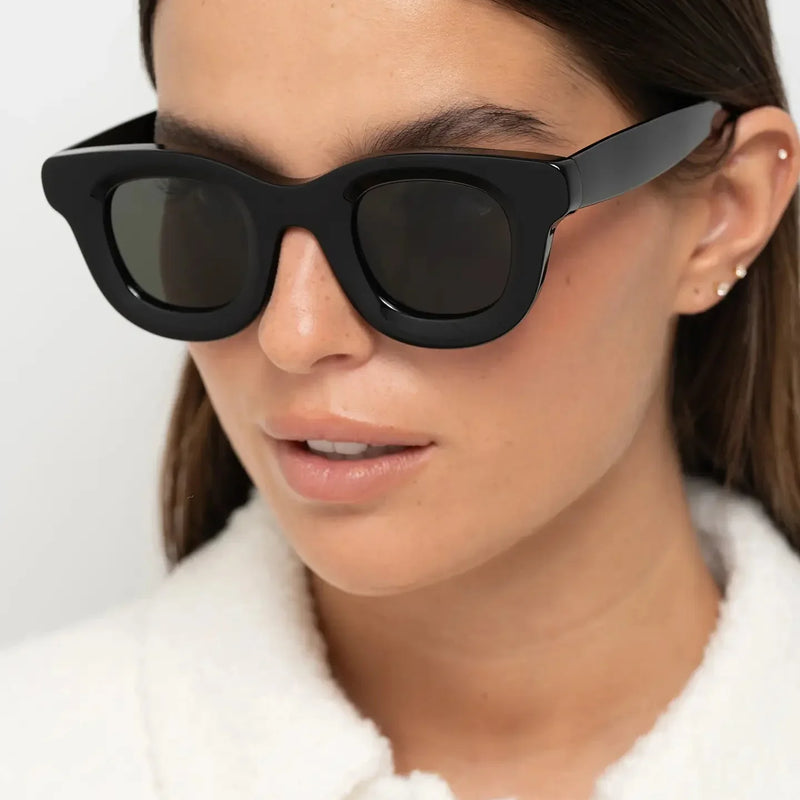
Frames like Narr work well because they introduce character without disrupting natural balance. The slightly rounded panto structure adds presence while remaining stable.
Key details that matter:
- Frame size proportional to face length
- Defined but not exaggerated structure
- Balanced width and height
Avoid:
- Very small frames
- Overly delicate designs
These tend to feel visually weak rather than intentional.
BEST SUNGLASSES FOR HEART SHAPED FACE

Heart shaped faces are wider at the forehead and narrower towards the chin.
The goal is to redistribute visual weight.
Panto shapes work particularly well because they balance upper and lower proportions.
Triboulet achieves this through a rounded lower structure combined with controlled width.
Key details that matter:
- Balanced lens curvature
- Moderate frame thickness
- No excessive top weight
Avoid:
- Top heavy frames
- Very thick upper rims
These exaggerate forehead width.
BEST SUNGLASSES FOR LONG FACE

Long faces have more vertical length than width.
The objective is to reduce that vertical perception.
Wider and deeper frames create horizontal balance and visually shorten the face.
Narr works well here because of its depth and rounded width, which distribute attention more evenly.
Key details that matter:
- Lens depth (height)
- Frame width
- Strong horizontal presence
Avoid:
- Small frames
- Narrow lenses
These make the face appear longer.
HOW FRAME SIZE CHANGES YOUR FACE
Shape alone is not enough. Size plays a critical role.
A well chosen shape in the wrong size will still feel incorrect.
Three elements define size impact:
- Frame width vs face width
- Lens height vs face length
- Bridge alignment
If the frame is too narrow, the face looks wider. If it is too wide, it loses structure.
This is where most mistakes happen.
COMMON MISTAKES WHEN CHOOSING SUNGLASSES
Even with the right shape, mistakes still happen.
- Choosing trends over proportion
- Ignoring frame size
- Wearing frames too small for the face
- Focusing only on colour
The most common issue is simple: the frame does not match the face in scale.
THE BO BO NOIR APPROACH

Bo Bo Noir approaches eyewear through structure, proportion and clarity.
Frames are designed to work across different face shapes by focusing on balance rather than trend.
This allows each model to feel consistent, stable and natural when worn.
You can explore the full collection here.
HOW TO MAKE THE FINAL DECISION
Face shape gives direction. But the final decision comes from how the frame feels.
- Does it feel balanced?
- Does it sit naturally?
- Does it reflect your identity?
If the answer is yes, the frame works.
FAQ ABOUT SUNGLASSES FOR WOMEN
What sunglasses suit all face shapes?
Balanced frames with medium proportions and defined structure tend to work across most faces.
Does frame thickness matter?
Yes. Thicker frames create more presence, while thinner ones feel lighter and less dominant.
Can sunglasses make my face look slimmer?
Yes. Structured frames and correct width can visually refine proportions.
Is size more important than shape?
Both matter, but size often has a stronger impact on overall balance.
How should sunglasses sit on the face?
They should align with your face width and feel stable without pressure.
👁 YOU MAY ALSO LIKE:
Best Sunglasses for Your Face Shape
A deeper guide to understanding proportions and balance.
Read the article
What Sunglasses Suit Everyone
Discover frames that work across most face shapes.
Read the article