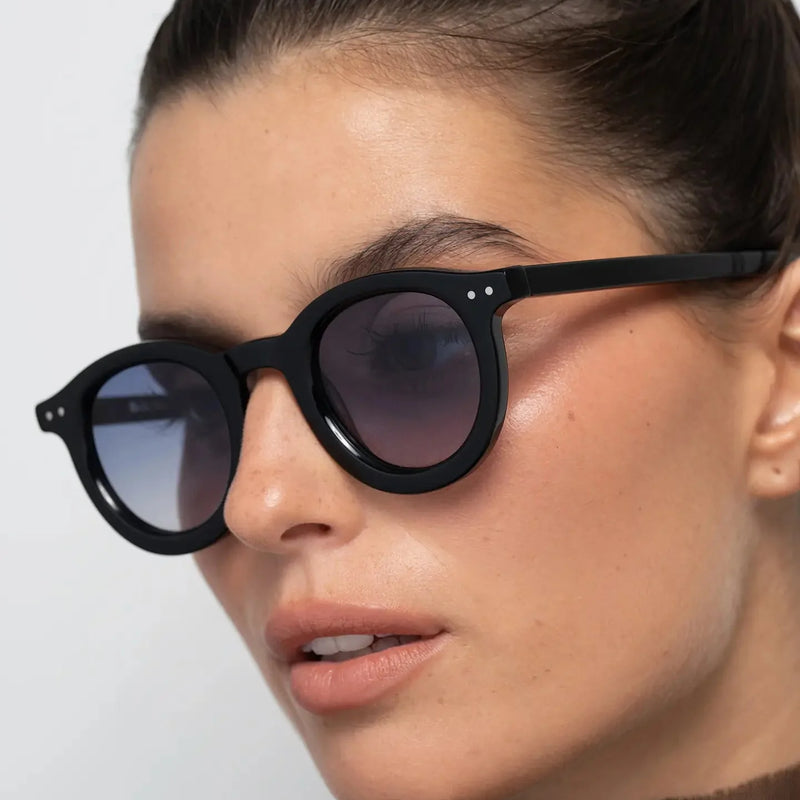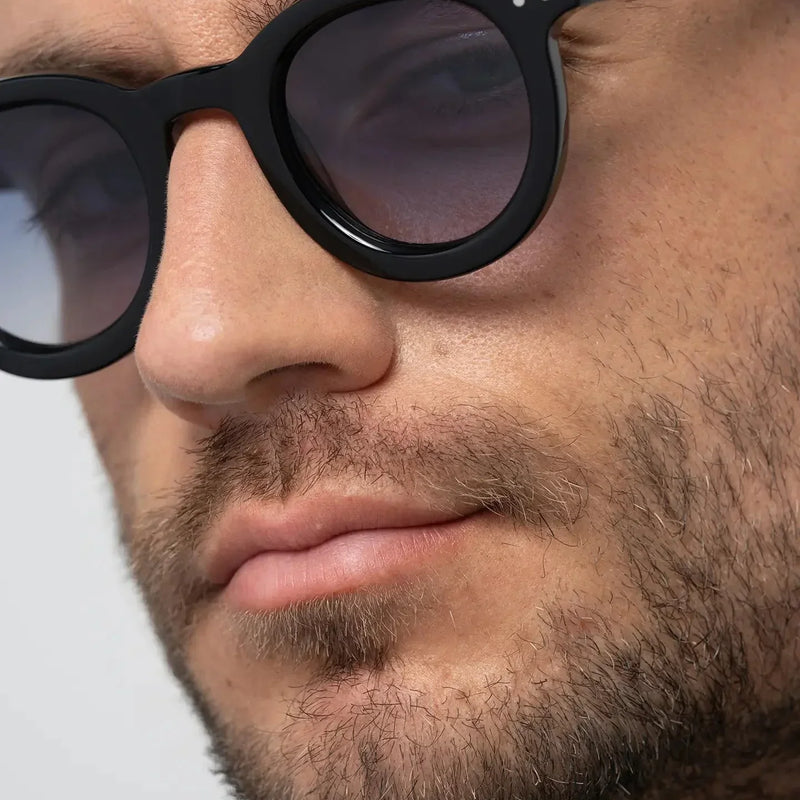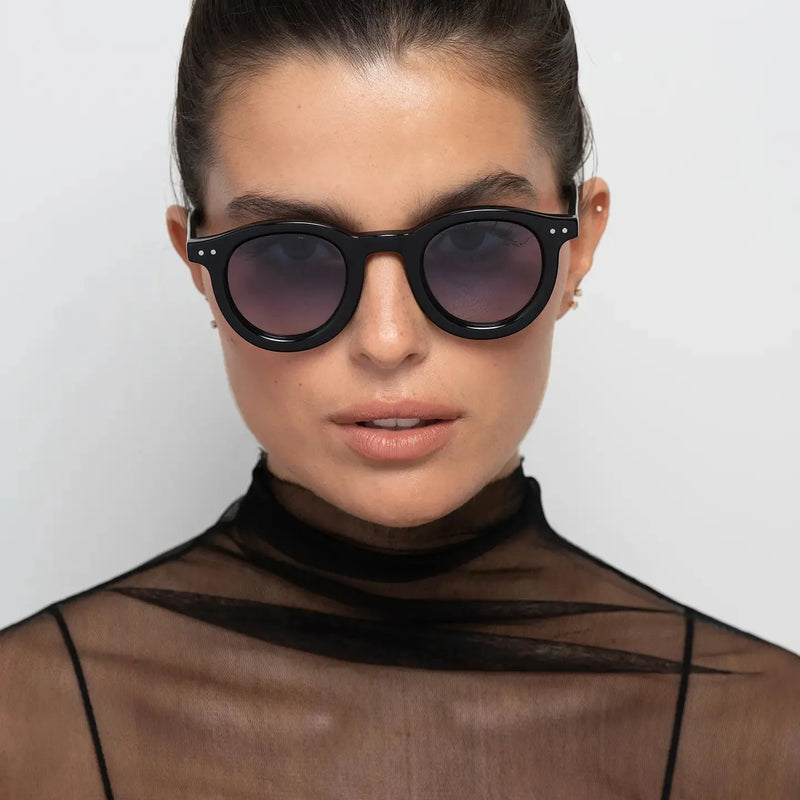
Choosing between green and brown sunglasses may seem like a simple colour preference, but lens colour changes far more than the appearance of the frame. It affects how naturally you see colour, how much contrast you perceive, how comfortable your eyes feel in bright light and how easily the sunglasses fit into your everyday routine.
Green lenses usually create a calmer and more balanced visual experience, while brown lenses create a warmer image with stronger contrast and more noticeable depth.
Many people focus first on frame shape, acetate colour or face shape. Those choices matter, but the lenses are the part of the sunglasses you experience every second you wear them. A frame may define how the sunglasses look from the outside, but the lens colour defines how the world looks from the inside.
Green and brown lenses can both be excellent choices when they provide the right level of UV protection. The difference is not about which colour is universally better. The real question is which visual experience suits your lifestyle, your environment and the way you prefer to see the world.
If you are comparing other lens tones, our guide to Brown vs Grey Sunglasses explains how warm and neutral lenses differ for everyday wear, driving and outdoor use.
For a deeper understanding of how frame colour changes the overall impression of sunglasses, read Black vs Tortoise Sunglasses, where we compare structure, contrast and long-term versatility.
Quick Answer: Green vs Brown Sunglasses

Green sunglasses are usually better if you want natural colour perception, balanced brightness and a calm visual experience for everyday wear. Brown sunglasses are usually better if you want warmer tones, stronger contrast and more visual depth in bright or changing outdoor conditions.
Choose green lenses if you want your sunglasses to reduce brightness without strongly changing the way colours appear. Choose brown lenses if you want the world to look warmer, richer and more defined.
The most important difference between green and brown sunglasses is not how they look on a table. It is how they change your visual confidence after two or three hours of wear. Green lenses tend to disappear into daily use. Brown lenses tend to shape the atmosphere more visibly.
The Mistake Most Buyers Make With Lens Colour

The most common mistake when comparing green and brown sunglasses is confusing frame colour with lens colour. A pair of sunglasses can have an olive green frame and brown lenses. It can also have a tortoise frame and green lenses.
For visual performance, the lens colour matters more than the frame colour. For appearance, both need to work together.
This distinction is important because a product name may describe the acetate colour rather than the lens tint. If you are choosing sunglasses for colour accuracy, contrast or driving comfort, look at the lens specification first. If you are choosing for facial balance and styling, then consider how the lens tone works with the frame.
In other words, green sunglasses can mean two different things: sunglasses with green lenses, or sunglasses with a green frame. This article focuses primarily on lens colour because lens colour is what changes your visual experience.
When comparing sunglasses, separate three decisions: lens colour, frame colour and frame shape. Each affects the final result in a different way.
Why Green Lenses Create a More Balanced View

Green lenses are valued because they reduce brightness while keeping colours relatively natural. Instead of making the world feel heavily tinted, they create a steady visual field that remains easy to live with throughout the day.
This makes green lenses particularly useful for people who want sunglasses that feel versatile rather than specialised.
In everyday environments, green lenses help soften glare from roads, pavements, windows, cars and open spaces without making the entire scene feel overly warm. Colours remain recognisable, contrast stays controlled and the overall image feels calm.
This is why green lenses often work well for city life, travelling, commuting, casual weekends and general daily wear. They reduce the intensity of sunlight without making the sunglasses feel like they are constantly changing the atmosphere around you.
Green lenses are not designed to create the strongest possible contrast. Their strength is restraint. They support visual comfort while preserving a sense of realism.
If you prefer the balanced character of green lenses, the William Tortoise combines warm tortoise acetate with green lenses. The rounded silhouette softens facial definition, while the lens tone supports clarity, calmer contrast and everyday visual balance.
Why Brown Lenses Create More Warmth and Contrast

Brown lenses create a different visual experience. Instead of preserving colour as neutrally as possible, they introduce warmth and increase perceived contrast. The result is a richer image with more separation between light, shadow and texture.
This makes brown lenses especially effective when your surroundings contain natural surfaces, changing terrain or strong sunlight.
Brown lenses can make earth tones, greenery, stone, sand, roads and shadows appear more defined. They do not simply make the world darker. They make certain details easier to read, which is why many people enjoy brown lenses for walking, driving, travelling and longer outdoor days.
The trade-off is that brown lenses change colour perception more noticeably than green lenses. Whites may look warmer, landscapes may feel more golden and shadows may appear deeper. For many wearers, this is part of the appeal. For others, it may feel less neutral than they prefer.
If you enjoy a warmer visual experience, the Triboulet Tortoise Gradient Brown combines sculptural panto geometry with gradient brown lenses. The lens tone softens brightness while maintaining clarity, depth and balanced contrast.
Green Lenses Preserve Balance While Brown Lenses Add Definition

The easiest way to understand the difference is to think of green lenses as balancing lenses and brown lenses as defining lenses.
Green lenses reduce brightness while keeping the scene visually steady. Brown lenses reduce brightness while adding warmth, depth and contrast.
This distinction matters because sunglasses are not only about protection. They are also about visual interpretation. Two lenses can provide similar sun protection yet make the same street, coastline or landscape feel completely different.
Green lenses are often better when you want your vision to feel predictable. Brown lenses are often better when you want your vision to feel richer. The decision is not simply technical. It is experiential.
If you dislike lenses that make the world feel too tinted, green will usually feel safer. If you enjoy a more cinematic, warm and contrast-rich view, brown will usually feel more satisfying.
If you want your sunglasses to interfere as little as possible with colour perception, choose green. If you want your lenses to actively enhance warmth and surface definition, choose brown.
Which Lens Colour Is Better for Driving?

Both green and brown lenses can work well for driving, but they support different priorities on the road.
Green lenses are often better for drivers who want natural colour perception and a calmer view. Brown lenses are often better for drivers who want stronger contrast on open roads or changing landscapes.
Green lenses help keep traffic lights, road signs, vehicles and surrounding colours closer to their natural appearance. This can be useful for daily driving, city routes and situations where visual accuracy feels more important than added contrast.
Brown lenses can be helpful when the road environment changes frequently. Countryside routes, coastal roads, bright open spaces and areas with alternating sun and shadow may feel easier to read because brown lenses make texture and contrast more noticeable.
For urban driving, green lenses often feel calm and dependable. For longer scenic drives, brown lenses can feel more supportive because they reveal more surface detail. The best choice depends on where you drive most often.
For driving, avoid choosing lens colour only by appearance. The right driving lens should make the road feel easier to read, not more dramatic or visually distracting.
Which Lens Colour Works Better Outdoors?

Outdoor environments often reveal the difference between green and brown lenses more clearly than city settings. Natural spaces contain changing light, uneven surfaces, shadows, plants, stone, sand, water and distance. Each lens colour responds to these elements differently.
Brown lenses usually feel stronger outdoors because they enhance contrast and make natural scenery appear warmer, deeper and more textured.
When walking, hiking, travelling or spending time near the coast, brown lenses can make the environment easier to read. Paths, rocks, trees, shadows and changes in surface often feel more defined. This can make long periods outside more visually comfortable and more immersive.
Green lenses still perform very well outdoors, especially if you prefer the scene to remain more natural. They reduce brightness while keeping colours calmer and less altered. This can be useful if you spend time moving between urban and natural environments throughout the same day.
Think of brown as the more expressive outdoor lens and green as the more balanced all-round lens.
For outdoor use, Triboulet Tortoise Gradient Brown is particularly relevant because the gradient brown lenses soften harsh brightness while the panto silhouette maintains structure, comfort and long-term wearability.
Frame Colour and Lens Colour Should Work Together
Lens colour should never be considered separately from the frame. The most successful sunglasses feel coherent because the lens tint, acetate colour and frame geometry all move in the same visual direction.
Green lenses often work well when the goal is balance, clarity and classic restraint. Brown lenses work especially well when the frame already contains warmth, depth or softer contrast.
This distinction is important because a green frame does not automatically mean green lenses. A product may have olive acetate and brown lenses, or tortoise acetate and green lenses. What matters editorially is the actual lens colour, not only the frame colour.
For example, an olive frame with brown gradient lenses creates a warm, softened effect. A tortoise frame with green lenses creates a more classic and balanced effect. Both can be refined, but they solve different visual problems.
The best result happens when the lens colour supports the frame’s geometry. Strong rectangular frames can feel softer with brown gradient lenses. Rounded tortoise frames can feel more balanced with green lenses. The relationship between lens and frame is what creates visual harmony.
The Jane Olive Green demonstrates this distinction clearly. Although the acetate is olive green, the frame uses gradient brown lenses, creating warmth, softer contrast and a more approachable rectangular silhouette.
A Simple Comparison Makes the Choice Easier

If you are still undecided, comparing green and brown lenses side by side can make the decision more practical.
| Feature | Green | Brown |
|---|---|---|
| Colour | Natural | Warmer |
| Contrast | Controlled | Stronger |
| Depth | Natural | Enhanced |
| Driving | Colour accuracy | Road contrast |
| Outdoor | Very good | Excellent |
| City | Excellent | Very good |
| Style | Classic | Warm |
| Best for | Daily balance | Outdoor depth |
For most people, the choice becomes clear once they understand their own visual preference. If you want your sunglasses to feel calm and almost invisible in use, green lenses are usually the better direction. If you want more atmosphere, warmth and contrast, brown lenses will often feel more satisfying.
Green Lenses Usually Feel More Versatile for Everyday Wear

Everyday sunglasses need to work across many situations: walking, driving, sitting outside, travelling, shopping, commuting and moving between shade and sunlight. For this kind of use, green lenses are often especially effective because they do not push the visual image too far in one direction.
Green lenses feel versatile because they reduce brightness while keeping the world visually familiar.
This makes them easy to adapt to. They do not make colours feel overly warm, they do not create a heavily stylised view and they do not compete strongly with the frame. Instead, they create a stable visual experience that works quietly in the background.
This is one reason green lenses are useful when you want one pair of sunglasses to cover many situations. They may not be the most dramatic option, but that restraint is exactly what makes them practical.
The William Tortoise is a strong everyday example because its green lenses create visual balance while the rounded tortoise frame adds warmth, structure and softer facial definition.
Brown Lenses Usually Feel Stronger for Long Days Outdoors

Brown lenses often become more valuable the longer you spend outside. Their warmth and contrast can make bright natural environments feel easier to read and more comfortable over time.
Instead of simply darkening the scene, brown lenses help separate textures, shadows and surfaces, creating a richer outdoor experience.
This can be helpful when your surroundings change frequently. A coastal walk may include sand, water, stone, glare and shadow. A countryside route may include trees, roads, uneven ground and open sunlight. Brown lenses help these elements feel more defined.
That does not mean brown lenses are only for outdoor activities. They can also work beautifully for everyday use, especially if you enjoy warmer colours and richer contrast. But their strongest advantage usually appears when natural light and varied terrain are part of your day.
The Triboulet Tortoise Gradient Brown is especially suited to this visual experience. Its gradient brown lenses preserve depth and contrast while the oversized panto silhouette creates stronger facial definition without becoming visually overpowering.
Lens Colour Also Changes the Personality of the Frame

Sunglasses are functional, but they are also highly visible. The colour of the lenses changes the emotional tone of the frame just as much as the acetate colour.
Green lenses usually feel classic, composed and understated. Brown lenses usually feel warmer, softer and more expressive.
If your wardrobe includes black, navy, denim, white, grey or simple tailoring, green lenses often integrate naturally because they do not introduce too much warmth. They create balance without becoming the loudest part of the frame.
If your wardrobe includes beige, cream, brown, olive, linen, leather or earth tones, brown lenses may feel more natural because they echo those warmer colours. They can make the sunglasses feel more relaxed and tonal.
This is why the right lens colour is not only about light conditions. It is also about visual identity. The sunglasses should make sense with your face, your clothing and the environments where you actually wear them.
Look at your wardrobe before choosing lens colour. The sunglasses you wear most often are usually the ones that already make sense with the colours you choose every day.
Ask Yourself These Questions Before Choosing

If you still feel unsure, the decision usually becomes clearer when you stop asking which lens colour is better and start asking which one fits your real life.
Before choosing between green and brown sunglasses, ask yourself:
- Do I prefer colours to look natural or warmer?
- Do I spend more time in cities, on the road or outdoors?
- Do I want calm visual balance or stronger contrast?
- Will these be my main everyday sunglasses?
- Do I usually wear cooler neutrals or warmer earth tones?
- Do I want the lenses to feel subtle or expressive?
- Do I dislike lenses that noticeably change colour perception?
- Do I want stronger definition when walking, driving or travelling?
Answering these questions usually leads to a better decision than choosing the lens colour that looks more attractive in product photography.
The best sunglasses are not defined by one ideal lens colour. They are defined by how naturally the lenses, frame, face and lifestyle work together.
The right lens colour should reduce hesitation, not create more of it. If you immediately understand where and when you would wear a pair, that is usually a strong sign.
Which Lens Colour Is Right for You?
After comparing green and brown lenses from every angle, the conclusion is clear: neither colour is universally better. Both can provide excellent sun protection, both can improve visual comfort and both can become highly wearable when paired with the right frame.
The better choice depends on the visual experience you want most often.
Choose green lenses if you want natural colour perception, balanced brightness and a lens that feels calm during everyday use. Green is especially strong when you want one pair of sunglasses for city life, commuting, driving and general wear.
Choose brown lenses if you want warmth, contrast and more visual depth. Brown is especially strong when you spend more time outdoors, enjoy natural scenery or want your sunglasses to make the world appear richer and more defined.
Instead of choosing based on trend, choose based on the way you want to see. Sunglasses become much easier to buy when the question changes from “Which colour looks better?” to “Which colour feels better for the way I live?”
The best lens colour is rarely the one that looks most impressive online. It is the one that feels natural every time you leave the house.
The Bo Bo Noir Approach to Green and Brown Lenses

At Bo Bo Noir, lens colour is never treated as an isolated design detail. Each combination of acetate, lens tint and frame geometry is considered as one complete visual composition.
Green lenses are used to support balance, clarity and softer everyday contrast. Brown lenses are used to introduce warmth, depth and a more expressive visual experience.
If you prefer the balanced character of green lenses, William Tortoise combines rounded proportions, layered tortoise acetate and green lenses for a calm but distinctive everyday frame.
If you prefer brown lenses with more warmth and contrast, Triboulet Tortoise Gradient Brown offers a stronger panto silhouette with gradient brown lenses designed to soften brightness while maintaining clarity and visual depth.
For a more directional expression of brown gradient lenses, Jane Olive Green pairs olive acetate with gradient brown lenses, creating a structured rectangular frame with warmth, softness and distinctive facial definition.
To compare every silhouette, acetate colour and lens combination, explore the complete Bo Bo Noir Sunglasses Collection.
Key Takeaways
- Green lenses usually preserve colour perception more naturally than brown lenses.
- Brown lenses usually create a warmer image with stronger contrast and depth.
- Green sunglasses are especially useful for everyday wear, city use and balanced visibility.
- Brown sunglasses are especially useful for outdoor environments, travel and changing light.
- Green lenses feel calmer and more restrained.
- Brown lenses feel richer, warmer and more expressive.
- Frame colour and lens colour should be considered together.
- A green frame does not always mean green lenses.
- Brown gradient lenses can soften stronger frame shapes.
- The best lens colour depends on your lifestyle, wardrobe and preferred visual experience.
Frequently Asked Questions
Are green lenses better than brown lenses?
Green lenses are better if you want natural colour perception, balanced brightness and a calm everyday view. Brown lenses are better if you want warmth, stronger contrast and more noticeable depth.
Are brown lenses better for driving?
Brown lenses can be excellent for driving because they enhance contrast and help road texture, shadows and changing landscapes appear more defined. Green lenses are also strong for driving when natural colour perception is more important.
Do green lenses make colours look natural?
Yes. Green lenses usually preserve colour relationships more naturally than warmer lens colours, making them a strong option for people who want sunglasses that reduce brightness without heavily changing the scene.
Do brown lenses improve contrast?
Yes. Brown lenses are known for increasing perceived contrast, which can make textures, surfaces, shadows and natural environments appear more defined.
Which lens colour is better for everyday wear?
Green lenses are often better for everyday wear because they feel balanced, calm and versatile across many situations. Brown lenses can also work well every day if you prefer a warmer and more contrast-rich visual experience.
Which lens colour is better outdoors?
Brown lenses are often preferred outdoors because they enhance contrast and depth in natural environments. Green lenses are better outdoors if you want the scene to remain more neutral and less visually altered.
Which lens colour is better for city use?
Green lenses are often very effective for city use because they reduce brightness while keeping colours natural. They work well for commuting, walking, travelling and daily routines.
Do brown lenses change colours more than green lenses?
Yes. Brown lenses usually create a warmer image and alter colour perception more noticeably than green lenses. Green lenses tend to preserve colours more naturally.
Are green sunglasses good for bright sunlight?
Yes, green sunglasses can be effective in bright sunlight when the lenses provide the appropriate protection category and UV protection. Their strength is reducing brightness while keeping the visual image balanced.
Are brown lenses more relaxing?
Many wearers find brown lenses relaxing outdoors because they soften harsh brightness while increasing contrast. This can create a warm and comfortable viewing experience during long periods in natural light.
Which lens colour looks more classic?
Green lenses often feel more classic and understated, especially when paired with tortoise, black or traditional acetate colours. Brown lenses feel warmer, softer and more expressive.
Which lens colour works best with tortoise frames?
Both green and brown lenses can work well with tortoise frames. Green lenses create a classic and balanced effect, while brown lenses create a warmer and more tonal combination.
Which lens colour works best with olive frames?
Brown gradient lenses often work beautifully with olive frames because both tones share warmth and softness. This creates a coherent, natural-looking colour relationship.
Should I choose lens colour based on style or performance?
You should consider both. Lens colour affects visual comfort and perception, while also changing the personality of the sunglasses. The best choice works for your eyes, your wardrobe and your lifestyle.
Can lens colour affect how sunglasses look on my face?
Yes. Lens colour changes the visual weight and character of the frame. Green lenses often feel calmer and more classic, while brown lenses can make sunglasses appear warmer and more expressive.
Are green or brown lenses better for sensitive eyes?
Both can be comfortable if the lens quality and protection level are appropriate. Green lenses may feel calmer for people who prefer neutral colour perception, while brown lenses may feel easier outdoors because of their enhanced contrast.
What is the safest choice if I am unsure?
If you are unsure, choose green lenses for the most balanced everyday experience or brown lenses if you already know you prefer warmth, contrast and outdoor depth.
👁 You May Also Like
If you are comparing lens colours and frame styles, these guides will help you make a more confident decision while understanding how every design choice influences appearance, comfort and everyday wearability.
Brown vs Grey Sunglasses
Discover how brown and grey lenses compare in contrast, colour perception and everyday versatility.
Read the article →
Gradient vs Solid Lenses
Understand how different lens finishes influence visibility, comfort and everyday usability.
Read the article →
Warm vs Cool Tone Sunglasses
Learn how colour temperature affects facial harmony and helps you choose frames that complement your complexion.
Read the article →
Black vs Tortoise Sunglasses
Explore how frame colour changes visual presence, versatility and personal style.
Read the article →
What Makes Sunglasses Look Flattering?
Learn how frame geometry, balance and proportion influence the way sunglasses look on your face.
Read the article →