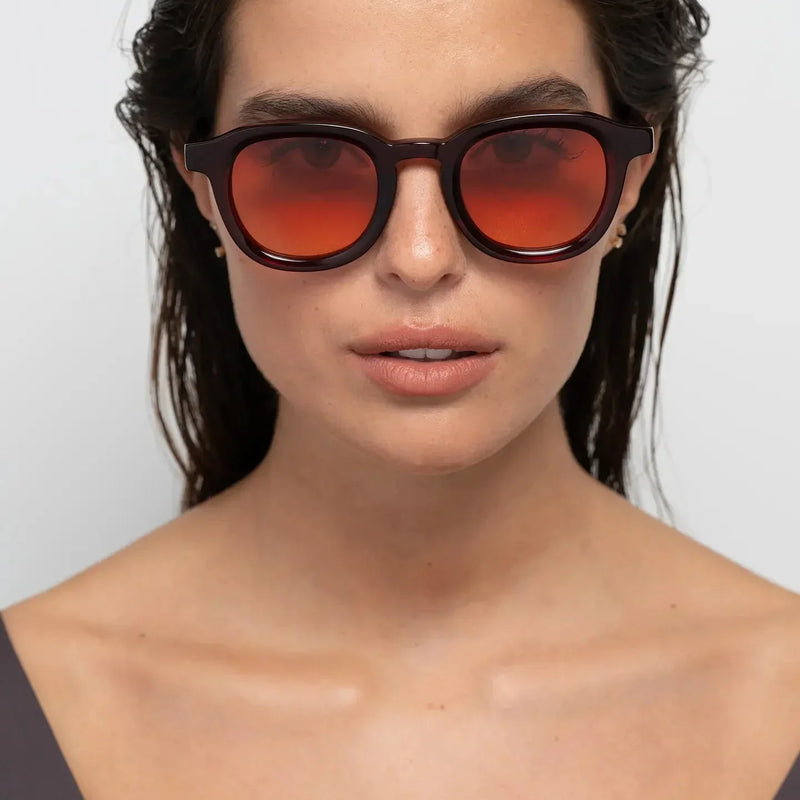
Search for the best French eyewear brands and you will quickly encounter the same vocabulary: Parisian style, craftsmanship, heritage and luxury. Those ideas can all be relevant, but none tells you which frame you should actually buy. French eyewear in 2027 spans architectural refinement, substantial heritage acetate, expressive colour, experimental construction, specialist panto shapes and fully bespoke eyewear. That diversity is precisely what makes the category interesting. AHLEM, Lesca Lunetier, Anne & Valentin, Pantos Paris, J.F. Rey, Lafont, Maison Bonnet, Thierry Lasry, Nathalie Blanc and Vuillet Vega do not belong in this guide for the same reason. Some stand out through manufacturing expertise; others through a design language recognisable before you notice the name on the temple. There is also an important distinction between a French eyewear brand, eyewear designed in France and eyewear made in France. They can overlap, but they are not interchangeable. Production can vary by brand, collection, material and even individual model, so this guide does not use “French craftsmanship” as a catch-all description. Instead, we will look at what each brand actually contributes — design language, material, proportion, colour, manufacturing, heritage and visual identity — so you can identify which part of French eyewear you are really looking for. The French eyewear brands most worth knowing in 2027 include AHLEM, Lesca Lunetier, Anne & Valentin, Pantos Paris, J.F. Rey, Lafont, Maison Bonnet, Thierry Lasry, Nathalie Blanc and Vuillet Vega. Together they cover architectural luxury, heritage acetate, graphic colour, specialist panto design, experimental construction, French manufacturing, bespoke eyewear and statement sunglasses. There is no meaningful universal number one. AHLEM is particularly compelling for architectural refinement, Lesca for substantial heritage-informed acetate, Anne & Valentin for colour and expression, Pantos Paris for focused panto design and Maison Bonnet for bespoke eyewear. The best choice depends on what you want the frame to do for you. BBN insight “French eyewear” is useful for discovery, but nationality does not tell you whether a frame will work on your face. Once you have found the brands, compare the variables you will actually experience: silhouette, frame width, lens depth, brow relationship, acetate thickness, colour, visual weight and the amount of identity you want your eyewear to carry. This is not a ranking based on fame, price or how often a brand appears in fashion media. The selection focuses on French eyewear brands that provide a distinctive and defensible reason to explore them. We considered design identity, heritage, materials, manufacturing provenance, construction, colour, innovation and relevance to someone actually choosing eyewear. That allows a historic manufacturer and a younger independent design brand to belong in the same guide without pretending they offer the same thing. Differentiation matters too. Pantos Paris earns attention through an unusually focused exploration of panto geometry. Maison Bonnet represents an entirely different world of made-to-measure eyewear. Lesca brings substantial acetate and mid-century references into the conversation, while J.F. Rey pushes much further into construction and experimentation. Most importantly, “best” does not mean best for everyone. An exceptional frame can still be wrong for your proportions, wardrobe, desired visual effect or everyday habits. Each brand therefore has to answer two practical questions: what does it do particularly well, and who is most likely to value that? That makes the list more useful than a conventional prestige ranking. You are not choosing the most impressive brand name. You are identifying the design territory in which you are most likely to find the right frame. Rather than force ten very different maisons into an artificial first-to-tenth ranking, the shortlist below identifies the strongest reason to explore each one. The table is the shortcut. The differences become more useful when we look at the frames themselves — because “architectural”, “bold”, “expressive” and “heritage” only mean something when you can see what those decisions do to proportion and visual weight. There is no single French eyewear look. What makes the category unusually rich is the overlap between a long manufacturing culture and designers willing to develop very different visual languages. The industrial history matters. Morez and the wider Jura region have a deep association with eyewear production, and contemporary French brands continue to draw on specialist manufacturing knowledge in different ways. Some make French production central to their proposition; others combine French creative identity with specialist production elsewhere. But manufacturing alone does not explain why these brands look different. Compare AHLEM with Lesca. AHLEM can make substantial material feel controlled through geometry, surfaces and detail. Lesca deliberately allows acetate volume and historic references to become much more visible. Then compare both with Anne & Valentin, where colour and graphic relationships can become part of the identity of the face itself. Or Pantos Paris, which demonstrates how far a brand can go by repeatedly interrogating one established eyewear family rather than continually chasing new silhouettes. This suggests a more useful definition of good independent eyewear: not novelty for its own sake, but enough conviction in a design idea to develop it deeply. BBN insight A useful distinction appears when AHLEM and Lesca are viewed side by side: frame thickness and visual weight are not the same thing. Two acetate frames can use substantial material while producing very different impressions because width, lens depth, bridge position, bevels, colour and brow-line structure redistribute that visual weight. If you want to understand this before buying, see What Makes a Frame Feel Substantial Without Being Heavy. No. “French brand”, “designed in France” and “Made in France” describe different things. They may overlap, but a buyer should not assume that one automatically guarantees the others. Anne & Valentin is a good example of why the distinction matters. The company describes Made in France as an ongoing commitment and says it has worked with the same factories in the Jura for more than two decades, while noting an exception for some titanium models produced in Japan. Lesca follows a different model. The company describes working with artisans in several European countries, notably France and Germany, while emphasising limited series and human-scale workshops and factories rather than mass production. Pantos Paris makes French manufacture more central to its proposition, while Lafont documents production in the Jura and states that a substantial proportion of its collections carry Origine France Garantie. Thierry Lasry provides yet another useful example: depending on the specific model, production can be in France or Italy. That variation is not something to hide. It is useful information. Specialist eyewear production exists across Europe and beyond, and design provenance and manufacturing provenance can both matter without being the same thing. If Made in France is an important reason for your purchase, verify the manufacturing information for the specific brand, collection and, when necessary, model. Do not let the word “Paris” do the work of a manufacturing statement. Before paying a premium for origin, ask three questions Where was the brand founded? Where is the design direction based? Where is this particular frame manufactured? All three facts can add value, but they describe different parts of the product. Separating them makes comparisons between French and other European independent eyewear considerably more meaningful. AHLEM is one of the strongest choices in French eyewear for buyers who interpret luxury through proportion, material and finishing rather than conspicuous branding. Founded in 2014 by Paris-born designer Ahlem Manai-Platt, the brand has repeatedly connected its design philosophy with architecture, material culture and early twentieth-century Bauhaus principles. What makes that architectural language relevant is not simply whether a frame looks angular or minimal. It appears in the relationship between lens geometry, bridge, brow line, acetate depth and edge treatment. Small changes in those areas can make a substantial frame feel controlled rather than blunt. The Simon image above demonstrates the point. Its personality does not depend on a logo or an unusual decorative device. The frame gets its identity from the way the upper line, lens shape and material volume have been resolved together. That makes AHLEM particularly relevant if you are the kind of buyer who notices details after the first impression. The attraction is less about instant novelty and more about the frame continuing to reveal why its proportions work. Consider AHLEM if: you value architectural proportion, sophisticated material treatment, specialist craft and refinement that rewards close inspection. Consider another direction if: you primarily want colour, overt retro character or a silhouette whose personality is immediately more forceful. Lesca Lunetier is one of the most compelling French names for buyers attracted to substantial acetate, generous proportions and eyewear informed by mid-century design. Founded in 1964, the family business draws strongly from the visual culture of the 1950s and 1960s, when cellulose acetate became central to some of the most recognisable European eyewear forms. The Pica is particularly useful for understanding the appeal. It belongs broadly to the panto family, but describing it simply as “round” misses most of what gives it presence. The compact lens geometry, strong upper frame, keyhole-like bridge relationship and material surrounding the lenses create a much more substantial expression than a fine conventional round frame. That visual weight can be an advantage. On a face that benefits from stronger definition, substantial acetate can establish a clearer brow line and give the eyewear enough scale to become intentional rather than incidental. But more material is not automatically better: on a smaller face or for someone who prefers quiet eyewear, the same qualities can dominate. Consider Lesca if: you like vintage-informed geometry, sculpted acetate, panto shapes and frames with visible material presence. Consider another direction if: you prefer fine profiles, minimal visual weight or contemporary refinement with fewer obvious heritage references. Another European perspective This is where researching French eyewear can become more useful than simply buying French. If Lesca appeals because of substantial acetate, recognisable geometry and frames that carry identity, those are the attributes to continue following — even when the search moves beyond France. Bo Bo Noir approaches that broader design-led eyewear territory from Portugal, with creative direction centred on strong silhouettes, considered proportions and classic forms reinterpreted through a contemporary, restrained lens. The objective is not to reproduce French eyewear, but to offer another independent European design perspective for people who want the frame itself to shape personal style. Anne & Valentin is one of the strongest French eyewear choices for people who want their glasses to contribute visibly to personal expression. Born from the work of Toulouse opticians Anne and Valentin, the brand has developed a design language in which line, colour and geometry are not finishing touches; they are often the reason the frame exists. That makes Anne & Valentin useful for understanding an important distinction in bold eyewear. A frame does not need to become physically enormous to have presence. Contrast, colour placement, lens geometry and the relationship between curves and angles can create visual intensity without simply adding more material. This is particularly relevant if neutral black or tortoise frames tend to feel too predictable on you. Colour can introduce warmth, contrast or an unexpected focal point, while graphic geometry can change how the eye reads the width and vertical proportions of the face. The trade-off is versatility. A highly expressive frame asks for a stronger commitment than a restrained neutral. That does not make it less wearable; it means the frame needs to feel connected to your actual wardrobe and identity rather than appealing only because it looks interesting in isolation.
What are the best French eyewear brands in 2027?
In this guide
How we selected the best French eyewear brands for 2027
The 10 best French eyewear brands to know in 2027
Brand
Best for
Design territory
Explore it if you value...
AHLEM
Architectural refinement
Controlled geometry, sophisticated material work and precise detailing.
Proportion, finishing and understated design complexity.
Lesca Lunetier
Heritage acetate
Generous proportions, sculpted acetate and strong mid-century references.
Material presence, vintage geometry and substantial frames.
Anne & Valentin
Colour and expression
Graphic lines, unconventional colour relationships and visible personality.
Individuality and eyewear that actively changes a look.
Pantos Paris
Panto specialists
Focused exploration of panto geometry through different scales, thicknesses and details.
Classic panto proportions interpreted with a stronger design point of view.
J.F. Rey
Experimental design
Inventive construction, colour and unconventional material combinations.
Technical creativity and more radical visual identities.
Lafont
French manufacturing and colour
Parisian design, sophisticated colour work and a strong connection to Jura production.
French provenance, colour and established savoir-faire.
Maison Bonnet
Bespoke eyewear
Made-to-measure eyewear developed around the individual face.
Personalisation and a genuinely bespoke relationship with the frame.
Thierry Lasry
Statement sunglasses
Strong geometry, expressive acetate and fashion-conscious silhouettes.
Immediate presence and sunglasses with stronger styling impact.
Nathalie Blanc
Refined Parisian eyewear
Elegant lines and close attention to proportion and the face.
Balance, refinement and quieter sophistication.
Vuillet Vega
French manufacturing heritage
A historic connection to Morez and French eyewear production.
Provenance, manufacturing history and French savoir-faire.

What makes French eyewear different?
Does a French eyewear brand mean the glasses are Made in France?
AHLEM — best for architectural refinement
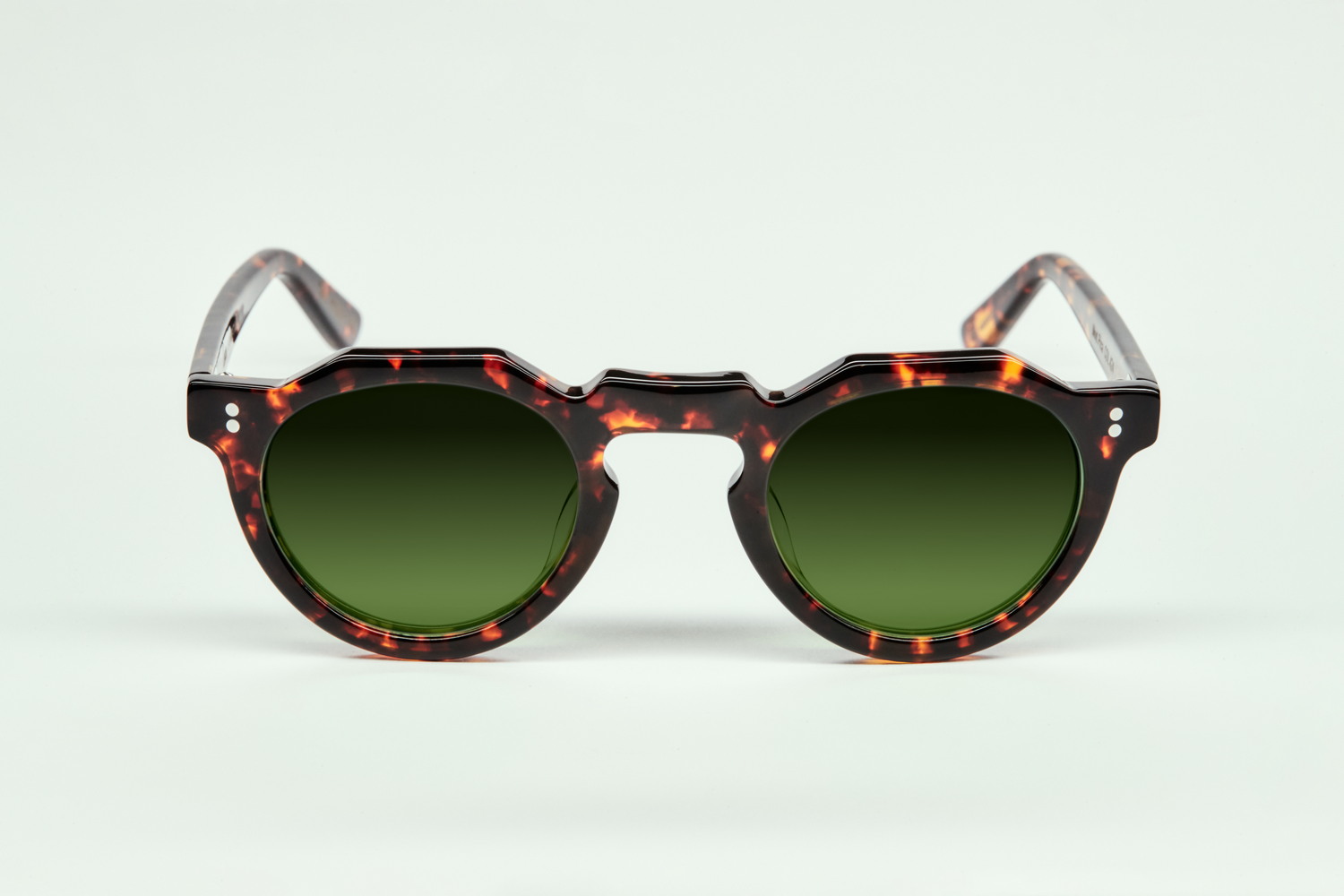
Lesca Lunetier — best for heritage acetate

Anne & Valentin — best for colour and expressive design

Consider Anne & Valentin if: you enjoy colour, graphic design and eyewear that deliberately becomes part of your visual identity.
Consider another direction if: you want one understated frame to disappear easily into almost every outfit or prefer material and proportion to carry the design more quietly.
BBN insight
Colour changes more than the mood of a frame. Dark opaque acetate usually creates a clearer boundary around the eyes, while translucent, muted or warmer colours can reduce perceived visual weight even when the physical frame remains substantial. This is why shape and colour should be evaluated together rather than as separate decisions. For a deeper look at that relationship, see Sunglasses Colour Trends 2027.
Pantos Paris — best for panto purists
Pantos Paris is unusual because its strength comes from narrowing the design problem rather than expanding it. Founded in 2015, the brand has built its identity around the historic panto form and explores that geometry through different proportions and treatments rather than trying to cover every eyewear trend.
Its Regular, Bold and Crown interpretations make the brand particularly useful for anyone trying to understand why two frames described as “panto” can look completely different on the face. Panto describes a geometric family, not a finished visual effect.
Increase acetate thickness and the eye reads a stronger perimeter around the lenses. Change the upper line and the relationship with the eyebrows becomes more assertive. Alter the bridge, lens depth or overall scale and the same curved-lower-lens concept can move from quiet and intellectual to substantially more expressive.
This focused approach also makes Pantos Paris one of the most relevant brands in this guide for someone who already knows they like panto eyewear but has not yet worked out how much panto they want.

Consider Pantos Paris if: you already respond to panto geometry and want to explore that shape through different levels of material presence and structure.
Consider another direction if: you are still experimenting with radically different frame families or want a brand whose identity spans rectangles, cat-eyes and more varied geometries.
A useful test if you think you want round glasses
Do not start by asking whether round glasses suit you. First distinguish between a true circle, a softened round shape and a panto. A panto typically gives you curvature through the lower lens while allowing more structure through the upper frame, which can create a very different relationship with the brow.
Then compare scale and thickness. If a delicate panto disappears too much, more acetate or a stronger upper line may provide the definition you want. If a substantial panto overwhelms your features, the solution may be less material rather than abandoning curved geometry altogether.

Why this matters when comparing brands
Pantos Paris and Bo Bo Noir should not be read as substitutes for one another. The useful comparison is the design variable: both demonstrate that choosing panto is only the beginning. If that geometry attracts you, compare acetate thickness, brow structure, colour, bridge, width and overall visual weight until you find the interpretation that feels like your own.
J.F. Rey — best for experimental French eyewear design
J.F. Rey belongs on this list because it represents a more experimental side of French eyewear. Rather than concentrating primarily on classic acetate silhouettes, the Marseille-based house has built a reputation around construction, colour, layering and combinations of materials that make the engineering of a frame part of its appearance.
This matters because “bold eyewear” is sometimes reduced to one formula: make the acetate thicker and the frame larger. J.F. Rey demonstrates another route. Visual interest can come from structure itself — overlapping elements, negative space, contrasting surfaces, metal interacting with acetate or colour appearing in unexpected areas.
The result can be more technical and graphic than the heritage-led approach of Lesca or the focused panto vocabulary of Pantos Paris. For the right wearer, that difference is precisely the attraction.
For someone building a first versatile eyewear wardrobe, however, the most experimental designs may require more commitment. The question is whether you want your glasses to support the rest of your style or become one of its principal visual events.
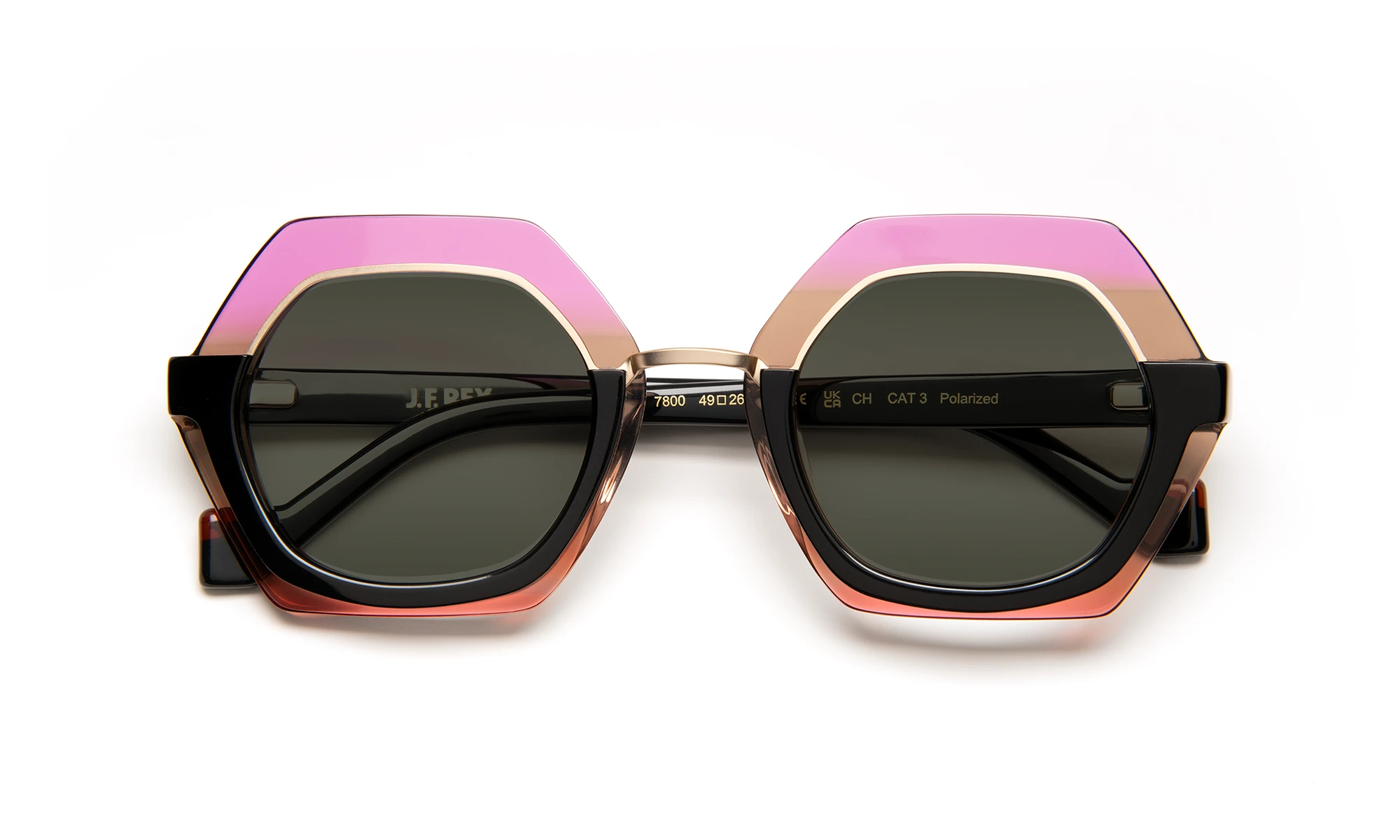
Consider J.F. Rey if: you enjoy eyewear as industrial or graphic design and want construction, colour and material combinations to remain visibly part of the object.
Consider another direction if: you prefer classic geometry, quieter surfaces or want the strongest design decision to come from silhouette rather than construction.
Lafont — best for French manufacturing and colour expertise
Lafont is particularly important in a guide to French eyewear because its proposition connects Parisian design with documented French manufacturing. The family house describes its frames as designed in Paris and manufactured in the Jura, while stating that around 80% of its collections carry Origine France Garantie.
That manufacturing story is more concrete than a generic appeal to savoir-faire. Lafont describes processes including five-axis acetate cutting, laser engraving and high-frequency bonding alongside the human skills involved in finishing and assembly.
But Lafont would be less interesting if manufacturing provenance were its only strength. Colour is central to the visual proposition. Layered acetates, pattern, transparency and unexpected combinations can give relatively familiar shapes a much more specific identity.
That combination makes Lafont useful for buyers who want French provenance without restricting themselves to conservative eyewear. Heritage and manufacturing capability can support expressive design rather than requiring the frame to look traditional.
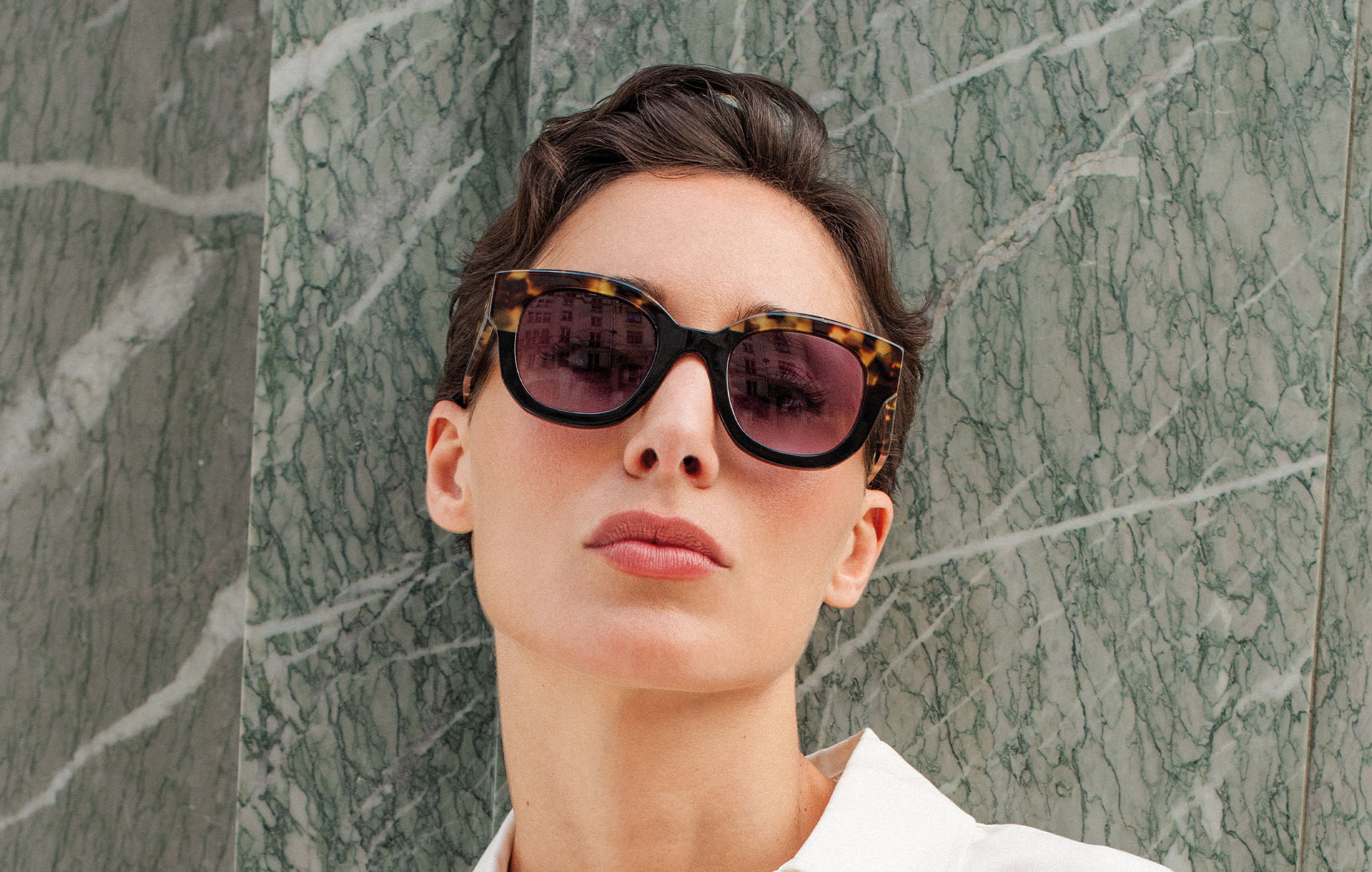
Consider Lafont if: French manufacturing provenance matters to you and you also want sophisticated colour, acetate pattern and a broad design vocabulary.
Consider another direction if: you are specifically looking for the concentrated aesthetic of a smaller design proposition, such as Pantos Paris's focus on one frame family or Maison Bonnet's bespoke approach.
BBN insight
A premium frame should give you something more specific than an expensive brand name. Depending on the maker, that value may come from manufacturing, material, finishing, design development, bespoke work or a genuinely distinctive visual language. Learning to separate those variables is one of the best ways to judge whether the premium matters to you. For a broader construction checklist, see How to Tell If Glasses Are High Quality.
Maison Bonnet — best for bespoke French eyewear
Maison Bonnet belongs in a different category from conventional ready-to-wear eyewear brands. Its relevance comes from the tradition of bespoke lunetterie: rather than asking which standard frame fits you best, the process can begin with the individual face and develop the eyewear around it.
That changes the design problem. In ready-to-wear eyewear, you adapt your choice to an existing combination of width, bridge, lens shape and temple geometry. In bespoke, those relationships can become variables in the creation itself.
The result is not automatically visually louder. In fact, bespoke can be particularly compelling when the objective is precision rather than spectacle: where the brow sits inside the frame, how much width extends beyond the face, how the bridge relates to the nose and how the overall scale supports the wearer's features.
Maison Bonnet therefore earns its place not because every eyewear buyer needs bespoke glasses, but because it represents the furthest end of a principle that applies to every purchase: the face should be part of the design decision.

Consider Maison Bonnet if: made-to-measure fit, individualisation and the experience of bespoke eyewear are central to what you want to buy.
Consider another direction if: you want the accessibility and immediacy of choosing from an established ready-to-wear design language rather than commissioning eyewear around the individual face.
Thierry Lasry — best for statement sunglasses
Thierry Lasry is one of the clearest choices in French eyewear for buyers who want sunglasses to function as a deliberate fashion statement. The French designer founded his namesake line in 2007, developing a visual language in which eyewear sits between fashion, beauty and architecture rather than acting as a neutral accessory.
Geometry is central to that identity. Rectangles, cat-eye references, oversized proportions and sculpted acetate frequently create a strong perimeter around the eyes. Colour and layered acetate then amplify the effect, giving the frame enough visual presence to become one of the first elements noticed in a look.
There is also a useful lesson here about provenance. Thierry Lasry is a French designer and the brand has a distinctly French creative identity, but individual models may be manufactured in France or Italy. CONFESSY, shown below, is handcrafted in Italy. That makes the brand a good example of why “French eyewear brand” and “Made in France” should never be treated as automatic synonyms.
For the buyer, the more important question is whether you want this degree of styling impact. Statement sunglasses can simplify an outfit because the frame does much of the visual work, but they also require more commitment than eyewear designed to recede quietly into the face.

Consider Thierry Lasry if: you want sunglasses with immediate presence, fashion awareness and enough geometry or acetate volume to become a defining part of an outfit.
Consider another direction if: you want quieter everyday eyewear, a stronger emphasis on French manufacturing provenance or a frame whose design reveals itself more gradually.
BBN insight
Rectangular sunglasses are effective because their horizontal structure can change the perceived proportions of the face before colour or styling is even considered. But width, lens depth and brow position determine whether that structure looks deliberate or simply oversized. If rectangles are the territory you are exploring, see Why Rectangular Sunglasses Are Back and How Frame Width Changes Facial Proportions.
Nathalie Blanc — best for refined Parisian eyewear
Nathalie Blanc offers a more controlled interpretation of French luxury eyewear, making the brand particularly relevant for buyers who want distinction without maximum visual intensity. The designer's background as an optician is significant because the brand's approach pays close attention to the relationship between line, proportion and the individual face.
That territory sits somewhere between anonymity and statement eyewear. A frame can be recognisable through proportion, colour and detail without requiring extreme thickness or unconventional construction. This is useful for someone who wants independent eyewear to feel considered but still needs it to move comfortably between different clothes and situations.
The Adèle sunglasses demonstrate that balance well. The silhouette carries a clear 1970s influence and enough scale to establish presence, while the tortoise and champagne treatment softens the effect compared with an opaque black frame of similar dimensions.
This is an important reminder that boldness is not a binary choice between invisible and oversized. Scale, transparency, colour and edge treatment can be adjusted independently, allowing a larger frame to feel lighter or a restrained shape to feel more distinctive.

Consider Nathalie Blanc if: you want refined proportions, elegant eyewear and a distinctive frame that does not need to become the loudest element of your appearance.
Consider another direction if: you are deliberately looking for heavier acetate, stronger graphic contrast or more experimental construction.
Vuillet Vega — best for French manufacturing heritage
Vuillet Vega deserves a place in this guide because it connects contemporary eyewear with one of the deepest manufacturing histories in the French industry. The house traces its roots in Morez to 1843 and has continued through six generations, making it a very different proposition from younger design-led brands founded in the last decade or two.
That history would mean little if it existed only as storytelling. Vuillet Vega states that more than 90% of the components used in its frames are manufactured in France and carries both Origine France Garantie and Entreprise du Patrimoine Vivant recognition.
For a buyer who cares specifically about French production, those details make the brand particularly relevant. They provide a more concrete basis for evaluating provenance than vague references to Parisian inspiration or French elegance.
At the same time, heritage should not be confused with nostalgia. A manufacturing tradition remains valuable only when it continues to produce frames worth wearing now. That is why Vuillet Vega belongs in a 2027 guide: the interesting proposition is continuity between specialist knowledge and contemporary eyewear, not age for its own sake.
This also exposes one of the weaknesses of many “best French eyewear brands” lists. If the selection contains only fashionable Parisian names, it misses part of what makes French eyewear genuinely distinctive: the manufacturing ecosystem behind the design culture.
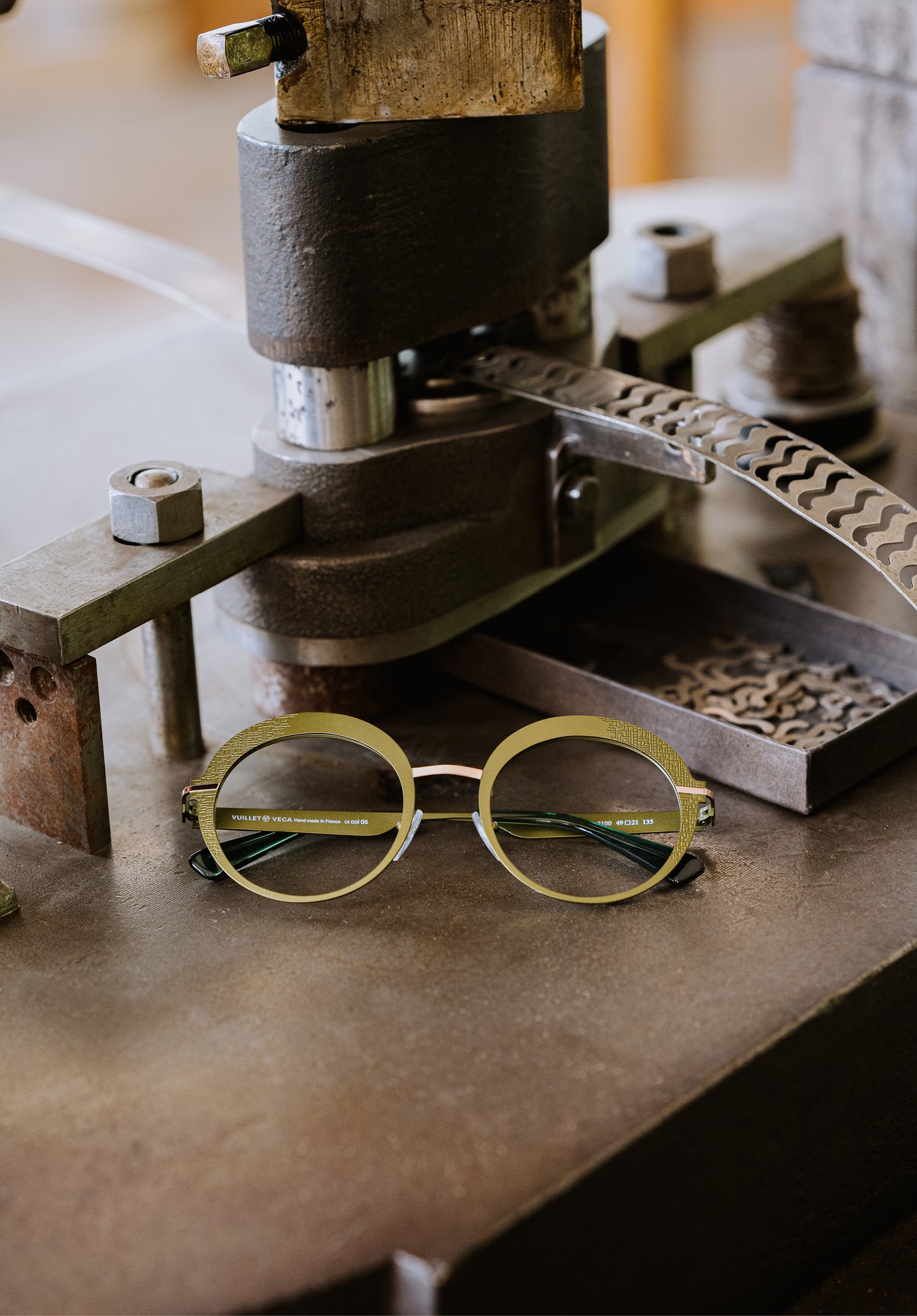
Consider Vuillet Vega if: French manufacturing provenance, historic savoir-faire and continuity of production matter strongly to your buying decision.
Consider another direction if: your priority is a highly specific contemporary fashion identity rather than manufacturing heritage.
What if you like French eyewear but want to look beyond France?
Once you understand what attracts you to French eyewear, nationality becomes less important than the design quality you were using France to find. This is the point where a brand-discovery search can become a much better buying decision.
If you respond to Lesca, perhaps what you actually want is substantial acetate, recognisable geometry and mid-century influence. If Pantos Paris catches your attention, the real attraction may be panto proportions and a frame with more material presence. Thierry Lasry may tell you that you want sunglasses to carry an outfit, while Anne & Valentin may reveal that colour is more important to you than you previously realised.
Those preferences exist beyond France. Italy has its own manufacturing and design traditions; Japan has extraordinary specialist eyewear expertise; Germany has a strong technical and independent design culture; and Portugal can offer another perspective on European product and creative design.
The useful shift is therefore from “Which country makes the best eyewear?” to “Which design philosophy produces the frame I am most likely to keep wearing?”
Translate the brand you like into a buying preference
If you like AHLEM: look for proportion, controlled detailing and material refinement.
If you like Lesca: look for substantial acetate, heritage geometry and material presence.
If you like Anne & Valentin: look for colour, graphic expression and personality.
If you like Pantos Paris: look for panto geometry, scale and upper-frame structure.
If you like J.F. Rey: look for construction, experimentation and unusual material relationships.
If you like Thierry Lasry: look for sunglasses with enough silhouette and visual weight to carry a look.
Bo Bo Noir — another independent European design perspective
If the qualities drawing you towards French independent eyewear are strong silhouettes, expressive acetate, considered proportions and frames with a recognisable identity, France does not need to be the end of the search. Bo Bo Noir approaches that broader territory through a different European design perspective.
Co-founded by Portuguese designer João Bessa, Bo Bo Noir develops eyewear around the idea that a frame should do more than complete a look — it should help shape it. The design language draws from classic forms and mid-century references but reinterprets them through cleaner contemporary lines, strong silhouettes and controlled proportions rather than treating retro design as costume.
That distinction matters in the context of this guide. The objective is not to reproduce Lesca, Pantos Paris, AHLEM or Thierry Lasry at another price point. Those brands have their own histories and design languages. The relevant overlap is the buyer: someone deliberately looking beyond mass-market eyewear because the frame itself matters.
Bo Bo Noir uses high-quality acetate and works with specialised eyewear production facilities with extensive industry experience, while its creative direction, brand development and design vision are based in Portugal. The resulting proposition is bold yet refined eyewear designed beyond short trend cycles.
If that sounds closer to what you were hoping to find when you searched for French independent eyewear, the next step is not to ask which French frame Bo Bo Noir resembles. It is to identify the visual effect you want and compare the models on those terms.

If you like substantial heritage-inspired acetate: consider William
If Lesca helped you realise that you prefer material presence and classic geometry, William Tortoise explores related buying priorities through Bo Bo Noir's own design language. The point of comparison is not imitation; it is substantial acetate + familiar geometry + contemporary proportion.
Creates: a strong perimeter around the eyes with softer curvature than a rectangular frame.
Best for: someone who wants round-influenced eyewear to have more presence rather than feeling fine or academically minimal.
Consider another direction if: your face or personal style benefits more from horizontal structure and sharper corners.
If you like stronger panto geometry: consider Narr or Triboulet
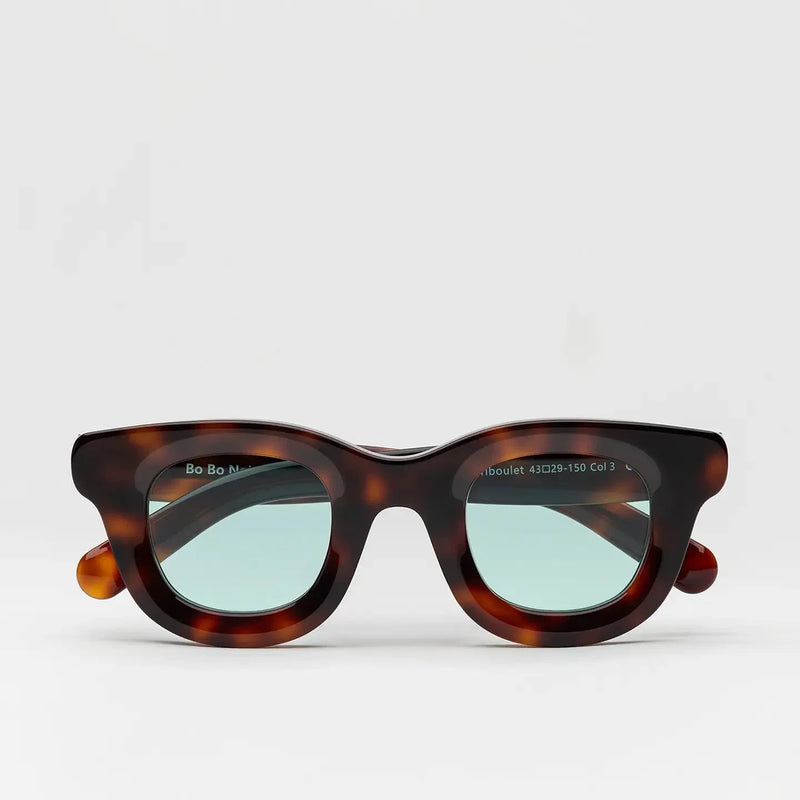
Pantos Paris makes a strong case for thinking beyond the word “round”. Bo Bo Noir's Narr Burgundy and Triboulet Tortoise Light Blue also use panto-influenced geometry, but colour, brow structure and material distribution create their own identities.
Narr creates: a stronger, warmer focal point through burgundy acetate and a defined upper frame.
Triboulet creates: a more visibly contrasted relationship between curved lower geometry and structured upper lines, amplified by the tortoise and light-blue acetate combination.
Choose between them by effect: not because both can be called panto, but according to the amount of colour, contrast and upper-frame definition you want.

If statement rectangles are what caught your attention: consider Jane
If Thierry Lasry confirmed that you want sunglasses with stronger horizontal structure, Bo Bo Noir's Jane Olive Green explores the rectangular territory for women through a bold silhouette and a more muted colour direction.
Olive is particularly useful here because it changes how the geometry is perceived. Compared with opaque black, the colour can make a substantial rectangular frame feel less severe while preserving the horizontal definition that gives the silhouette its authority.
Creates: stronger horizontal definition and a more structured relationship with the brow.
Best for: women who want their sunglasses to establish the look rather than disappear into it.
Consider another direction if: you want softer curved geometry or less visual structure around the eyes.

BBN perspective
The strongest reason to explore independent eyewear is not exclusivity for its own sake. It is the possibility of finding a design philosophy that aligns more closely with how you want to present yourself.
Whether the frame comes from France, Portugal or elsewhere, the better question remains the same: does its geometry, material, colour and visual weight feel intentional on you — and will that identity still make sense after the novelty of buying it has disappeared?
French eyewear brands compared: which design direction fits you?
At this point, the differences can be reduced to a more practical decision map. Start with the effect you want rather than the logo you recognise.
| If you want... | Start with... | What to examine |
|---|---|---|
| Architectural refinement | AHLEM | Bevels, surfaces, proportion, bridge and material finishing. |
| Substantial heritage acetate | Lesca Lunetier | Acetate volume, panto geometry, scale and mid-century references. |
| Colour and personality | Anne & Valentin | Colour relationships, contrast and graphic interaction with the face. |
| A dedicated panto vocabulary | Pantos Paris | Thickness, upper line, bridge, lens depth and overall scale. |
| Experimental construction | J.F. Rey | Layering, mixed materials, negative space and structural colour. |
| French manufacturing + colour | Lafont | Provenance, acetate treatment, pattern and colour. |
| Made-to-measure eyewear | Maison Bonnet | Individual fit, facial proportions and bespoke process. |
| Statement sunglasses | Thierry Lasry | Silhouette strength, scale, acetate and styling impact. |
| Refined Parisian luxury | Nathalie Blanc | Balance, lighter visual weight, line and proportion. |
| French manufacturing heritage | Vuillet Vega | Provenance, production history and French manufacturing credentials. |
The purpose of this comparison is not to reduce each brand to a single adjective. It is to give you a starting direction. Once you know the design effect you want, the final decision should move from brand reputation to the individual frame and, ultimately, to how that frame works on you.
How to choose the right independent eyewear brand
After comparing ten French eyewear brands, it is tempting to make the final decision by reputation. That is usually where a useful brand guide becomes less useful. The brand can narrow the search, but the individual frame still has to work with your face, wardrobe and preferred level of visual presence.
A better process is to choose in layers. Start with the design territory you respond to — architectural, heritage, colourful, panto, experimental, bespoke, statement or restrained. Then evaluate the actual frame through width, lens depth, bridge, brow relationship, geometry, acetate volume and colour.
Only after those questions should provenance, manufacturing, price and brand identity become the final filters. This prevents a respected name from persuading you to buy a frame whose proportions or personality are fundamentally wrong for you.
1. Decide how visible you want the frame to be
The first decision is not round versus rectangular. It is how much visual authority you want your eyewear to have.
If you want refinement that reveals itself gradually, AHLEM or Nathalie Blanc may be more natural starting points. If you want substantial acetate to become an obvious part of your identity, Lesca moves further in that direction. Anne & Valentin and J.F. Rey can create presence through colour and construction, while Thierry Lasry makes the statement itself central to the proposition.
There is no correct level of boldness. The useful level is the one you will still enjoy once the excitement of trying something new has passed.
2. Choose geometry before decoration
A beautiful acetate colour cannot rescue a geometry that fights your proportions. Start with the structural relationship between the frame and your face: overall width, lens shape, lens depth, bridge position and the line across the eyebrows.
Rectangular frames tend to introduce more horizontal structure. Rounder frames soften that structure, while panto designs sit in a particularly useful middle ground because their curved lower lenses can coexist with a more defined upper frame.
Face shape can help you understand these effects, but it should not become a rigid rule. Two people labelled “oval” can have different face widths, brow positions, nose bridges and feature scale. For a fuller framework, see Best Sunglasses for Face Shape: How to Choose the Right Frame.
If you are unsure whether the frame itself is too wide or narrow, use How Frame Width Changes Facial Proportions before changing shape entirely.
3. Check the brow relationship
Eyebrows are one of the most overlooked variables in choosing sunglasses. A strong upper frame can echo the brow, sit below it, partially cover it or compete with it. Each creates a different expression.
This is especially important with substantial panto and rectangular frames, where the upper line carries significant visual weight. If everything about a frame seems right but it still feels strangely disconnected from your face, the brow relationship may be the reason.
See How Eyebrow Position Affects Which Sunglasses Suit You for a more detailed explanation.
4. Use colour to adjust visual weight
Once the geometry works, colour becomes a powerful second-stage decision. Opaque black tends to emphasise the boundary of the frame. Tortoise introduces variation and warmth. Burgundy, olive, crystal and translucent acetates can preserve a strong silhouette while changing how heavy it feels against the face.
This is why the same frame can feel surprisingly different between colourways. You may not need a smaller or thinner frame; you may simply need less contrast.
That principle is particularly useful if you like bold eyewear in product photography but find black acetate too severe when you put it on.

BBN insight
When a bold frame feels “too much”, buyers often change the shape first. Try changing one variable at a time: colour, then width, then thickness or lens depth. Keeping the geometry while moving from black to tortoise, olive or translucent acetate may preserve everything you liked about the frame while reducing the part that felt overpowering.
Fit matters more than the brand name
A premium frame that does not fit is still the wrong frame. Design pedigree cannot compensate for a bridge that behaves poorly, temples that sit incorrectly or a frame width that distorts the intended proportions.
This is particularly important when buying independent eyewear online because bold designs can be deceptive in isolated product photography. A frame may look enormous because it is photographed closely, or surprisingly compact despite thick acetate. Measurements and worn images provide different information, and ideally you should use both.
Start with a frame you already own that fits well and compare its measurements. Then consider whether the new design distributes those dimensions differently. Two frames with similar overall width can still feel different because of lens width, bridge width, temple position and the amount of acetate around the lenses.
If you regularly struggle with frames appearing oversized, see Best Sunglasses for a Small Face. If the opposite problem is more familiar, use Best Sunglasses for a Wide Face.
For a broader starting point, How to Choose Sunglasses That Fit Your Face and Style brings fit, proportion and personal style together.
What should you look for in high-quality independent eyewear?
Price alone is not a reliable quality test. Neither is frame thickness. When comparing French eyewear brands — or any premium independent eyewear — look for evidence in the material, construction, finishing, hinges, alignment and consistency of the frame.
Acetate deserves particular attention because it is both structural and visual. Good acetate can provide depth of colour, polished surfaces and enough material for designers to work with bevels, contours and substantial silhouettes. But the word “acetate” on its own does not tell you how thoughtfully a frame has been designed or finished.
Examine how cleanly the frame transitions around the lenses and bridge, whether the temples align properly, how surfaces have been polished and whether decorative complexity appears purposeful. A frame should feel coherent as an object rather than expensive because several premium-sounding specifications have been added together.
For more detail, see How to Tell If Glasses Are High Quality and Why Premium Acetate Looks Different.
Ultimately, quality is most valuable when it supports a design you actually want to wear. Craftsmanship should strengthen the frame's purpose, not substitute for one.
A practical buying sequence
First: identify the visual effect you want.
Second: choose the geometry that creates it.
Third: check width, bridge, lens depth and brow relationship.
Fourth: use colour and acetate transparency to tune visual weight.
Fifth: evaluate material, construction and manufacturing claims.
Finally: ask whether you can imagine wearing the frame regularly after the initial novelty has disappeared.
Other French eyewear brands worth knowing
A list of ten cannot represent the entire French eyewear landscape. MOREL deserves attention for its long history dating to 1880; Roussilhe brings a strong connection to Oyonnax and French manufacturing; and Gouverneur Audigier draws on an eyewear history in Morez dating to the nineteenth century.
Peter and May offers a younger Parisian independent perspective, while Face à Face is relevant for buyers attracted to expressive architecture and colour. Vuarnet occupies a different territory through its strong association with mineral sunglass lenses and French production, while Julbo is particularly important when performance and mountain eyewear enter the buying brief.
Other names such as Waiting for the Sun, Minima and Emmanuelle Khanh further demonstrate why “French eyewear” should not be treated as a single aesthetic category.
These brands were not excluded because they are necessarily inferior. The ten main names were selected because together they create a particularly useful map of the different reasons someone might seek French eyewear in 2027.
Frequently asked questions about French eyewear brands
What are the best French eyewear brands?
French eyewear brands worth knowing include AHLEM, Lesca Lunetier, Anne & Valentin, Pantos Paris, J.F. Rey, Lafont, Maison Bonnet, Thierry Lasry, Nathalie Blanc and Vuillet Vega. The best choice depends on whether you prioritise architectural refinement, heritage acetate, colour, panto geometry, experimental construction, bespoke work, statement design or French manufacturing provenance.
Which French eyewear brand is best for bold acetate frames?
Lesca Lunetier is a particularly strong starting point if you want substantial acetate combined with heritage-informed geometry. Thierry Lasry moves further towards fashion-led statement sunglasses, while Pantos Paris is worth exploring if bold panto shapes are specifically what attract you.
Which French eyewear brand is best for colourful glasses?
Anne & Valentin and Lafont are particularly relevant for colour. Anne & Valentin often uses colour as part of a graphic, expressive identity, while Lafont combines sophisticated colour and acetate treatments with a strong connection to French manufacturing.
Which French eyewear brand is best for panto glasses?
Pantos Paris is the most focused choice because the brand has built its concept around variations of panto geometry. Lesca also offers important panto-influenced designs, including substantial heritage-oriented interpretations such as the Pica.
Which French eyewear brand is best for bespoke glasses?
Maison Bonnet is the clearest choice in this shortlist for bespoke French eyewear. Its made-to-measure approach allows facial proportions and individual fit to become part of the design process rather than requiring the wearer to select only from predetermined standard dimensions.
Are all French eyewear brands Made in France?
No. A French brand may design in France while manufacturing some or all frames elsewhere. Manufacturing can also vary by collection, material or model. If French production matters to you, check the provenance of the specific frame rather than assuming that a French brand name or Paris address means Made in France.
Why is the Jura region important to French eyewear?
The Jura, including Morez, has a long relationship with French eyewear manufacturing and specialist production knowledge. Contemporary brands engage with that ecosystem in different ways, which is why the region appears repeatedly when researching French-made frames and manufacturing heritage.
Is French eyewear better than Italian or Japanese eyewear?
Not inherently. France, Italy and Japan all have significant eyewear design and manufacturing traditions, but nationality alone does not determine whether a frame is well designed, well made or right for your face. Compare the specific product, manufacturing information, material, construction and design philosophy rather than treating country of origin as a quality score.
Are expensive French glasses worth it?
They can be when the premium reflects qualities you value, such as specialist manufacturing, bespoke work, material treatment, finishing or a distinctive design language. Price becomes less convincing when the main justification is prestige. Evaluate what is physically and creatively different about the individual frame.
What should I buy if I like French independent eyewear but want another European brand?
Start by identifying what you liked about the French brands rather than looking for a direct substitute. If it was substantial acetate, panto geometry, expressive colour or strong silhouettes, independent European brands such as Bo Bo Noir can offer those broader design qualities through their own perspective. The goal is to find a frame with the effect you want, not a copy of another brand's design.
How do I know which sunglasses will suit my face?
Use face shape as a starting point rather than a rule. Pay particular attention to frame width, lens depth, brow position, bridge, visual weight and the amount of contrast between the acetate and your features. The Bo Bo Noir guide to choosing sunglasses that fit your face and style explains the process in more detail.
Final thoughts: the best French eyewear brand depends on what you value
The strongest French eyewear brands do not all succeed in the same way. AHLEM makes a case for architectural refinement. Lesca Lunetier demonstrates the continuing appeal of substantial heritage-informed acetate. Anne & Valentin makes colour and expression central to the face, while Pantos Paris shows how much variation can exist inside one apparently familiar geometry.
J.F. Rey pushes construction further. Lafont connects colour with French manufacturing expertise. Maison Bonnet changes the buying equation through bespoke work. Thierry Lasry embraces the sunglass as a fashion statement, Nathalie Blanc offers a more controlled form of Parisian refinement, and Vuillet Vega keeps French manufacturing heritage firmly inside the conversation.
The common lesson is not that French eyewear is automatically superior. It is that good independent eyewear gives you a reason to care about the frame beyond the logo. That reason might be proportion, colour, material, manufacturing, heritage, experimentation or the relationship between the design and your individual face.
Once you know which of those qualities matters to you, the search can extend beyond France. Bo Bo Noir approaches independent European eyewear through its own design language: classic references, strong silhouettes, considered proportions and expressive acetate, developed with the intention of remaining relevant beyond short-lived trends.
The final question is therefore simpler than a ranking of ten brands: which frame feels sufficiently distinctive to become yours, while remaining sufficiently considered that you will still want to wear it years from now?
Explore bold European eyewear designed beyond trends
Discover Bo Bo Noir sunglasses built around strong silhouettes, expressive acetate and considered proportions.
Explore Bo Bo Noir sunglassesContinue reading
How to Choose Sunglasses That Fit Your Face and Style — a practical framework for turning design preference into a frame that works on you.
Best Sunglasses for Face Shape: How to Choose the Right Frame — understand how geometry changes facial balance without relying on rigid face-shape rules.
How to Choose Sunglasses You'll Still Love in Five Years — how to distinguish lasting design from a frame you only like because it feels new.
Why Premium Acetate Looks Different — explore colour depth, material presence and why acetate affects the visual character of a frame.
What Makes a Frame Feel Substantial Without Being Heavy — understand the difference between physical material and perceived visual weight.