
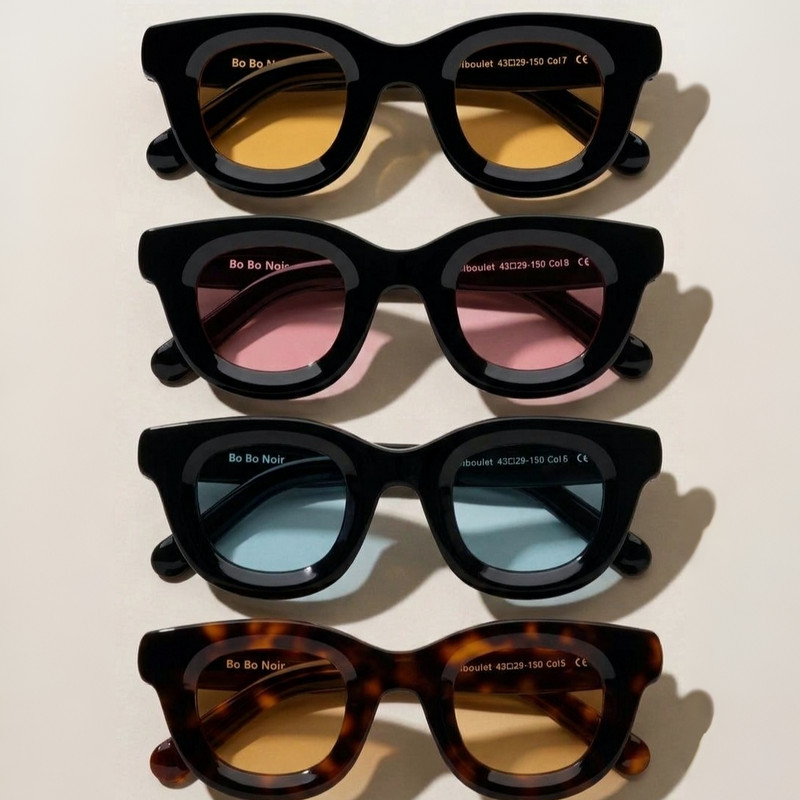
Summer ends. Sunglasses don’t. As coats replace linen and winter light changes the mood of the street, a lighter lens can bring a fresh point of colour to the face. The question is not whether sunglasses belong in autumn and winter, but which tint works with your wardrobe—and when that tint is suitable for the light. Meet four Bo Bo Noir Triboulet panto sunglasses with light-coloured lenses: Shiny Black / Pink, Shiny Black / Light Blue, Shiny Black / Yellow and Tortoise / Yellow. Below, compare their visual effects, verified Category 1 lens specifications, 43–29–150 measurements and styling possibilities before choosing your pair. Quick Answer Yes—light-tinted sunglasses can complement autumn and winter wardrobes, especially when softer pink, blue or yellow lenses contrast with coats and knitwear. Bo Bo Noir’s four Triboulet options are Shiny Black / Pink, Shiny Black / Light Blue, Shiny Black / Yellow and Tortoise / Yellow. All four product listings specify Category 1 nylon lenses, UV400 / 100% UV protection and 43–29–150 measurements. Choose pink for a softer accent, blue for cool contrast, black/yellow for graphic warmth or tortoise/yellow for tonal warmth. Category 1 offers limited visible-light reduction: these are not intended as high-glare sunglasses for intense sun or snow. BBN Insight: A dark frame and a light lens perform different visual jobs. The frame defines the face; the lens colour changes how open, warm or cool the area around the eyes appears. Keeping the silhouette constant makes the difference between the four Triboulet combinations easier to understand. Autumn and winter dressing introduces more fabric, depth and texture around the face. A wool coat, a dark roll-neck or a substantial scarf can make the upper half of an outfit look visually dense. A lighter-looking lens can interrupt that density without requiring a smaller or thinner frame. This is particularly noticeable with a black acetate frame. The outline remains clear, but the coloured lenses create a softer or more expressive focal point than an entirely dark-looking combination. With tortoise acetate, a yellow tint can reinforce the warmth already present in the frame pattern. There is also a practical distinction to preserve: winter is not synonymous with weak sunlight. Low-angle sun, reflective wet surfaces and snow can produce challenging glare. A fashion-forward pale tint should never be treated as a substitute for verified sun-protection specifications. For the broader seasonal colour context, explore sunglasses colour trends for 2027. All four designs use the Triboulet panto direction. That shared geometry makes this a comparison of lens colour and acetate contrast, rather than four unrelated shapes. The question is not which tint is universally best, but which visual effect you want to repeat. Verified product details: Unisex panto sunglasses · Category 1 nylon lenses · UV400 / 100% UV protection · 43–29–150 fit measurements · €195 (listed price; subject to change). Best for: Black tailoring, charcoal wool, cream knitwear. Consider another colour if: you prefer a discreet lens colour or a darker sunglass effect. Pink lenses bring a gentler colour note to the firm outline of glossy black acetate. The contrast is deliberate: the frame reads as structured, while the lens colour prevents the overall look from becoming uniformly dark. This combination can work particularly well as a visual accent beside charcoal, black, navy or cream knitwear. Choose this direction if you want a subtle colour statement without changing the silhouette of your sunglasses. If you prefer an entirely neutral look, the pink tint may feel more expressive than you need. Verified product details: Unisex panto sunglasses · Category 1 nylon lenses · UV400 / 100% UV protection · 43–29–150 fit measurements · €195 (listed price; subject to change). Best for: Navy coats, grey knits, denim. Consider another colour if: you want the warmth of amber, camel and brown. Light blue produces a different balance. The black frame supplies a clear boundary around the eyes; the pale blue lens adds a cooler note that can sit naturally with grey wool, navy outerwear, washed denim and black leather. It is less about warmth and more about visual clarity of colour. Choose this pairing if your wardrobe already leans towards cool neutrals and you like eyewear that looks precise rather than earthy. The blue tint is a visible styling choice, not a guarantee of a particular light-filtering performance. Verified product details: Unisex panto sunglasses · Category 1 nylon lenses · UV400 / 100% UV protection · 43–29–150 fit measurements · €195 (listed price; subject to change). Best for: Black outerwear, olive layers, simple neutral outfits. Consider another colour if: you prefer a less noticeable colour accent. Yellow lenses create an immediate warm accent, while shiny black acetate keeps the panto outline sharp. This is the most direct contrast between a dark frame and a warm lens in the four-piece edit. Against black, charcoal and olive clothing, the yellow can become the focal point without needing an exaggerated frame shape. Choose it if you want colour to be clearly noticeable. If you prefer the lens and frame to blend tonally, consider the tortoise-and-yellow alternative. Yellow lenses should not be assumed to improve night-driving vision or to be appropriate for driving without checking the product’s specifications. Verified product details: Unisex panto sunglasses · Category 1 nylon lenses · UV400 / 100% UV protection · 43–29–150 fit measurements · €195 (listed price; subject to change). Best for: Camel, chocolate, oatmeal, textured winter fabrics. Consider another colour if: you want a sharp monochrome black outline. Tortoise acetate changes the effect of the same yellow-lens idea. Instead of placing a warm lens inside a stark black outline, the frame adds its own tonal variation. The result can feel more integrated with camel coats, brown suede, ecru knitwear and olive tailoring. Choose this combination if you want a warmer, more connected palette rather than maximum frame-to-lens contrast. The patterned acetate remains visually present, but its variation can soften the impression of a continuous dark border. Begin with the visual result you want, then consider how often you will wear that colour. Lens colour can affect the way a scene appears through the lens, but the actual optical performance depends on the specific lens construction and transmission characteristics, not on the colour name alone. For a wider explanation of how colour changes a frame’s visual presence, read how frame width changes facial proportions. The easiest approach is to make the eyewear part of the outfit’s colour structure rather than treating it as a separate novelty accessory. You do not need to match the lenses exactly to another item; a repeated warm or cool undertone is often enough. Pink and yellow introduce colour without removing the structure of a black frame. Light blue creates a cooler, more restrained contrast. Choose according to whether you want the outfit to feel warmer or cooler around the face. Light blue creates an intuitive connection with the clothing palette. Pink adds a more deliberate contrast, while yellow creates a warmer interruption. The black acetate outline keeps all three combinations defined. Tortoise and yellow are the most tonally connected option of the four. The patterned frame can echo brown outerwear and textured knitwear, while the lens adds a distinct colour layer. Yellow can connect to the warmer notes of olive, while tortoise introduces further pattern. Black and yellow offers a sharper alternative when you want more contrast. For a longer-term approach, building a timeless sunglasses collection explains how to judge whether a pair will remain useful beyond a single season. Lens darkness does not establish UV protection. A light-looking lens may have UV protection, and a dark-looking lens may not; the product specification is what matters. Lens category and visible light transmission also affect whether a lens is appropriate for a particular brightness level. Winter light can be demanding. Low sun can sit directly in the line of sight, while wet roads, glass and snow may increase reflected glare. Do not infer that a pink, blue or yellow lens is suitable for driving, snow sports or intense sunlight simply because it looks comfortable or fashionable. All four featured Triboulet product listings specify Category 1 nylon lenses with UV400 / 100% UV protection. Category 1 sunglasses have lightly tinted lenses: this is a category intended for limited reduction of sunlight, rather than strong glare. These are not a substitute for higher-category sun lenses in intense brightness, especially around snow or strong reflections. UV400 does not mean high glare reduction; check the intended-use warnings on the product page before driving or taking part in demanding outdoor activities. First, compare proportions. Panto frames balance a rounded lower lens shape with more definition at the top, but their effect still depends on overall width, bridge fit and the relationship with your brow line. Use measurements from a comfortable pair you already own rather than judging fit from the front image alone. Second, inspect the frame from more than one angle. The front view shows the panto geometry; the angled views help reveal acetate depth and the frame’s sculptural profile. Product images are useful for assessing design, but they cannot confirm comfort on your face. Third, verify the intended use. Confirm lens specifications, current availability, returns and delivery conditions before buying. If you need prescription compatibility, request confirmation for the exact product. Our guides to frame width and facial proportions and how transparency changes visual weight explain the underlying fit and contrast decisions. Each of the four current product pages lists a premium acetate panto frame, Category 1 nylon lenses with UV400 / 100% UV protection, unisex sizing of 43–29–150, and a price of €195. The included accessories are a hard box, a recycled-material eyewear case and a cleaning cloth. The brand lists free worldwide shipping and a 14-day return window; consult the current shipping and returns terms for destination-specific conditions and any import charges. Before ordering: compare 43–29–150 with a frame you already own, check the front and angled product photographs, and select the lens colour you would wear most often—not simply the one that looks most striking on screen. Light conditions matter: Category 1 is a light tint. These models are described for softer daylight and mild brightness, not as a replacement for high-glare sunglasses in intense sun, on snow or for night driving. UV protection and visible-light darkness are separate properties. Explore Pink · Explore Light Blue · Explore Black / Yellow · Explore Tortoise / Yellow Are light-tinted sunglasses fashionable in autumn and winter? They can be. Pale pink, blue and yellow lenses introduce a lighter colour accent against seasonal outerwear, especially when paired with a structured acetate frame. Can you wear sunglasses in winter? Yes. Sunglasses can be relevant year-round, but the lens must suit the actual light conditions and intended activity. Do light lenses provide UV protection? Yes, a lightly tinted lens can protect against UV. All four Triboulet styles in this guide list UV400 / 100% UV protection. The lens category describes visible-light filtering, not UV protection. Are yellow lenses better for cloudy days? Some wearers prefer the appearance of yellow-tinted lenses in certain conditions, but performance depends on the lens specification. Do not assume suitability from colour alone. Are yellow sunglasses safe for night driving? Do not assume they are. Confirm the specific lens transmission, category and driving restrictions before using any tinted eyewear while driving. What is the difference between black/yellow and tortoise/yellow sunglasses? Both use yellow lenses, but a black frame creates stronger graphic contrast while tortoise adds warm pattern and a more tonal effect. Which light lens colour works with a black coat? Pink, blue and yellow can all work. Pink softens the palette, blue adds cool contrast and yellow introduces a warmer focal point. Which colour suits navy and grey clothing? Light blue is a natural cool-toned option; pink creates a gentler contrast, while yellow produces a more noticeable warm accent. Do pink lenses suit men and women? Lens colour is not restricted by gender. The relevant considerations are the effect you want, frame proportions and whether the tint works with your wardrobe. What is a panto sunglasses frame? A panto frame typically combines a rounded lower lens contour with a more structured upper line, balancing curves and definition. Are light-tinted sunglasses suitable for snow? Do not assume so. Snow can reflect substantial light, so check the exact lens category, UV protection and suitability for the intended environment. Can light-tinted sunglasses be worn indoors? They may be used as a styling choice where appropriate, but indoor comfort and visibility vary. Do not use tinted lenses where they impair safe vision. How should I choose between pink and blue lenses? Choose pink for a softer warm-leaning accent and light blue for a cooler visual effect. Then check the specific lens characteristics. Does a darker frame make light lenses more noticeable? Often yes. A black acetate outline can create a strong boundary that makes a pale lens colour more visually distinct. How do I know whether Triboulet will fit? All four listed Triboulet models measure 43–29–150. Compare these numbers with a pair that already fits you, then check the front and angled photographs. Measurements help, but cannot guarantee comfort. Are these four Triboulet sunglasses identical apart from colour? They share the Triboulet panto silhouette and the published 43–29–150 measurements. All four listings specify Category 1 nylon lenses with UV400 / 100% UV protection. Their frame finish and lens colour create different visual effects. Which Triboulet is the most versatile for winter? There is no universal choice. Black/light blue may suit cool wardrobes; tortoise/yellow may suit warmer palettes; black/pink and black/yellow offer different degrees of colour contrast. Light-tinted sunglasses are not a replacement for darker lenses in every condition. They are a different way to build contrast around the eyes, connect eyewear to seasonal clothing and express colour without changing the shape of the frame. The four Triboulet combinations make the choice clear: pink for softness, blue for a cooler contrast, black and yellow for a graphic warm accent, or tortoise and yellow for tonal depth. Start with the effect you want to wear, then confirm fit and lens suitability. Explore the four combinations: Black / Pink · Black / Light Blue · Black / Yellow · Tortoise / Yellow Product dimensions, lens material, lens category, UV protection, listed prices and included accessories are based on the four linked Bo Bo Noir product descriptions. Style recommendations reflect editorial comparisons of lens colour, acetate finish and seasonal clothing palettes; they are not measurements of optical performance. No independent laboratory testing or wearer-fit testing was conducted for this article. Prices, stock, shipping and return conditions may change. Check the current product pages and applicable policies before ordering. Lens category describes visible-light reduction, whereas UV400 refers to ultraviolet protection; suitability for driving and high-glare environments must be assessed separately. How frame width changes facial proportions · Sunglasses colour trends for 2027 · Why transparent frames create softer facial balance
Why do light-tinted sunglasses feel different in autumn and winter?
Four Triboulet combinations: which one fits your winter wardrobe?
1. Triboulet Shiny Black / Pink: a softer accent against dark layers


2. Triboulet Shiny Black / Light Blue: a cool contrast with a defined frame

3. Triboulet Shiny Black / Yellow: warmth with graphic definition


4. Triboulet Tortoise / Yellow: tonal warmth for textured dressing


Pink, blue or yellow lenses: which effect should you choose?
Combination
Visual effect
Consider if
Alternative if
Black / Pink
Soft colour against a defined outline
You want a gentle accent with dark outerwear
You prefer cooler tones
Black / Light Blue
Cool, clear colour contrast
You wear navy, grey and denim
You want a warmer palette
Black / Yellow
Graphic outline with a warm focal point
You want the lens colour to stand out
You prefer tonal harmony
Tortoise / Yellow
Layered warmth and patterned depth
You wear camel, brown, olive and cream
You want a stark black outline
How do you style light-tinted sunglasses with autumn and winter clothes?
With black and charcoal
With navy and denim
With camel, chocolate and cream
With olive and earth tones
Do light-coloured lenses protect your eyes in winter?
What should you check before choosing your Triboulet sunglasses?
What do you get with each Triboulet pair?
Frequently asked questions about light-tinted sunglasses
Summer ends. Your eyewear vocabulary can expand.
Sources and methodology
What should you read next about frame colour and fit?
Bo Bo Journal
Featured products


