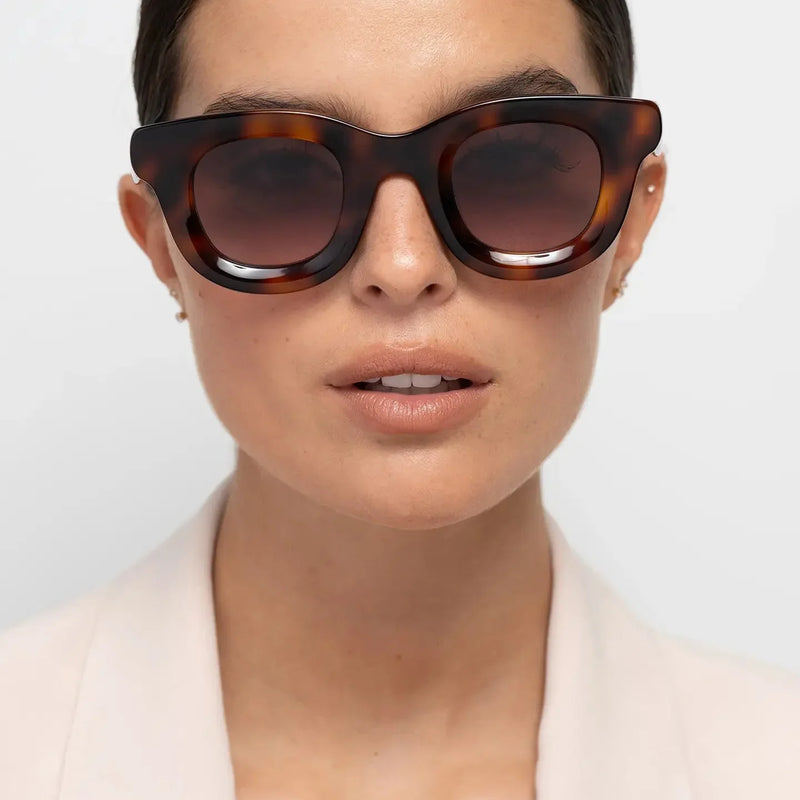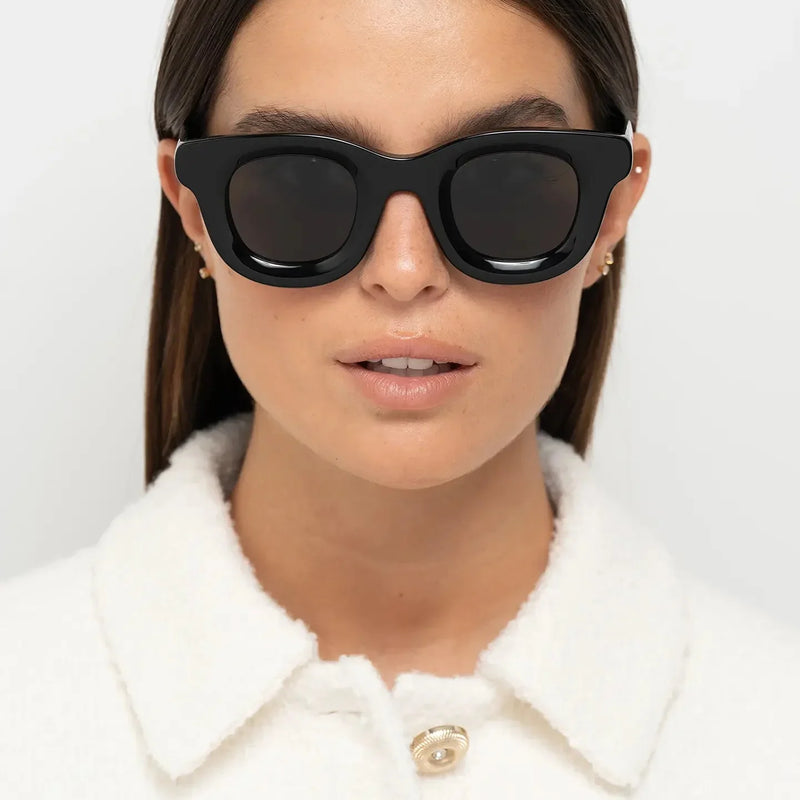
Choosing between brown and grey sunglasses may seem like a simple colour preference, yet lens colour influences far more than the appearance of your sunglasses. It changes the way you perceive contrast, how colours appear throughout the day, how comfortable your eyes feel during prolonged wear and even how naturally the frame integrates with your overall style.
Although both lens colours provide excellent protection against sunlight, they achieve that result in very different ways, making each one better suited to particular environments, lifestyles and personal preferences.
Many people spend considerable time choosing the perfect frame shape but give very little thought to the lenses themselves. In reality, the lenses are the part of the sunglasses you experience every second you wear them, making lens colour one of the most important decisions in the entire buying process.
Brown lenses create a warmer, richer and more contrast-driven view of the world, while grey lenses preserve colours more naturally and produce a calmer, more neutral visual experience. Neither approach is objectively better. The right choice depends entirely on how and where you intend to wear your sunglasses.
If you're also deciding between frame colours, our guide to Black vs Tortoise Sunglasses explains how acetate colour influences facial balance, versatility and everyday wear.
For a deeper understanding of how lens colours affect overall appearance, you may also enjoy Green vs Brown Sunglasses, where we compare two of the warmest lens tones available.
Quick Answer: Brown vs Grey Sunglasses

Brown lenses enhance contrast, increase visual depth and create a warmer image that many people find relaxing during outdoor activities. Grey lenses reduce brightness evenly while preserving colours much closer to their natural appearance, making them one of the most versatile choices for everyday use.
If your priority is richer contrast and warmer colours, brown lenses are often the stronger option. If you prefer accurate colour perception and visual neutrality, grey lenses will generally feel more natural.
Most people buy sunglasses because of the frame, but continue wearing them because of the lenses. Lens colour has a greater impact on your daily experience than many people realise.
Why Brown Lenses Create a Richer Visual Experience

Brown lenses filter light in a way that naturally increases contrast, allowing textures, landscapes and subtle changes in terrain to become easier to distinguish. Instead of simply making the world darker, they introduce warmth that many wearers describe as softer, richer and more immersive.
This characteristic makes brown lenses particularly enjoyable for driving, walking, hiking, travelling and spending long periods outdoors, where stronger contrast helps reveal detail without making the image appear artificial.
Natural environments often benefit the most from brown lenses because greens, earth tones and warm colours become slightly more pronounced while harsh blue light is reduced. The result is a viewing experience that feels comfortable over extended periods without dramatically changing the way the world looks.
Brown lenses also pair exceptionally well with tortoise, honey, olive and other warm acetate colours, creating sunglasses that feel visually coherent rather than assembled from unrelated elements.
If you appreciate the warmer character of brown lenses, the Triboulet Tortoise Gradient Brown combines layered tortoise acetate with gradient brown lenses, creating a balanced combination that feels equally at home in the city, by the coast or on longer journeys.
Why Grey Lenses Remain the Most Versatile Choice

Grey lenses follow a completely different philosophy. Rather than increasing contrast, they reduce brightness evenly across the visible spectrum, allowing colours to remain remarkably close to their natural appearance. This neutral filtering creates a visual experience that many people immediately recognise as calm, balanced and effortless.
Because they do not significantly alter colour perception, grey lenses adapt naturally to almost any environment, making them an excellent option for everyday commuting, travelling, city life and prolonged wear in bright conditions.
Their understated character also allows the frame itself to become the visual focus. Instead of competing with bold acetate colours or architectural frame shapes, grey lenses reinforce a cleaner and more contemporary aesthetic that remains timeless regardless of seasonal trends.
If you prefer a neutral viewing experience, the William Shiny Black demonstrates how grey lenses and a structured round silhouette work together to create sunglasses that feel balanced, refined and exceptionally versatile throughout the year.
How Your Lifestyle Should Influence Your Lens Colour Choice

One of the biggest mistakes people make when buying sunglasses is choosing a lens colour based purely on appearance. While aesthetics certainly matter, the environments where you spend most of your time will have a far greater impact on how satisfied you are with your choice over the long term.
Brown and grey lenses were designed to solve slightly different visual challenges, which means the better option depends less on fashion and much more on the situations in which you actually wear your sunglasses.
If weekends usually involve countryside walks, coastal drives, mountain roads or long afternoons outdoors, brown lenses often create a more enjoyable viewing experience because the additional contrast helps reveal textures and natural depth. Many people also find the warmer colour rendering less tiring during extended periods in changing light.
Grey lenses, on the other hand, excel in environments where colour accuracy and visual neutrality feel more important than enhanced contrast. Busy city streets, travelling, everyday commuting and bright urban settings are situations where many wearers appreciate the calm, balanced image that grey lenses provide.
Instead of asking which lens colour is better, ask yourself where you actually wear sunglasses most often. Your daily routine is usually the best guide when choosing between brown and grey lenses.
Frame Colour and Lens Colour Should Work Together

Choosing the right lens colour is only one part of the equation. The overall impression of a pair of sunglasses also depends on how successfully the lenses complement the acetate, the frame geometry and your facial features.
The most refined sunglasses feel visually unified because every design element supports the same aesthetic direction instead of competing for attention.
Brown lenses naturally reinforce warm acetates such as tortoise, honey, olive and translucent amber. Together they create a softer, richer appearance that feels relaxed without losing definition.
Grey lenses often pair beautifully with black, crystal grey and darker acetate tones because their neutral character allows the frame itself to become the focal point. This combination is particularly effective for clean rectangular silhouettes and contemporary round frames where geometry is intended to lead the design.
If you'd like to understand how frame colours influence overall appearance, read our guide to Warm vs Cool Tone Sunglasses.
If you enjoy warm acetate tones but prefer a stronger everyday presence, the Narr Tortoise combines rich tortoise acetate with balanced panto geometry, creating a frame that feels structured without becoming visually heavy.
Brown Lenses Enhance Contrast While Grey Lenses Preserve Colour Accuracy

Although both lens colours reduce glare effectively, they do so in different ways. Brown lenses selectively increase contrast by enhancing warm tones and reducing the influence of blue light, making landscapes appear more vibrant and textured. This additional contrast often improves the perception of depth, which explains why brown lenses remain popular for driving and outdoor activities.
Grey lenses take the opposite approach by filtering light more evenly, allowing colours to remain closer to their natural appearance while still providing excellent protection against bright sunlight.
Neither experience is objectively superior because each responds to a different visual preference. Some people immediately appreciate the warmth and richness of brown lenses, while others value the neutrality and consistency offered by grey lenses.
This difference becomes especially noticeable after wearing sunglasses for several hours, when lens colour begins to influence overall visual comfort rather than simply reducing brightness.
If you prefer a cleaner, more architectural aesthetic with neutral colour perception, the Jane Shiny Black demonstrates how structured rectangular geometry and neutral lenses create a timeless, contemporary look.
A Simple Comparison Makes the Choice Easier

If you're still undecided, comparing the strengths of each lens colour side by side often makes the decision much clearer.
| Feature | Brown Lenses | Grey Lenses |
|---|---|---|
| Colour perception | Warmer | Neutral |
| Contrast | High | Natural |
| Driving | Excellent | Excellent |
| Nature | ★★★★★ | ★★★★☆ |
| City use | ★★★★☆ | ★★★★★ |
| Style character | Warm and relaxed | Clean and contemporary |
For most people, the decision ultimately comes down to whether they enjoy a warmer, more contrast-rich view of the world or prefer colours to remain as neutral and natural as possible. Once that preference becomes clear, choosing between brown and grey lenses becomes surprisingly straightforward.
Brown Lenses Usually Feel More Relaxing During Long Days Outdoors

One of the reasons many people continue choosing brown lenses year after year has very little to do with fashion. It is the way these lenses change the overall viewing experience, creating an image that feels warmer, richer and more comfortable over long periods of wear.
Instead of simply reducing brightness, brown lenses increase visual contrast in a subtle way that helps separate textures, terrain and natural colours, making outdoor environments appear deeper and easier to read without looking artificial.
This is particularly noticeable when driving through changing landscapes, walking in woodland, spending time near the coast or travelling in places where natural colours dominate the scenery. Greens become richer, earthy tones gain more depth and shadows feel less harsh, allowing the eyes to relax while maintaining excellent visual clarity.
For many wearers, this creates a more immersive experience that remains comfortable from morning until late afternoon, especially in bright but constantly changing light.
If your lifestyle regularly takes you outdoors, the Triboulet Tortoise Gradient Brown combines warm gradient lenses with layered tortoise acetate, creating a balanced frame that feels equally comfortable on coastal roads, countryside walks and everyday city wear.
Grey Lenses Are Often the Best Choice for Everyday Urban Wear
Grey lenses have earned their reputation as one of the most versatile choices because they preserve natural colour relationships while effectively reducing glare. Rather than making colours warmer or cooler, they simply reduce the intensity of incoming light, allowing the world to appear remarkably close to the way you naturally see it.
This neutral character makes grey lenses particularly well suited to city life, commuting, travelling and everyday use, where visual consistency often feels more comfortable than increased contrast.
Many people also appreciate how grey lenses adapt effortlessly to different environments throughout the day. Whether moving between shaded streets, bright pavements, open spaces or reflective glass buildings, the overall viewing experience remains calm, balanced and predictable.
This versatility explains why grey lenses have become the preferred choice for people looking for one pair of sunglasses that works almost everywhere.
If you appreciate neutral colour perception and timeless design, the William Shiny Black combines clean round geometry with neutral lenses, creating a frame that feels equally relevant with casual clothing, tailoring or everyday essentials.
Choosing the Right Lens Colour Is Also About Personal Style

Although lens performance is important, sunglasses are also one of the most visible accessories you wear. The colour of the lenses influences the overall personality of the frame just as much as the acetate itself.
Brown lenses naturally create a warmer and more relaxed aesthetic, making them an excellent companion for tortoise acetate, olive tones, earthy wardrobes and softer styling choices, while grey lenses reinforce cleaner, sharper and more contemporary designs.
Neither approach is inherently better. Instead, each creates a different emotional response that can completely change the character of the same frame.
People who gravitate towards timeless, natural styling often prefer the warmth of brown lenses, while those who enjoy minimal wardrobes and architectural silhouettes frequently choose grey because of its understated neutrality.
Lens colour should therefore complement not only your environment but also the way you naturally dress throughout the year.
If your wardrobe is built around warm neutrals and timeless textures, the Narr Tortoise demonstrates how rich tortoise acetate and balanced panto geometry create effortless everyday versatility.
Ask Yourself These Questions Before Choosing Your Lenses

If you still find yourself hesitating between brown and grey lenses, the decision usually becomes much easier when you focus on how you actually use your sunglasses rather than which colour appears more popular.
Before making your choice, ask yourself:
- Do I spend more time in cities or in nature?
- Do I prefer warmer colours or completely neutral colour perception?
- Do I usually wear black, grey and monochrome clothing, or warmer earth tones?
- Will these be my only sunglasses or one pair among several?
- Do I want stronger visual contrast or the most natural possible view?
Answering these questions honestly often leads to a much better decision than simply following current trends or choosing the lens colour that someone else recommends.
Great sunglasses are not defined by one perfect lens colour. They are defined by how naturally every element works together with your lifestyle, your wardrobe and your everyday routine.
The best sunglasses are rarely the pair with the most fashionable lens colour. They are the pair you continue reaching for every time you leave the house because they simply feel right.
Which Lens Colour Is Right for You?
After comparing brown and grey lenses from every angle, one conclusion becomes very clear: neither colour is objectively superior. Both provide excellent sun protection, both improve visual comfort and both can become exceptional everyday sunglasses when paired with the right frame.
The real difference lies in the visual experience you prefer and the environments where your sunglasses spend most of their time.
If you enjoy warmer colours, stronger contrast and frequently spend time outdoors, brown lenses will often feel more engaging because they enrich natural scenery without becoming exaggerated. If you value colour accuracy, clean aesthetics and a neutral visual experience that adapts effortlessly to changing environments, grey lenses are likely to become your preferred choice.
Rather than following trends, choosing lenses according to your lifestyle almost always leads to a pair of sunglasses that continues to feel right long after the initial purchase.
The best lens colour is rarely the one that looks most impressive online. It is the one that feels completely natural every time you wear it.
The Bo Bo Noir Approach to Brown and Grey Lenses

At Bo Bo Noir, lens colour is never selected as an isolated design decision. Every combination of acetate, geometry and lens tint is developed to create one coherent visual language, ensuring the sunglasses feel balanced from every angle rather than relying on a single feature.
Brown lenses are paired with warm acetates to create richness, depth and softer contrast, while grey lenses reinforce cleaner silhouettes by preserving colour neutrality and allowing the frame geometry to become the defining visual element.
If you're drawn to warmer colours and relaxed everyday versatility, Triboulet Tortoise Gradient Brown combines layered tortoise acetate with gradient brown lenses, creating a timeless balance between warmth and definition.
For a stronger everyday presence with rich acetate tones, Narr Tortoise offers balanced panto geometry that works naturally across different face shapes and personal styles.
If your preference leans towards contemporary minimalism and neutral colour perception, Jane Shiny Black demonstrates how structured rectangular geometry and neutral lenses create an architectural yet highly wearable silhouette.
For those looking for one of the most versatile round frames in the collection, William Shiny Black combines clean proportions with colour-neutral lenses that adapt effortlessly to everyday life.
To compare every frame shape, lens colour and acetate combination in one place, explore the complete Bo Bo Noir Sunglasses Collection.
Key Takeaways

- Brown lenses create a warmer visual experience with stronger contrast.
- Grey lenses preserve colours more naturally while reducing brightness evenly.
- Your lifestyle should influence lens colour more than current trends.
- Brown lenses pair naturally with tortoise, olive and other warm acetate colours.
- Grey lenses complement black, crystal and contemporary frame finishes.
- Frame geometry and lens colour should always be considered together.
- The most successful sunglasses balance lens colour, acetate, proportion and facial harmony.
- Choosing the right lenses improves both visual comfort and long-term satisfaction.
Frequently Asked Questions
Are brown lenses better than grey lenses?
Neither is universally better. Brown lenses enhance contrast and warmth, while grey lenses preserve natural colour perception. The better choice depends on where and how you wear your sunglasses.
Which lens colour is best for driving?
Brown lenses are often preferred because the additional contrast makes road markings, textures and changing landscapes easier to distinguish, although grey lenses also perform very well in bright conditions.
Do grey lenses make colours look more natural?
Yes. Grey lenses reduce brightness evenly without significantly altering colour relationships, making them one of the most neutral lens options available.
Are brown lenses better for outdoor activities?
Many people prefer brown lenses for hiking, walking, travelling and countryside driving because they enhance depth and improve contrast in natural environments.
Which lens colour works best with tortoise frames?
Brown lenses usually create the most harmonious combination because their warm tones naturally complement layered tortoise acetate.
Which lens colour suits black acetate frames?
Grey lenses often reinforce the clean, contemporary appearance of black acetate, although brown lenses can also create an attractive contrast depending on the overall design.
Can lens colour affect how sunglasses look on my face?
Yes. Lens colour influences the overall character of the sunglasses, making them appear warmer, softer, cleaner or more contemporary depending on the combination.
Should I choose the frame or the lens first?
Ideally, both should be considered together. The strongest sunglasses are designed so that frame geometry, acetate colour and lens tint work as one balanced composition.
Do brown lenses make your eyes less tired?
Many wearers find brown lenses more relaxing during extended outdoor use because the increased contrast creates a softer and more comfortable viewing experience.
Why do premium sunglasses pay so much attention to lens colour?
Because lens colour influences visual comfort, colour perception, overall aesthetics and the relationship between the wearer, the frame and the surrounding environment.
👁 You May Also Like
If you're comparing lens colours and frame styles, these guides will help you make a more confident decision while understanding how every design choice influences both appearance and everyday comfort.
Green vs Brown Sunglasses
Discover how green and brown lenses compare in contrast, colour perception and versatility.
Read the article →
Gradient vs Solid Lenses
Understand how different lens finishes influence visibility, comfort and everyday usability.
Read the article →
Warm vs Cool Tone Sunglasses
Learn how colour temperature affects facial harmony and helps you choose frames that complement your complexion.
Read the article →
Black vs Tortoise Sunglasses
Explore how frame colour changes visual presence, versatility and personal style.
Read the article →
What Makes Sunglasses Look Flattering?
Learn how frame geometry, balance and proportion influence the way sunglasses look on your face.
Read the article →