Sunglasses trends change every year. But not all changes matter.
2026 is not about more options. It is about clearer decisions.
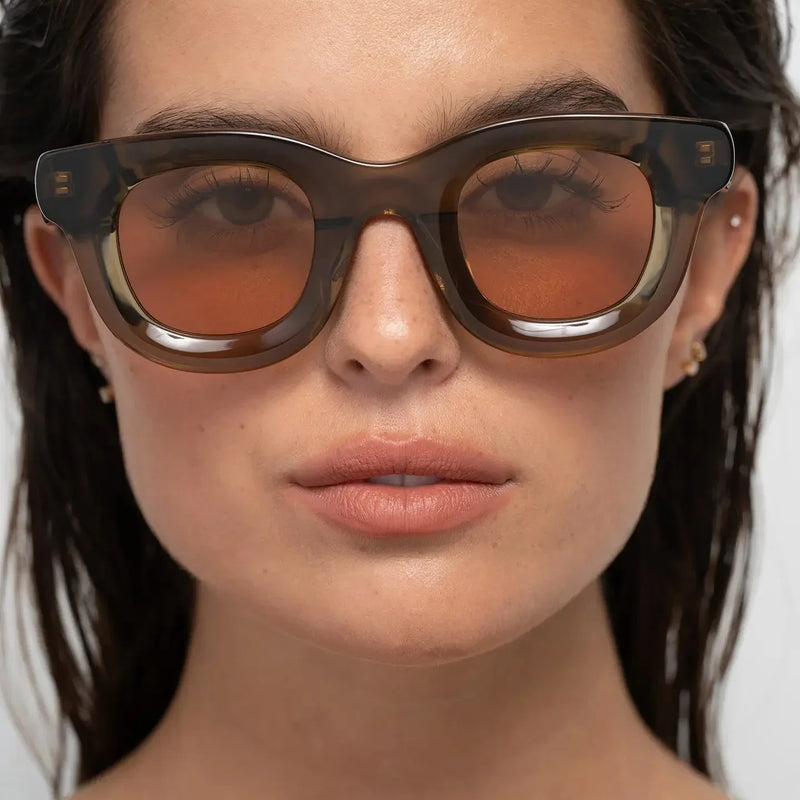
The shift is already visible. Less noise, fewer unnecessary details and a stronger focus on shape, proportion and presence.
If you want to understand how trends translate into real choices, start with our style guide, refine proportions with the fit guide and explore structure in our face shape article.
Because trends only work when they work on you.
THE SHIFT FROM TREND TO INTENTION
For years, sunglasses followed fashion cycles. Shapes changed quickly. Colours shifted constantly. What was relevant one season disappeared the next.
2026 moves in a different direction.
Instead of chasing novelty, eyewear is becoming more stable. Shapes are stronger. Lines are cleaner. Choices feel more deliberate.
This is not about minimalism. It is about clarity.
RECTANGULAR FRAMES: STRONGER PRESENCE
Rectangular frames are becoming one of the most defining shapes of 2026.
The reason is simple. Straight lines create structure. Structure creates presence.
Compared to softer shapes, rectangular frames feel more direct, more defined and more intentional.
A frame like the Jane Shiny Black reflects this shift clearly. It does not try to adapt. It defines the look.
PANTO SHAPES: THE BALANCE POINT
While rectangular frames create presence, panto shapes offer balance.
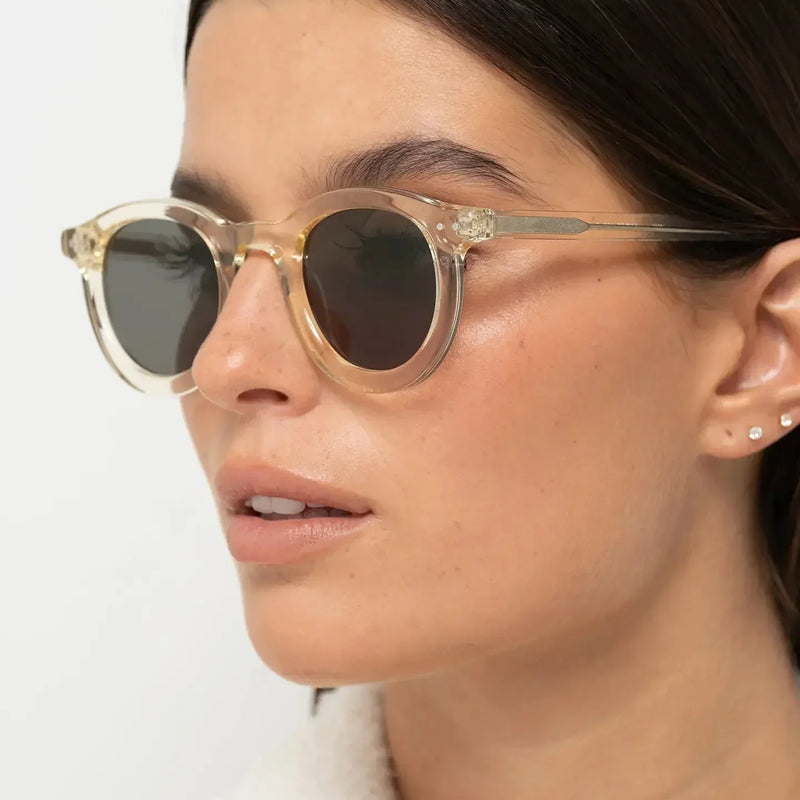
This is why they continue to grow in relevance. They sit between sharp and soft, making them adaptable across different faces.
The Narr Tortoise Grey shows how this balance works in practice. It adds definition without feeling too strong.
If you want to understand how different shapes affect perception, read our comparison guide.
ROUNDED FRAMES: CONTROLLED SOFTNESS
Rounded frames are not disappearing. But they are evolving.
In 2026, they feel less decorative and more controlled. Less vintage inspired and more intentional.
The William Crystal Peach reflects this approach. Soft, but not passive.
COLOR TRENDS: FROM CONTRAST TO DEPTH
Colour in 2026 moves away from extremes.
Instead of very bright or overly neutral tones, the focus shifts towards depth. Colours that feel layered, textured and more natural.
- Tortoise tones with variation
- Warm earthy shades
- Refined neutrals
A frame like the William Tortoise reflects this shift clearly.
SIZE: LESS EXTREME, MORE PRECISE
Oversized sunglasses dominated previous years. That dominance is fading.
In 2026, size becomes more precise. Frames are chosen based on proportion, not impact alone.
The Triboulet Olive works because it fits correctly before it makes a statement.
If you are unsure about size, read this guide.
WHAT IS FALLING OUT OF TREND
- Overly decorative frames
- Extreme oversized shapes
- Thin, fragile looking silhouettes
- Designs driven only by trend cycles
These styles do not disappear completely. They simply lose relevance.
WHY 2026 IS ABOUT CLARITY
The biggest trend of 2026 is not a shape or a colour.
It is clarity.
Choosing frames that feel aligned. Not because they are trending, but because they make sense.
That is where trends stop being temporary and start becoming personal.
FAQ ABOUT SUNGLASSES TRENDS 2026
What sunglasses are trending in 2026?
Rectangular frames, refined panto shapes and controlled round silhouettes are defining the year, along with deeper, more natural colour tones.
Are oversized sunglasses still in style?
They are becoming less dominant. More precise and balanced sizes are replacing oversized shapes.
What colours are trending for sunglasses in 2026?
Tortoise, warm earthy tones and refined neutrals are replacing extreme or overly bold colours.
Are round sunglasses still relevant?
Yes, but in a more controlled and structured way. They feel more intentional than decorative.
What matters more, trend or fit?
Fit always matters more. Trends only work when they align with your proportions and features.
👁 YOU MAY ALSO LIKE:
What Sunglasses Suit Everyone
Discover the most universally flattering frames.
Read the article
How to Choose Sunglasses That Fit Your Face
Learn how to choose the right proportions.
Read the article