Envío mundial gratuito • Devoluciones en 14 días • Diseñado en PortugalEnvío mundial gratuito • Devoluciones en 14 días • Diseñado en PortugalEnvío mundial gratuito • Devoluciones en 14 días • Diseñado en PortugalEnvío mundial gratuito • Devoluciones en 14 días • Diseñado en PortugalEnvío mundial gratuito • Devoluciones en 14 días • Diseñado en PortugalEnvío mundial gratuito • Devoluciones en 14 días • Diseñado en PortugalEnvío mundial gratuito • Devoluciones en 14 días • Diseñado en PortugalEnvío mundial gratuito • Devoluciones en 14 días • Diseñado en PortugalEnvío mundial gratuito • Devoluciones en 14 días • Diseñado en PortugalEnvío mundial gratuito • Devoluciones en 14 días • Diseñado en PortugalEnvío mundial gratuito • Devoluciones en 14 días • Diseñado en PortugalEnvío mundial gratuito • Devoluciones en 14 días • Diseñado en PortugalEnvío mundial gratuito • Devoluciones en 14 días • Diseñado en PortugalEnvío mundial gratuito • Devoluciones en 14 días • Diseñado en PortugalEnvío mundial gratuito • Devoluciones en 14 días • Diseñado en Portugal
Europe has produced some of the world's most recognisable eyewear traditions, but searching for the best European sunglasses brands in 2027 quickly reveals a problem: “European eyewear” is not one design language, one quality level or even one manufacturing model.
A British eyewear house can manufacture in Italy. A Berlin brand can design and produce under one roof. A French company can work with specialist workshops across Europe. Barcelona can produce both colour-led and contemporary shape-driven design cultures, while an independent Portuguese brand can develop its creative direction locally and work with specialised eyewear production facilities elsewhere.
That diversity is exactly what makes European eyewear worth understanding. Instead of ranking brands through prestige alone, this guide compares design identity, production approach, materials, construction, visual character and buyer fit. The objective is not to decide that one country makes universally better sunglasses. It is to identify what each brand gives you — and which of those qualities you are actually willing to pay for.
European eyewear is better understood through design decisions than nationality alone. Silhouette, material, production, colour and proportion can reveal more about a frame than a country label in isolation.
Quick Answer
The European sunglasses brands worth knowing in 2027 include Cutler and Gross, MYKITA, Retrosuperfuture, Lesca Lunetier, KALEOS, Etnia Barcelona, Kuboraum, Monokel and Bo Bo Noir. They represent very different reasons to buy European eyewear: British design heritage with Italian manufacture, Berlin engineering, Italian-made contemporary sunglasses, French frame-making culture, Barcelona shape and colour, conceptual experimentation, Scandinavian restraint and Portuguese creative direction. There is no single “best” European brand. The useful question is which design philosophy, production approach and frame character best match what you want to wear.
BBN Insight
“European eyewear” is most useful as a map of specialist design cultures rather than a quality badge. Italy, France, Germany, Spain, Britain, Sweden and Portugal contribute different histories, production networks and aesthetic priorities. The strongest purchase comes from identifying which of those differences is visible in the frame — not from assuming that European origin automatically makes it better.
1. How did we choose the best European sunglasses brands?
A useful list of European sunglasses brands needs to do more than assemble famous names from France and Italy. Europe contains multiple eyewear traditions, and the brands become more informative when they represent genuinely different approaches to design and production.
For this guide, we compare brands through six practical lenses: design identity, production approach, materials and construction, visual character, price positioning and buyer fit. A brand does not need to maximise every category. It needs to provide a sufficiently clear reason for one type of buyer to choose it over another.
What we compare
What it tells you
Why it matters
Design identity
Whether the frames express a recognisable approach to silhouette, proportion, material or colour.
A strong eyewear brand should give you a reason to recognise its design beyond the logo.
Production approach
Where and how the brand describes its manufacturing.
Separates verifiable production information from vague European craftsmanship language.
Materials and construction
How acetate, metal, lenses, hinges and other components support the design.
Material names matter less when the finished frame does not use them convincingly.
Visual character
How much presence, restraint, experimentation or colour the frame contributes to the face.
Helps translate brand identity into a real wearing experience.
Price positioning
What type of proposition the buyer is being asked to pay for.
Luxury heritage, specialist manufacture and contemporary design solve different purchasing problems.
Buyer fit
The clearest reason one wearer may prefer the brand over another.
Turns a ranking into an actual decision tool.
We also avoid treating price as a proxy for quality. More expensive eyewear can reflect specialised manufacturing, complex construction, distribution, limited production, materials, finishing and brand positioning. Those can be legitimate sources of value, but they do not determine whether a particular frame is the best design for your face or wardrobe.
The same principle applies to independence. Many of the brands in this guide have strong independent or specialist design identities, but independence itself is not proof of superior eyewear. For a wider look at that distinction, see our guide to independent eyewear brands from Europe to know.
BBN Insight: compare reasons to buy, not prestige
A ranking becomes more useful when every brand has a different strongest argument. Heritage, engineering, Italian manufacture, colour, experimentation and long-term design relevance are not interchangeable forms of value. Identifying which one you care about prevents a famous brand name from making the decision for you.
2. What does European eyewear actually mean?
“European sunglasses” sounds geographically simple, but it can describe several different relationships with Europe. The brand can be European while production happens elsewhere. Design and manufacturing can take place in different European countries. Materials and components can also cross borders before the finished frame is assembled.
That is why European brand, European design identity, Made in Europe and European material origin should not be treated as synonyms.
Description
What it means
What it does not guarantee
European brand
The company or brand has its identity or base in Europe.
That every frame is manufactured in Europe.
European design
The creative direction or product development is based in a European design context.
That manufacturing takes place in the same country.
Made in Europe
The relevant manufacturing origin is within Europe.
That every material and component has the same origin.
European material
A specified material or component originates from a European supplier or country.
The quality of the complete frame.
The brands in this guide demonstrate the distinction clearly. Cutler and Gross began in London but makes its optical and sunglass frames in Italy. MYKITA integrates its eyewear production into the MYKITA HAUS in Berlin. Kuboraum describes its frames as dreamed in Berlin and handmade in Italy. Retrosuperfuture likewise identifies its eyewear as handmade in Italy. Different countries can therefore contribute different parts of the same European design story.
The distinction becomes even more important when craftsmanship enters the conversation. “European craftsmanship” is too broad to explain why a frame is good. Specialist Italian manufacturing, French frame-making knowledge and Berlin's integration of engineering and production represent different systems rather than one universal European method.
The better question is: what does the stated origin help explain about this particular frame? If the answer is visible in its construction, material treatment, geometry or finishing, provenance becomes useful evidence. If origin is the only argument being offered, keep looking at the object.
Before paying more for European eyewear
Separate the story into four questions: Where is the brand based? Where is the design developed? Where is the particular frame manufactured? What materials and construction choices can you actually identify? A credible European eyewear proposition should survive those questions without depending on geography as a substitute for quality.
3. Which European sunglasses brands should be on your 2027 shortlist?
The shortlist is deliberately varied. A good European eyewear guide should not produce nine brands that all solve the same aesthetic problem. Instead, each name below provides a different entry point into contemporary European sunglasses.
Some are compelling because manufacturing is central to the proposition. Others are stronger through colour, experimentation, heritage or the way familiar eyewear forms are reinterpreted. That variation is more useful than pretending there is one objectively superior European design language.
Brand
European perspective
Best for
Start here if...
Cutler and Gross
British eyewear heritage with Italian manufacture.
Heritage-led statement eyewear.
You value established design identity, substantial frames and Italian production.
MYKITA
Berlin design, engineering and integrated manufacture.
Technical precision and lightweight construction.
You are attracted to visible engineering, material innovation and German production.
Retrosuperfuture
Contemporary eyewear handmade in Italy.
Italian-made contemporary sunglasses.
You want contemporary silhouettes backed by established Italian eyewear production.
Lesca Lunetier
French family eyewear heritage and specialist European workshops.
Substantial acetate and heritage-informed shapes.
Panto geometry, generous proportions and vintage-informed acetate appeal to you.
KALEOS
Contemporary Barcelona design culture.
Shape, proportion and current visual language.
You enjoy changing silhouettes and contemporary reinterpretation.
Etnia Barcelona
Barcelona eyewear with a strong relationship to colour and art.
Expressive colour and artistic references.
Colour is one of the main reasons you notice and choose eyewear.
Kuboraum
Berlin conceptual design with Italian manufacture.
Experimental expression.
You want the eyewear itself to become a major part of your visual identity.
Monokel
Swedish design perspective.
Scandinavian restraint.
You prefer cleaner, quieter eyewear with less visual excess.
Bo Bo Noir
Portuguese creative direction with a design-led European perspective.
Bold, refined eyewear designed beyond trends.
You want strong silhouettes, considered proportions and expressive acetate to shape personal identity without depending on conspicuous branding.
The table is a starting point rather than a final ranking. “Best for” identifies the clearest reason to investigate each brand, not the only thing it can do. A MYKITA frame can be expressive. A Cutler and Gross frame can be restrained. A KALEOS design can remain relevant beyond its season. The categories simply make the differences easier to use when buying.
The next step is to examine what each proposition actually means at frame level — beginning with three very different relationships between European design and manufacture: Cutler and Gross, MYKITA and Retrosuperfuture.
4. Cutler and Gross — best for British design heritage and Italian craftsmanship
Cutler and Gross occupies an unusual position in European eyewear because its identity crosses two important design and manufacturing cultures. Founded in London in 1969 by opticians Graham Cutler and Tony Gross, the house has a distinctly British history while its frames are made in Italy.
That distinction makes the brand particularly useful in a guide to European sunglasses. It demonstrates why brand nationality and manufacturing nationality do not need to match for provenance to remain meaningful. The British part of the story helps explain the house's design history; Italian production describes another part of how the physical frames are realised.
Cutler and Gross shows how substantial acetate can create facial presence through a confident brow, visible frame volume and clearly defined lens geometry.
Visually, Cutler and Gross is particularly convincing when acetate is allowed to have presence. Substantial fronts, confident brow lines and recognisable lens shapes can make the glasses part of the wearer's identity rather than a neutral accessory. The strongest designs often feel assertive without requiring an obvious external logo to explain their value.
That makes the brand relevant to buyers who associate premium eyewear with material presence, established design language and specialist Italian production. It is less compelling if your priority is extremely light, visually recessive eyewear or if you prefer engineering to be the main story behind the frame.
Consider Cutler and Gross if: you want an established European eyewear house, substantial frame character and a proposition that connects British design heritage with Italian manufacture.
Consider another direction if: you prefer minimal visual weight, highly technical construction or a more experimental design language.
BBN Insight: heritage becomes useful when you can see it without reading the biography
A long history can add context to an eyewear brand, but longevity alone does not make a frame relevant. The stronger test is whether accumulated design knowledge remains visible in proportion, silhouette and material treatment. Heritage should explain the object rather than asking the object to depend on heritage.
5. MYKITA — best for Berlin engineering and integrated manufacture
MYKITA provides an almost opposite reason to investigate European eyewear. Founded in Berlin in 2003, the brand has built its identity around the relationship between design, engineering and production, with its frames developed and manufactured at the MYKITA HAUS in Berlin.
This integrated approach matters because it changes what craftsmanship can mean. In acetate-heavy discussions, craftsmanship is often imagined through polishing, sculpting and traditional workshop processes. MYKITA demonstrates another model: precision, construction logic and the close relationship between product development and manufacture can themselves become part of the design language.
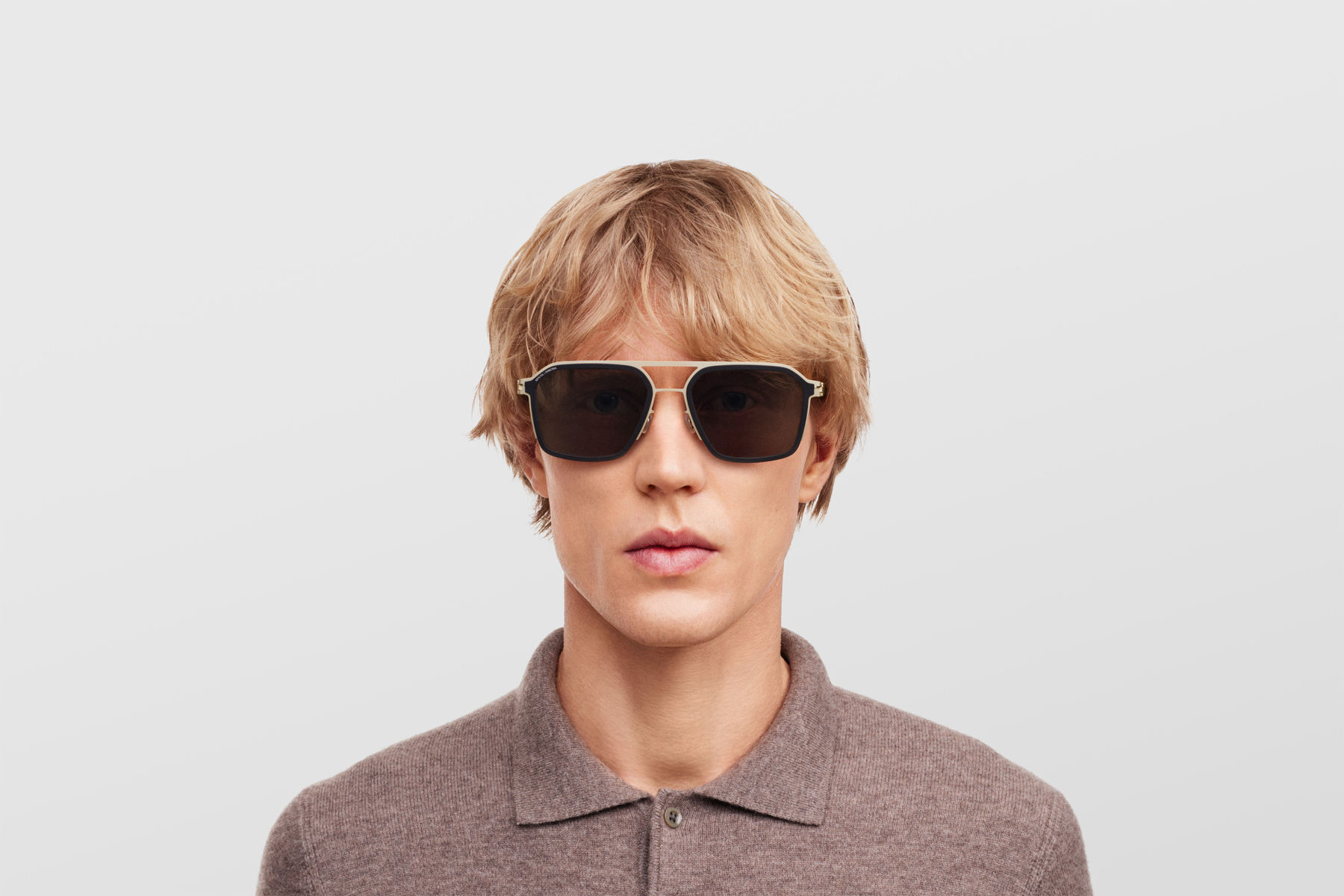
MYKITA demonstrates a different expression of European craftsmanship: lightness, precision and construction logic rather than substantial acetate volume.
The brand is especially associated with lightweight stainless-steel construction and technical solutions that allow engineering to remain visible rather than disguising it behind decorative detail. The result can feel distinctly Berlin: controlled, functional and contemporary, yet recognisable through construction rather than through ornament.
For buyers, this creates a very different value proposition from a substantial acetate heritage frame. The question is not simply which one is “better made.” One uses material volume and sculpting to create presence; the other can use lightness, precision and structural economy to create identity.
Consider MYKITA if: lightweight construction, visible engineering, Berlin manufacture and a close relationship between design and production are important to you.
Consider another direction if: your idea of premium eyewear is primarily substantial acetate, warm material depth or heritage-informed frame volume.
Cutler and Gross vs MYKITA
Choose Cutler and Gross when material presence, acetate character and British eyewear heritage with Italian production are central to the appeal.
Choose MYKITA when lightness, engineering, structural precision and integrated Berlin manufacture matter more. The comparison shows why “European craftsmanship” cannot be reduced to one aesthetic or one production method.
6. Retrosuperfuture — best for contemporary Italian-made sunglasses
Retrosuperfuture brings the comparison into contemporary Italian eyewear. Founded in Italy in 2007, the brand has developed a recognisable position around sunglasses that combine accessible frame archetypes with a more fashion-aware, contemporary visual language.
Retrosuperfuture illustrates how Italian eyewear production can support a contemporary design language rather than relying on traditional luxury or heritage codes.
Its relevance is different from that of an old heritage house. Retrosuperfuture demonstrates that Italian eyewear manufacturing does not have to be expressed through nostalgia or traditional luxury codes. The same production culture can support frames designed for a younger and more contemporary visual context.
The brand identifies its eyewear as handmade in Italy, making Italian manufacture a clear part of the proposition. Yet the reason to consider Retrosuperfuture is not simply the country label. Its stronger argument is the relationship between that production base and a design language capable of moving between familiar rectangles, rounded forms, narrow silhouettes and more directional shapes.
That makes it particularly relevant for buyers who want Italian-made sunglasses but do not necessarily want traditional luxury signalling. Depending on the model, the eyewear can feel recognisable enough for everyday use while still carrying enough proportion or colour to make the frame noticeable.
Consider Retrosuperfuture if: you want contemporary Italian-made eyewear with a strong relationship to fashion, shape and current visual culture.
Consider another direction if: you are specifically looking for deep heritage, highly experimental sculptural eyewear or a design philosophy built around remaining visually stable beyond trends.
BBN Insight: manufacturing tradition does not dictate aesthetic tradition
Italian production can support a heritage-inspired acetate frame, a luxury statement piece or contemporary fashion eyewear. Where a frame is made and what visual language it expresses are related pieces of information, not the same piece of information. This is why manufacturing origin becomes more useful when evaluated alongside the brand's design intention.
7. Lesca Lunetier — best for French heritage and substantial acetate
Lesca Lunetier brings a distinctly French frame-making perspective to the shortlist. Established in 1964, the family house draws heavily on eyewear forms associated with the 1950s and 1960s while working with specialist workshops in Europe, notably in France and Germany.
Its most recognisable acetate frames help explain why French eyewear is often associated with generous proportions, panto-derived geometry and visible material volume. Rather than making acetate disappear, many Lesca designs allow thickness and sculpting to become part of the frame's personality.
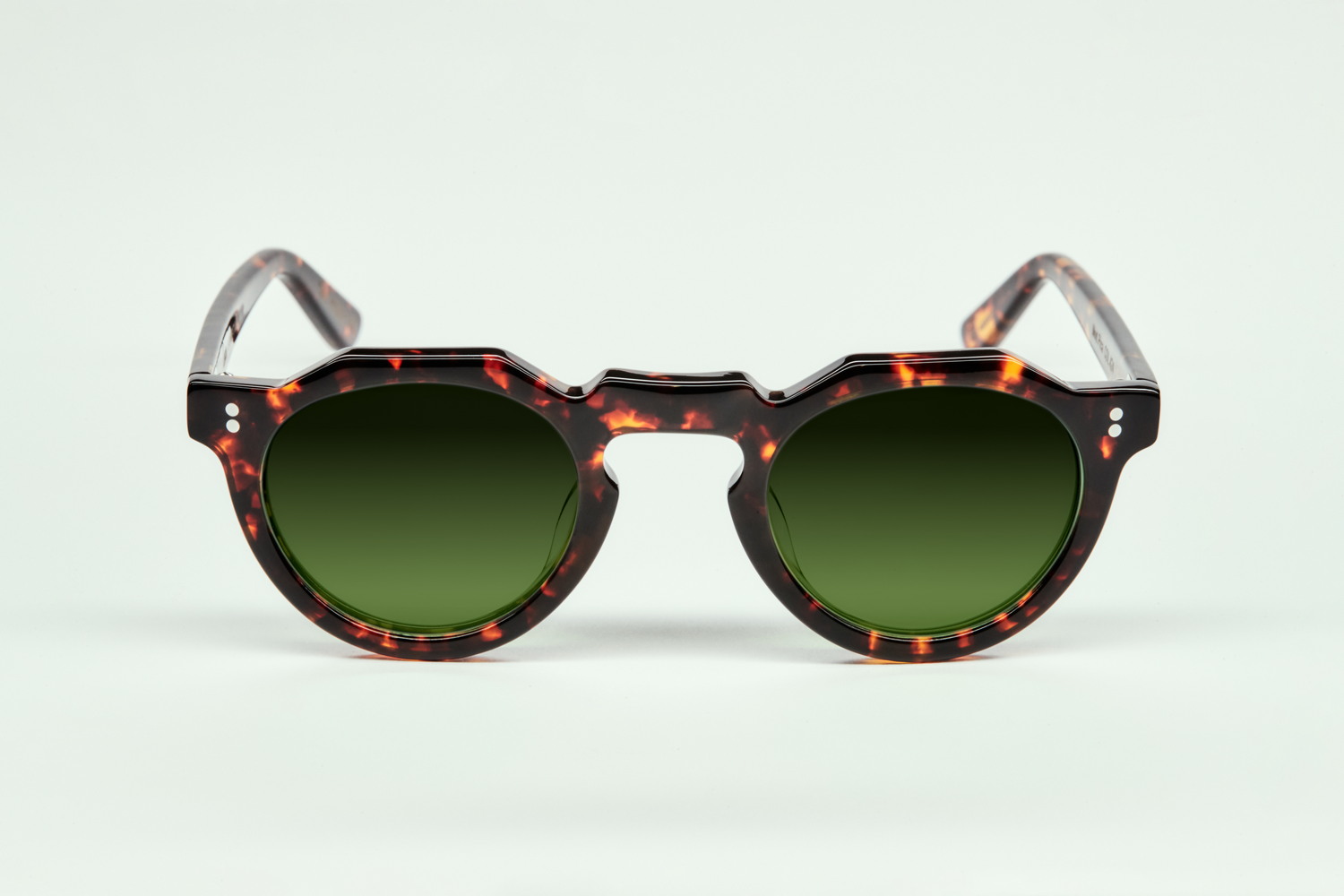
Lesca Pica demonstrates one recognisable French approach to acetate: generous material volume combined with rounded panto-derived geometry and sculpted surfaces.
The Pica is a useful example because its character does not come from thickness alone. Rounded lens geometry moderates the visual force of the acetate, while the bridge, brow and outer contours organise that volume into a coherent silhouette. It illustrates a recurring principle in premium acetate: more material only becomes meaningful when proportion gives it direction.
Lesca also reinforces the provenance distinction established earlier in this guide. Calling it simply “French-made eyewear” would flatten a more interesting production story involving specialist European workshops. The brand's Frenchness is strongly connected to history and design culture, while manufacturing should be understood at the level the company actually describes it.
If this is the aspect of European eyewear that interests you most, our guide to the best French eyewear brands for 2027 compares Lesca with other French houses in greater depth.
Consider Lesca if: you respond to substantial acetate, panto shapes, heritage references and frames whose material presence is immediately visible.
Consider another direction if: you want very lightweight engineering, minimal material presence or a deliberately futuristic silhouette.
BBN Insight: thickness is a design resource, not a quality score
Substantial acetate creates opportunities for sculpting, colour depth and stronger silhouette definition, but it also creates more visual weight to control. The best thick frames do not merely contain more material; they make that material explain the shape. This is why a well-resolved substantial frame can feel deliberate while another of similar thickness simply feels bulky.
8. KALEOS — best for contemporary Barcelona shape and proportion
KALEOS represents a younger Barcelona design perspective. Founded in Barcelona in 2013, the brand approaches eyewear as a fashion and design object, using changing proportions, combinations of materials and distinctive silhouettes to give collections a contemporary character.
Where Lesca often makes heritage legible through familiar eyewear archetypes, KALEOS is more useful for buyers interested in how established frame categories can be altered through proportion. A rectangle can become more directional through lens depth and outer width. A rounded frame can feel more architectural through the brow or bridge. Small changes in geometry can alter the personality of a familiar form without requiring an entirely new category of eyewear.
This is an important part of European eyewear's diversity. Barcelona does not need to imitate Parisian heritage, Italian manufacturing culture or Berlin engineering to justify its place in the landscape. Its strongest contemporary brands can instead use shape, colour and fashion awareness to develop a separate visual vocabulary.
For buyers, the trade-off is largely about time horizon and visual intention. A frame selected because its proportions feel especially current may be exactly what a fashion-aware wearer wants. Someone prioritising maximum continuity across many seasons may instead prefer a brand whose design philosophy is more explicitly resistant to trend cycles.
Consider KALEOS if: contemporary proportion, evolving silhouettes and Barcelona's fashion-design perspective are central to what you want from eyewear.
Consider another direction if: you are primarily looking for heritage continuity, visible engineering or an explicitly beyond-trends design philosophy.
What these five brands already reveal about European eyewear
Cutler and Gross: heritage can cross national boundaries through British identity and Italian manufacture.
MYKITA: craftsmanship can mean engineering and integrated production rather than traditional acetate finishing alone.
Retrosuperfuture: specialist Italian manufacture can support contemporary eyewear rather than only heritage luxury.
Lesca: substantial acetate becomes convincing when volume, geometry and heritage references reinforce one another.
KALEOS: contemporary European identity can come from changing proportion and silhouette rather than manufacturing tradition alone.
9. Etnia Barcelona — best for colour and artistic eyewear
Etnia Barcelona gives the city's eyewear culture another, distinctly different expression. While KALEOS is especially useful for thinking about contemporary proportion and changing silhouettes, Etnia Barcelona has built a recognisable identity around colour, art and the expressive possibilities of eyewear.
That matters because colour is often treated as a secondary decision — something selected after the shape of a frame has already been established. In eyewear, however, colour changes how strongly that shape is perceived. A dark opaque frame can make its perimeter highly visible; translucent acetate can soften the same amount of material; layered or patterned colour can divide a substantial front into smaller visual areas.
Etnia Barcelona demonstrates why colour is not merely decorative. Transparency, hue and contrast can change how strongly the geometry and material volume of a frame are perceived.
Etnia Barcelona is particularly relevant to buyers who want this expressive dimension to remain visible. The brand's relationship with art and colour gives it a different reason to exist from an engineering-led brand such as MYKITA or a heritage-oriented house such as Lesca. The comparison is therefore less about which approach is more sophisticated and more about which variable you want your eyewear to emphasise.
Colour also changes buying behaviour. A neutral black or tortoise frame can often move easily between wardrobes, whereas a highly specific colour combination may become a more deliberate part of how someone dresses. Neither is inherently more wearable. The question is whether you want your sunglasses to establish continuity or introduce contrast.
Consider Etnia Barcelona if: colour, artistic references and expressive material combinations are major reasons you choose eyewear.
Consider another direction if: you prefer a quieter palette, minimal visual intervention or want construction and engineering to provide most of the frame's identity.
BBN Insight: colour is structural to perception
Colour does not physically change the dimensions of a frame, but it can substantially change how those dimensions are perceived. Higher contrast makes boundaries easier to see; transparency allows more of the face to remain visually present; pattern interrupts continuous areas of material. When comparing bold eyewear, colour and geometry should therefore be evaluated together rather than as separate design decisions.
10. Kuboraum — best for experimental European eyewear
Kuboraum occupies the most overtly experimental position in this shortlist. Born in Berlin, the brand describes its eyewear as masks rather than conventional glasses, with frames dreamed in Berlin and handmade in Italy. That language indicates a fundamentally different idea of what eyewear is supposed to do.
Most sunglasses negotiate between the object and the wearer. Even a bold frame usually aims to remain recognisable as a familiar category — rectangle, aviator, panto, cat-eye or round. Kuboraum is more willing to make the object itself dominant, using exaggerated volume, unusual geometry and sculptural treatments to alter the wearer's visual identity.
Kuboraum pushes beyond conventional bold eyewear by allowing scale, geometry and sculptural treatment to become dominant parts of the wearer's visual identity.
This makes the brand useful at the extreme end of the European eyewear spectrum. It demonstrates that statement eyewear is not simply ordinary eyewear made thicker. A truly experimental frame can alter scale, contour, lens relationship, surface and facial coverage simultaneously.
The Berlin–Italy relationship is also instructive. Conceptual development and physical manufacture do not have to occur in the same country for a coherent European design identity to emerge. Berlin contributes the creative context described by the brand; Italian production contributes a separate part of the finished proposition.
Consider Kuboraum if: you want eyewear to function as a highly expressive design object and are comfortable allowing the frame to become one of the first things people notice.
Consider another direction if: you need one versatile pair for daily use, prefer restrained geometry or want your sunglasses to integrate quietly into a wardrobe.
Bold vs experimental eyewear
Bold eyewear can use a strong silhouette, substantial acetate or noticeable colour while remaining easy to understand as a familiar frame category.
Experimental eyewear goes further by challenging the category itself through scale, geometry, construction or facial coverage. If you like statement frames but still want repeat-wear versatility, this distinction can prevent you from buying more visual intensity than you actually need.
11. Monokel — best for Scandinavian restraint
Monokel brings the shortlist toward a quieter end of the visual spectrum. Based in Stockholm, the independent eyewear brand represents a Scandinavian perspective in which clean geometry, controlled colour and relatively restrained styling can carry more of the design than overt decoration.
Restraint should not be confused with absence of design. In eyewear, making a frame quieter often places more pressure on proportion. When exaggerated sculpting, conspicuous logos and highly unusual geometry are removed, small relationships — lens depth, bridge width, corner radius and overall frame width — become easier to notice.
This is what makes Monokel useful in a European comparison. The brand provides a counterpoint to Kuboraum's sculptural experimentation and Etnia Barcelona's colour-led expression. All three can produce recognisable eyewear, but they allocate visual attention differently.
For someone building a compact sunglasses collection, quieter frames can also solve a practical problem. They may combine more easily with different clothing, occasions and seasons because the eyewear does not need to become the dominant element of every look. That can increase repeat wear even when the frame appears less dramatic at first encounter.
Consider Monokel if: you prefer a Scandinavian design perspective, controlled silhouettes and eyewear that contributes character without requiring maximum visual impact.
Consider another direction if: you want substantial sculptural acetate, highly expressive colour or sunglasses that deliberately dominate the face.
BBN Insight: quiet frames have fewer places to hide weak proportion
Visual complexity can attract attention away from small proportional decisions. A restrained frame has less camouflage. When colour, decoration and volume are reduced, lens geometry, bridge position, width and brow relationship become proportionally more important. Minimal eyewear is therefore not necessarily simpler to resolve well.
12. Bo Bo Noir — best for bold, refined eyewear designed beyond trends
Bo Bo Noir brings a Portuguese creative perspective to this European landscape. Co-founded by Portuguese designer João Bessa, the independent eyewear brand is built around the idea that glasses should shape a look rather than merely complete it.
The brand's creative direction, brand development and design vision are based in Portugal. João Bessa founded Bessa Design in 2013, and his broader design work explores relationships between past and present. In Bo Bo Noir eyewear, that thinking appears through classic forms, strong silhouettes and frequent mid-century references reinterpreted through a contemporary, restrained design language.
This creates a different proposition from both trend-led fashion eyewear and highly experimental frames. The objective is not to make the loudest object possible. It is to create enough presence, character and clarity for the frame to contribute meaningfully to personal identity while keeping proportion and structure controlled.
Material supports that approach. Bo Bo Noir uses high-quality acetate and works with specialised eyewear production facilities with extensive industry experience, with an emphasis on consistency and attention to detail. The important distinction is that Portuguese creative direction should not be confused with a claim that the frames are manufactured in Portugal. As throughout this guide, design origin and production should be described separately.
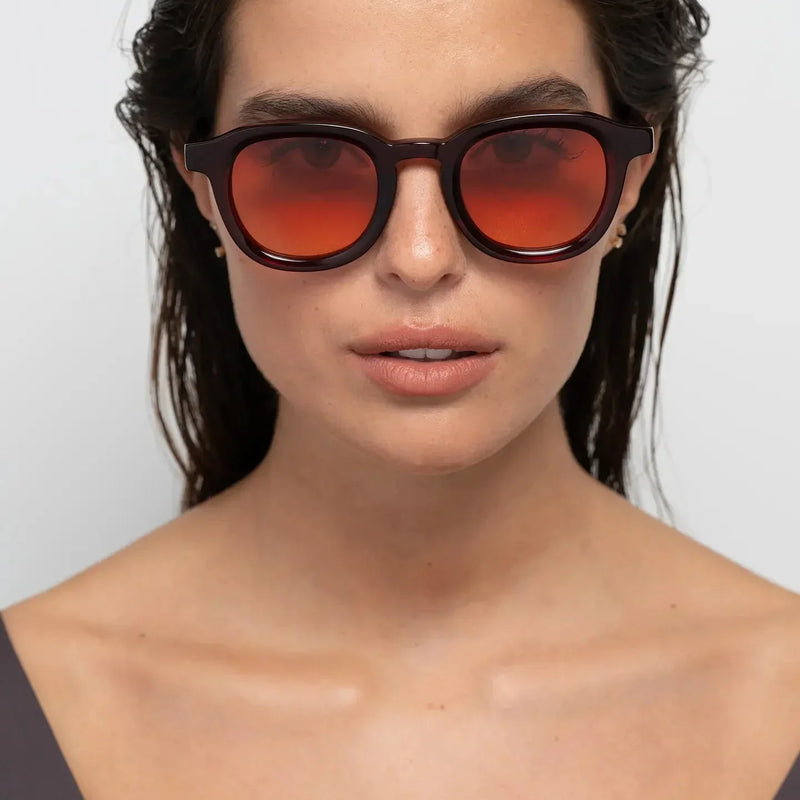
Narr Burgundy shows how a recognisable panto-derived silhouette can gain identity through acetate colour and proportion without requiring exaggerated geometry. Boldness comes from the relationship between shape, material and the face.
The Narr Burgundy illustrates the distinction. Its panto-derived geometry is familiar enough to remain legible, while the burgundy acetate gives the frame a more specific identity. The colour creates presence without relying on black's maximum perimeter contrast, allowing shape and material to share the visual work.
For buyers attracted to substantial European acetate, this creates a middle ground between restraint and experimentation. The frame can be distinctive without needing to become costume-like, and historical references can inform the silhouette without turning the object into a reproduction of vintage eyewear.
Consider Bo Bo Noir if: you want strong silhouettes, expressive acetate and considered proportions, with a design philosophy focused on identity and relevance beyond short-lived trends.
Consider another direction if: you specifically require manufacture in a particular European country, prefer almost invisible eyewear or want deliberately extreme conceptual forms.
BBN perspective: bold and refined are not opposites
A frame does not need every variable turned to maximum intensity in order to have identity. Silhouette can provide presence while colour moderates contrast; acetate volume can strengthen architecture while rounded geometry softens its effect. The tension between expression and restraint is often what makes a bold frame easier to wear repeatedly.
13. How do the best European sunglasses brands compare?
Once the brands are viewed together, the most useful comparison is not a numerical ranking. It is a map of what each brand makes central to the purchase. That reveals whether you are really paying for heritage, manufacturing integration, contemporary fashion relevance, colour, experimentation, restraint or a particular design philosophy.
Brand
Design identity
Production context
Visual presence
Best reason to consider it
Cutler and Gross
British heritage and statement frame design.
Frames made in Italy.
Medium to strong.
Established design identity combined with Italian manufacture.
MYKITA
Technical, engineered and contemporary.
Design and manufacture integrated in Berlin.
Low to strong depending on construction.
Engineering, lightness and integrated production.
Retrosuperfuture
Contemporary Italian fashion eyewear.
Handmade in Italy.
Medium to strong.
Italian production with a current visual language.
Lesca Lunetier
French heritage, panto forms and substantial acetate.
Specialist European workshops, notably France and Germany.
Medium to strong.
Heritage-informed geometry and visible acetate volume.
KALEOS
Contemporary Barcelona proportion and shape.
Barcelona-led design proposition; check individual product information when manufacturing origin matters.
Medium to strong.
Contemporary silhouette and proportion.
Etnia Barcelona
Colour-led, artistic and expressive.
Barcelona brand; verify model-level production information when provenance is decisive.
Medium to strong.
Colour as a central part of eyewear identity.
Kuboraum
Conceptual, sculptural and experimental.
Dreamed in Berlin and handmade in Italy.
Strong to extreme.
Eyewear as an expressive design object.
Monokel
Scandinavian restraint and clean geometry.
Swedish design identity; check current model information for specific production details.
Low to medium.
Controlled everyday design with less visual excess.
Bo Bo Noir
Bold yet refined, heritage-informed and designed beyond trends.
Portuguese creative direction with specialised eyewear production facilities.
Medium to strong.
Strong silhouettes and expressive acetate controlled through proportion.
The comparison also exposes a useful buying shortcut. If the word craftsmanship is doing most of the persuasive work on a product page, ask what form that craftsmanship actually takes. Is it acetate sculpting and finishing? Lightweight engineering? Integrated manufacture? Specialist Italian production? Complex colour work? Precision assembly?
Different answers can all be legitimate. What matters is that the term points toward something identifiable rather than operating as an unsupported synonym for expensive. This same principle applies when evaluating what makes some sunglasses feel premium.
The final comparison is therefore the one most buyers eventually need to make: how much should manufacturing country influence the decision, and what should you examine when choosing between these very different European brands?
14. Does country of manufacture determine eyewear quality?
No. Country of manufacture can provide useful context, but it does not determine the quality of a pair of sunglasses by itself. Italy, France and Germany all have important specialist eyewear capabilities, yet the finished quality of a frame still depends on design, materials, manufacturing processes, finishing, assembly and quality control.
This distinction is particularly important when shopping for European sunglasses because country names often carry powerful associations. “Made in Italy” can suggest established eyewear manufacturing expertise. French production can connect a frame with historic specialist regions and frame-making knowledge. Berlin manufacture can become meaningful when design, engineering and production are closely integrated. Those associations are useful only when they help explain something observable about the product.
A poorly proportioned frame does not become better because it was produced in a prestigious manufacturing region. Equally, a carefully designed and well-resolved frame does not become inferior simply because its production model differs from the traditional European workshop story a buyer expected.
The more useful distinction is between provenance and execution. Provenance tells you something about where or within what production context an object was made. Execution tells you whether the design was successfully translated into the physical frame. Premium eyewear needs the second even when the first is compelling.
How to evaluate a manufacturing claim
1. Identify exactly what is being claimed. “Designed in”, “made in” and “brand from” do not mean the same thing.
2. Look for model-level information. A brand can use different materials, suppliers or production arrangements across collections.
3. Connect provenance to the object. Ask what the stated production context helps explain about construction, finishing or material treatment.
4. Judge the frame independently. Country of manufacture should add evidence to a good object rather than substitute for one.
The same reasoning applies to the word “handmade.” Many sophisticated eyewear production systems combine machinery, specialist processes and manual operations. Precision technology is not evidence of inferior craftsmanship, just as manual intervention is not automatically proof of superior quality. What matters is whether each production stage is appropriate to the frame being made.
This is why the strongest European eyewear propositions tend to be specific. Instead of asking you to believe that “Europe makes better sunglasses,” they give you enough information to understand what was designed, where relevant processes take place and why those choices matter to the finished frame.
BBN Insight: provenance has three levels of usefulness
At its weakest, provenance is simply a country name attached to a product. At the next level, it identifies where meaningful production takes place. At its strongest, provenance helps explain something you can actually see or experience in the frame — its construction, material treatment, finishing or design resolution. The closer a brand gets to that third level, the more useful origin becomes to the buyer.
15. How should you choose between European eyewear brands?
The easiest way to choose between these brands is to stop asking which one is universally best and identify which design variables matter most to you. Once those variables are clear, a nine-brand shortlist becomes considerably easier to navigate.
Start with visual presence. If you want sunglasses to become an obvious part of your identity, substantial acetate from Lesca, the heritage-led confidence of Cutler and Gross, the controlled boldness of Bo Bo Noir or the more extreme experimentation of Kuboraum can all be relevant — but at very different levels of intensity.
If you prefer the object to feel lighter, move toward brands where engineering or restraint does more of the visual work. MYKITA provides a particularly clear technical route, while Monokel offers a quieter Scandinavian direction. If colour is central to your decision, Etnia Barcelona becomes more relevant; if changing contemporary proportions attract you, KALEOS and Retrosuperfuture deserve closer attention.
Then separate the variables that are often bundled together. You may like Italian manufacture without wanting traditional Italian luxury styling. You may admire French acetate volume without needing a French brand. You may appreciate Berlin design without wanting experimental eyewear. Translate the country or brand you admire into the specific characteristics that attracted you.
A seven-step European sunglasses decision guide
1. Decide how visible you want the frame to be. Quiet, noticeable, bold and experimental are different levels of commitment.
2. Choose your dominant geometry. Rectangle, panto, round, aviator and cat-eye shapes organise the face differently.
3. Decide how much material presence you want. Substantial acetate creates a different effect from thin metal or lightweight technical construction.
4. Use colour to adjust intensity. Black strengthens perimeter contrast; tortoise introduces variation; transparency can reduce perceived visual weight.
5. Identify what you value in production. If Italian, French, German or another manufacturing origin matters, verify the specific model rather than assuming from brand nationality.
6. Check fit before prestige. Frame width, bridge behaviour, lens depth, temples and brow relationship affect whether good design actually works on you.
7. Ask whether you would still choose it without the logo. If the silhouette, material and proportions remain convincing, the design is carrying meaningful value of its own.
This last test is especially useful at premium prices. A recognisable logo can carry social meaning, but it should not be required to make the frame interesting. The strongest independent and design-led eyewear usually gives you something to respond to before you identify the name on the temple.
When shopping remotely, this framework needs to be combined with practical fit evidence. Clear front, side and three-quarter images, dimensions, worn photography and material information can reveal far more than a single isolated product shot. Our guide to what to check before buying sunglasses online covers those cues in greater detail.
Ultimately, the best European sunglasses brand for you is the one whose design language, physical frame and production proposition overlap with the way you actually want to wear eyewear. Geography can help you discover it. It should not make the final decision for you.
BBN Insight: build a frame brief before choosing a brand
Instead of beginning with “I want Italian sunglasses” or “I want a French brand,” describe the object first: “I want a substantial tortoise panto with medium facial contrast and minimal branding,” or “I want a lightweight technical frame with restrained geometry.” That short frame brief turns brand discovery into a more rational comparison and makes it much harder for prestige alone to control the purchase.
16. Frequently asked questions about European sunglasses brands
What are the best European sunglasses brands in 2027?
European sunglasses brands worth knowing in 2027 include Cutler and Gross, MYKITA, Retrosuperfuture, Lesca Lunetier, KALEOS, Etnia Barcelona, Kuboraum, Monokel and Bo Bo Noir. They are useful for different reasons, from British heritage and Italian production to Berlin engineering, French acetate traditions, Barcelona colour and shape, Scandinavian restraint and Portuguese creative direction. The best choice depends on the design language, construction and level of visual presence you prefer.
Which European countries are known for eyewear?
Italy and France have particularly important histories of specialist eyewear manufacturing, while Germany has produced distinctive engineering-led approaches and Spain, Britain and Scandinavian countries contribute their own design cultures. Contemporary European eyewear is highly interconnected, so brand origin, design location and manufacturing country should be checked separately.
Are European sunglasses better quality?
Not automatically. Europe contains important eyewear manufacturing regions and specialist design cultures, but geography alone cannot guarantee good sunglasses. Material selection, frame geometry, manufacturing, finishing, lenses, assembly and fit all matter. European provenance is most useful when it helps explain identifiable qualities in the finished frame.
Are the best European sunglasses made in Italy?
Many respected European eyewear brands use Italian manufacturing, and Italy has substantial specialist expertise, but it is not the only credible production route. MYKITA, for example, integrates production in Berlin, while French manufacturing regions retain significant frame-making knowledge. The better question is how effectively the production system supports the particular design.
What is the difference between a European brand and Made in Europe?
A European brand refers to the company's identity or base, while Made in Europe describes manufacturing origin. A brand can be based in one European country and manufacture in another, or it can work with production outside Europe. Design location, brand nationality, material origin and manufacturing location are separate facts and should not be assumed from one another.
Which European sunglasses brand is best for bold acetate frames?
Lesca Lunetier, Cutler and Gross and Bo Bo Noir are particularly relevant if substantial acetate and visible frame presence attract you, although their design perspectives differ. Lesca leans strongly into French heritage-informed forms, Cutler and Gross combines British eyewear identity with Italian production, while Bo Bo Noir uses strong silhouettes and considered proportions within a Portuguese-led design perspective.
Which European eyewear brand is best for minimalist sunglasses?
MYKITA and Monokel are useful starting points for different interpretations of restraint. MYKITA is particularly relevant when lightweight engineering and construction interest you, while Monokel offers a quieter Scandinavian design perspective. Minimalism should still be judged through proportion, fit and construction rather than visual simplicity alone.
Which European sunglasses brands are best for statement eyewear?
Kuboraum is the most overtly experimental option in this guide, while Etnia Barcelona uses colour as an important form of expression. Cutler and Gross, Lesca and Bo Bo Noir can provide substantial visual presence while remaining closer to familiar eyewear archetypes. The useful distinction is whether you want bold eyewear that remains versatile or experimental eyewear that deliberately dominates the look.
Are independent European eyewear brands worth it?
They can be when the brand provides a design language, production approach or material expression you genuinely value. Independence alone is not proof of quality, just as a large luxury name is not proof that a particular frame is right for you. Compare silhouette, materials, construction, fit, provenance and repeat-wear potential before deciding whether the price makes sense.
How should I choose a European sunglasses brand online?
Start with the type of frame you want rather than nationality alone. Compare overall width, lens dimensions, bridge design, material, colour, front and side views and worn photography. Then verify manufacturing information if provenance matters to you. This makes it easier to compare brands on observable qualities instead of relying primarily on prestige or marketing language.
Final thoughts: which European sunglasses brand should you choose in 2027?
The most useful conclusion is not that Europe produces one superior kind of eyewear. It is almost the opposite. Europe matters because it contains multiple specialist design and manufacturing cultures capable of producing very different answers to the same object.
Cutler and Gross connects British eyewear heritage with Italian manufacture. MYKITA makes engineering and integrated Berlin production central to its identity. Retrosuperfuture uses Italian manufacturing for a more contemporary proposition. Lesca preserves a recognisably French relationship with heritage-informed geometry and substantial acetate.
KALEOS and Etnia Barcelona demonstrate two different Barcelona perspectives through proportion and colour. Kuboraum pushes eyewear toward conceptual self-expression. Monokel offers a quieter Scandinavian counterpoint. Bo Bo Noir approaches the category from Portugal through strong silhouettes, expressive acetate and a design philosophy intended to remain relevant beyond short-lived trends.
None of those propositions needs to defeat the others to be valuable. They answer different buyer priorities. The more precisely you can identify whether you value heritage, engineering, material presence, colour, experimentation, restraint or long-term design relevance, the easier the choice becomes.
That is ultimately the advantage of understanding European eyewear as a design landscape rather than a prestige category. The country name can lead you toward a frame, but the frame itself should give you the reason to stay.
Discover another European perspective
Explore Bo Bo Noir sunglasses shaped by Portuguese creative direction, strong silhouettes, expressive acetate and considered proportions.
¡Disfruta de un 10% de descuento en tu compra! Suscríbete a nuestro boletín informativo.¡Disfruta de un 10% de descuento en tu compra! Suscríbete a nuestro boletín informativo.¡Disfruta de un 10% de descuento en tu compra! Suscríbete a nuestro boletín informativo.¡Disfruta de un 10% de descuento en tu compra! Suscríbete a nuestro boletín informativo.¡Disfruta de un 10% de descuento en tu compra! Suscríbete a nuestro boletín informativo.¡Disfruta de un 10% de descuento en tu compra! Suscríbete a nuestro boletín informativo.¡Disfruta de un 10% de descuento en tu compra! Suscríbete a nuestro boletín informativo.¡Disfruta de un 10% de descuento en tu compra! Suscríbete a nuestro boletín informativo.¡Disfruta de un 10% de descuento en tu compra! Suscríbete a nuestro boletín informativo.¡Disfruta de un 10% de descuento en tu compra! Suscríbete a nuestro boletín informativo.¡Disfruta de un 10% de descuento en tu compra! Suscríbete a nuestro boletín informativo.¡Disfruta de un 10% de descuento en tu compra! Suscríbete a nuestro boletín informativo.¡Disfruta de un 10% de descuento en tu compra! Suscríbete a nuestro boletín informativo.¡Disfruta de un 10% de descuento en tu compra! Suscríbete a nuestro boletín informativo.¡Disfruta de un 10% de descuento en tu compra! Suscríbete a nuestro boletín informativo.