
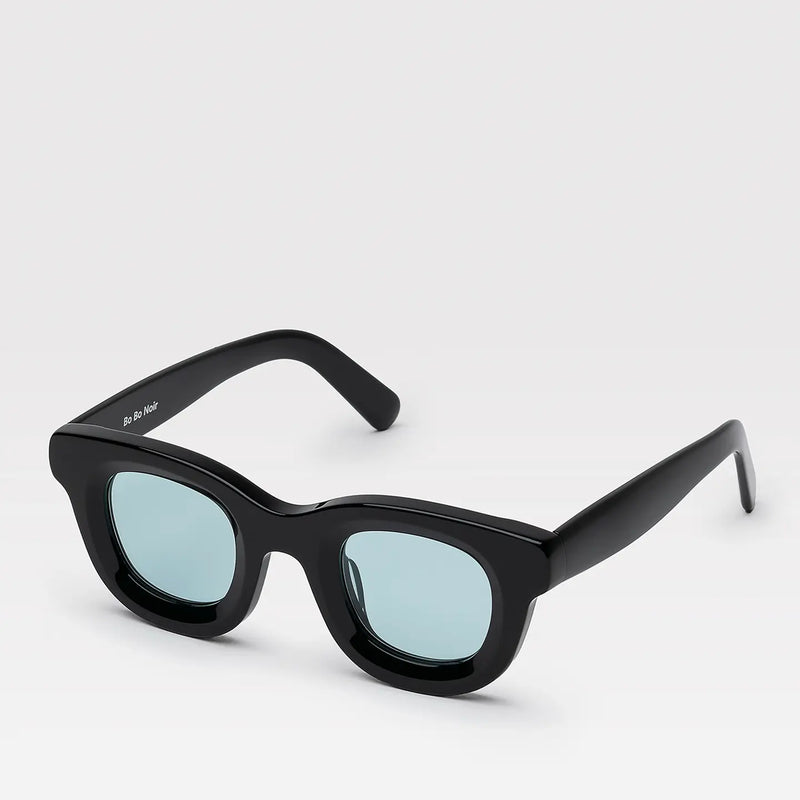
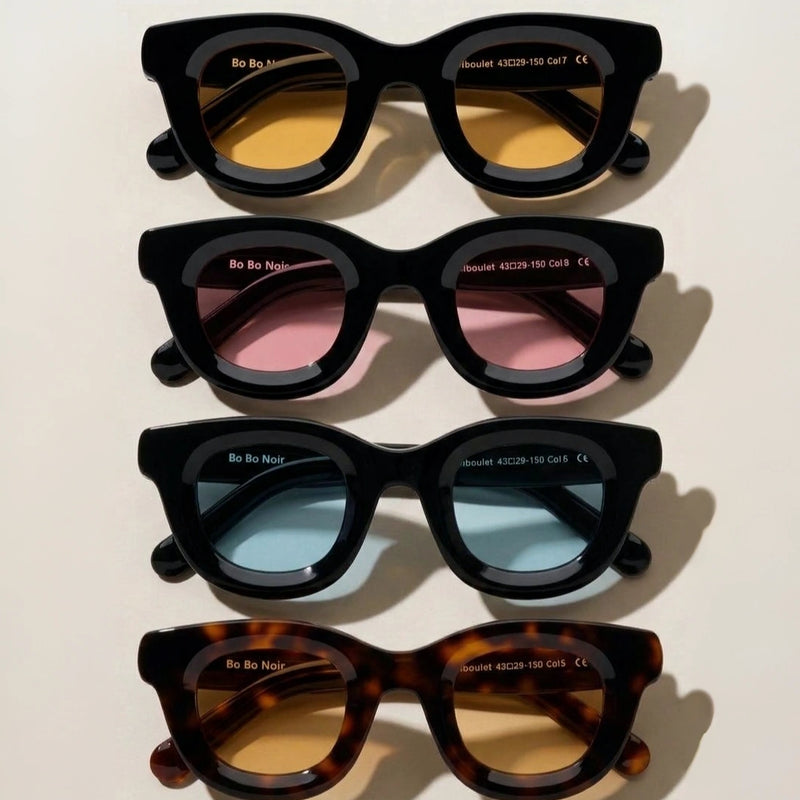
Light blue sunglasses pair a visible lens colour with a more open look around the eyes. On a substantial acetate frame, the pale tint lets the eye area remain part of your expression while the frame provides the outline and character. For the two Bo Bo Noir Triboulet versions in this guide, the practical starting point is equally clear: Category 1 nylon lenses for light shading in softer daylight, with UV400 protection. Choose the tint for the daylight you expect, then decide whether tortoise or glossy black better fits your style. A pale lens leaves more of the eye area visible than a dark tint. That is the main visual effect behind the idea of a more open look: the frame still shapes the face, while the eyes remain part of the expression. This can work particularly well with substantial acetate. Triboulet has pronounced rounded panto contours; the light blue lenses add colour without making the whole eye area appear uniformly dark. The result is a deliberate relationship between a strong frame and a lighter lens appearance. Visual lightness is different from physical weight. A pale blue tint does not establish that a frame weighs less, fits better or feels more comfortable. Those questions depend on the construction, dimensions and fit of the actual pair. Tint colour: Light blue describes the colour you see in the lens. In these models, it creates a cooler accent against warm tortoise or glossy black acetate. Filter category: Both featured versions have Category 1 lenses. Their light shading is intended for softer daylight and provides less shading than darker Category 3 lenses. UV protection: Both models are specified with UV400 protection. A pale appearance does not tell you the UV specification; check the product information separately. Polarisation and blue light filtering: A blue tint does not, by itself, establish either property. Look for an explicit specification rather than treating the lens colour as a technical claim. Start with the daylight rather than the season. A softly lit autumn afternoon and a bright winter day are different conditions. Calling a pair “winter sunglasses” does not make its light filter suitable for every winter setting. The two Category 1 Triboulet versions are options when light shading matches the conditions and you want the visual effect of pale blue lenses. If you are buying primarily for strong sunshine, choose the appropriate stronger shading first, then compare the frame and colour. For a stronger filter in the same substantial frame family, Triboulet Tortoise Gradient Brown has Category 3 lenses. That is a change in both tint and filter category. Our brown vs blue guide explains the comparison in detail. For driving or another specific activity, confirm the exact lens instructions and suitability before choosing. Lens colour alone is not enough to establish this. Warm tortoise acetate creates a colour contrast with pale blue lenses. The pattern introduces variation across the frame, while the lens colour remains the cooler accent. Choose this version if you prefer tortoise to a solid black outline and want eyewear to bring both warm and cool tones into your look. Category 1 nylon lenses · UV400 · 148 mm overall front width. Choose for: tortoise colour variation, a pale blue accent and a substantial panto silhouette. View Triboulet Tortoise Light Blue Glossy black acetate gives the rounded panto outline a clearer, more uniform definition. The pale blue lenses introduce colour while leaving the eyes visible. Choose this version if you like a black frame and want the lenses to supply the colour accent. Category 1 nylon lenses · UV400 · 148 mm overall front width. Choose for: a defined black outline, glossy acetate and light blue lenses. View Triboulet Shiny Black Light Blue Tortoise works as a patterned warm frame with a cooler blue lens. Black makes the frame outline more uniform, letting the blue stand out against it. Neither requires matching every item of clothing to the lenses. With a substantial frame and coloured lenses, a simple shirt, knit or jacket can give the eyewear room to define the look. If you already wear expressive colour or pattern, compare the frame palette with the combinations you actually repeat. Both Triboulet versions have a 148 mm overall front width. Compare that with a pair you already wear comfortably. The pale lenses can change how open the frame looks, but they do not turn a broad frame into a narrow one. Use the front and angled product views to judge frame thickness, colour and proportions. Worn photographs show the design on a particular person; your own measurements and bridge fit still matter. The two Triboulet versions featured here are specified with UV400 protection. Check UV protection separately from the darkness of the tint. No. Category 1 is the specification of these two pale blue Triboulet versions. Other blue lenses can have different filter categories; check the exact product. Choose them when their Category 1 light shading matches the daylight conditions. They are not a substitute for stronger shading when that is needed, and the pale tint does not guarantee comfort throughout every situation. If strong daylight shading is your priority, compare a suitable darker category. These Category 1 versions provide lighter shading than Category 3 models. A blue sunglass tint is a colour. It does not by itself confirm a blue light filtering specification. Read the information for the exact lens instead of relying on its appearance. The product descriptions specify Category 1 nylon lenses and UV400 protection. They do not list polarisation, so this guide does not describe them as polarised. They can give the frame a more open visual appearance. That is different from physical weight; there is no weight reduction claim based on the tint. Both have the same stated lens category and 148 mm overall front width. Choose tortoise for warm pattern variation or shiny black for a more uniform, defined outline, then check the fit. The featured Triboulet models are unisex designs. Choose through frame dimensions, fit and personal style rather than treating the lens colour as gender specific. Technical background: ZEISS on UV protection and shading. Model specifications and photography: Bo Bo Noir. The styling observations describe the visible design; they are not a laboratory comparison of lens performance. Choose your light blue Triboulet Compare tortoise and shiny black, check the 148 mm front width and choose the Category 1 tint for softer daylight. Open the product page for full details and photographs.
Why light blue lenses look more open
Tint, UV protection and other lens properties
When to choose a light tint
Two Triboulet frames with light blue lenses
Triboulet Tortoise Light Blue

Triboulet Shiny Black Light Blue

How to style them and check the fit
Choose the colour relationship
Keep one clear focal point
Check the overall width
Review photographs from more than one angle

Frequently asked questions
Do light blue sunglasses provide UV protection?
Are all blue sunglass lenses Category 1?
Can I wear these light blue sunglasses all day?
Are these a good choice for bright sunshine?
Are blue lenses the same as blue light filtering glasses?
Are these light blue lenses polarised?
Do pale blue lenses make the frame lighter?
How do I choose between the two blue Triboulet versions?
Are light blue sunglasses for men or women?
Sources and product information
Bo Bo Journal
Featured products


