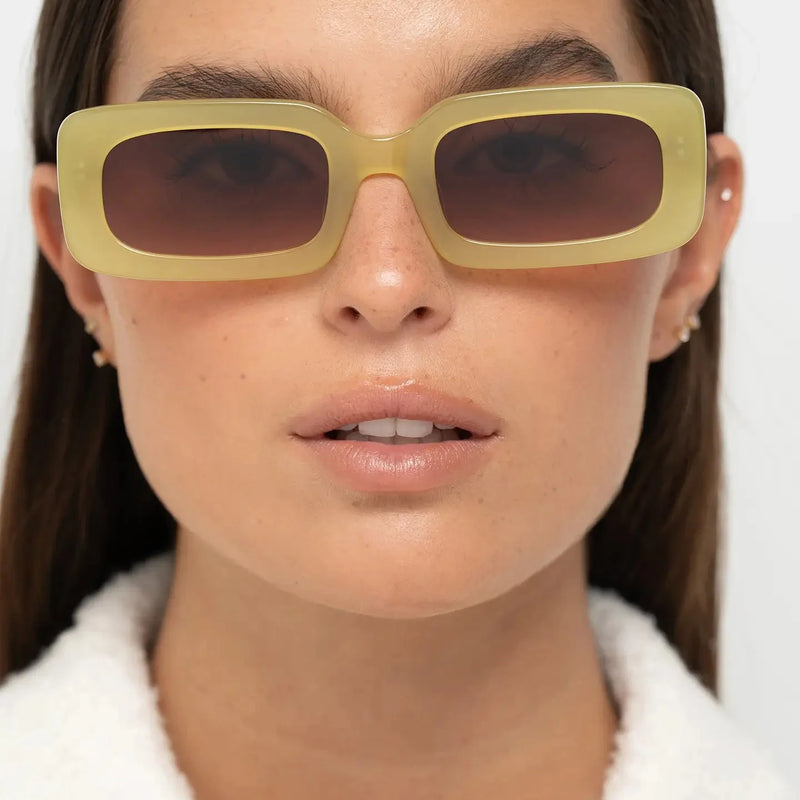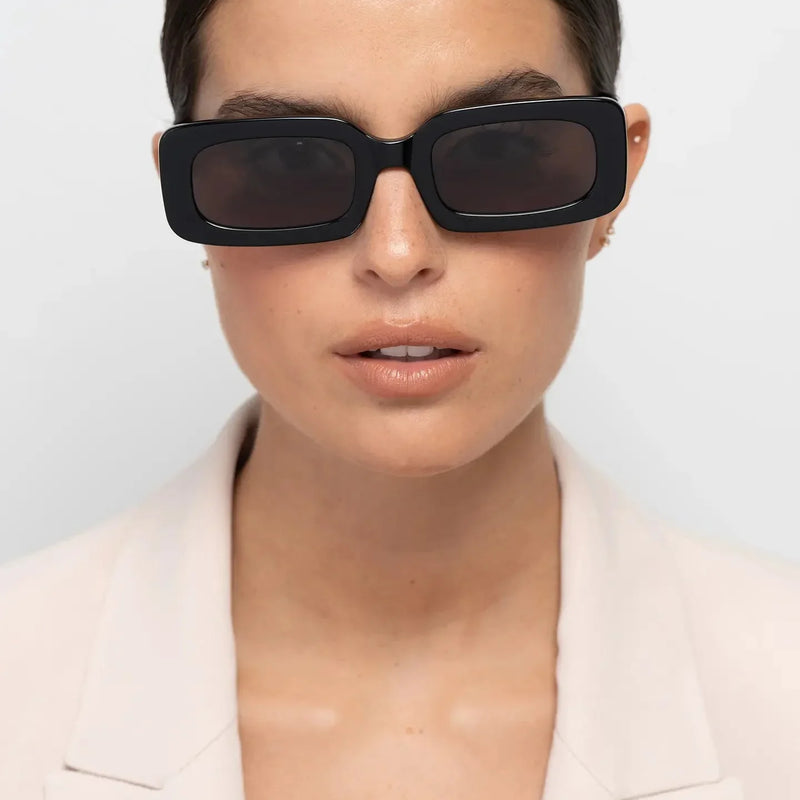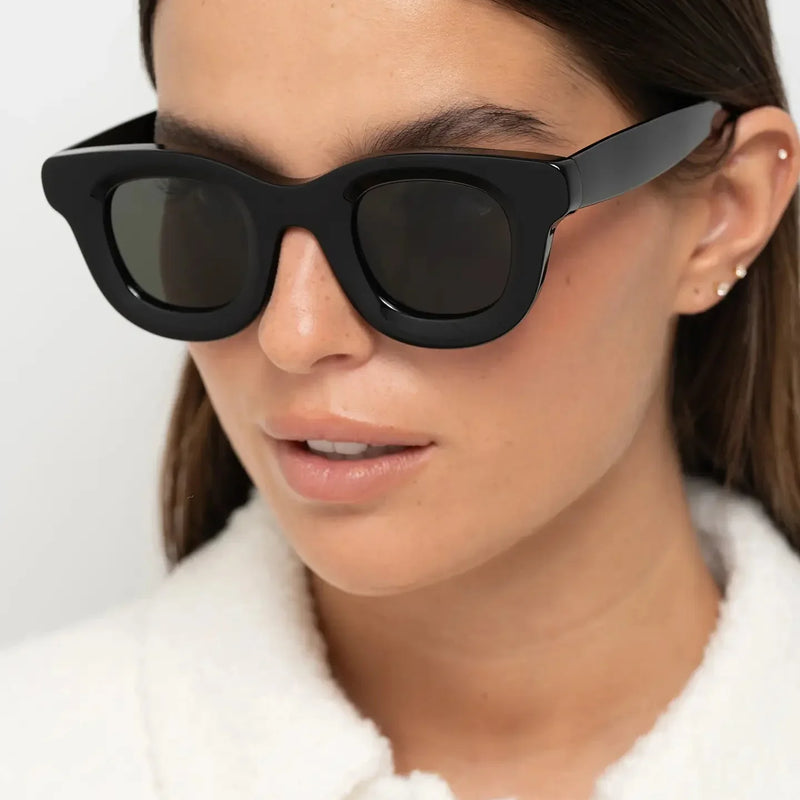
Imagine leaving a shaded street and stepping into bright sunshine. Through brown lenses, the pavement, trees and building shadows may appear warmer and more clearly separated. Through blue lenses, the same scene feels cooler, lighter and more atmospheric.
This is why choosing between brown vs blue sunglass lenses involves more than deciding which colour looks best. Lens tint can influence perceived contrast, colour temperature, landscape definition and how comfortable different environments feel throughout the day.
Brown lenses generally create stronger perceived contrast. Blue lenses create a cooler visual experience and can give sunglasses a more distinctive identity, but they are not usually the first choice when recognising shadows, textures and changes in terrain is the main priority.
This guide explains how both lens colours behave, where each performs best and which Bo Bo Noir sunglasses illustrate the difference. For a wider comparison of warm and neutral tints, read our guide to Brown vs Grey Sunglasses.

Quick Answer: Do Brown or Blue Sunglass Lenses Create Better Contrast?
Brown sunglass lenses usually create better perceived contrast than blue lenses. Their warm filtration can increase the visible separation between light areas, shadows and similar natural colours, helping roads, landscapes and textured surfaces appear more defined.
Blue lenses create a cooler colour balance. They can reduce brightness when the lens category is suitable for the conditions, but their main advantage is often the distinctive visual atmosphere they create rather than maximum terrain definition.
Choose brown lenses when you want stronger contrast, practical versatility and a warmer view. Choose blue lenses when you prefer cooler colour perception and want the lenses to play a more expressive role in the appearance of the sunglasses.
Lens colour does not physically sharpen eyesight. It changes the relationship between colours and brightness levels. Brown lenses can make certain edges and tonal changes easier to recognise, which is why the view often feels more defined even though visual acuity itself has not changed.
Brown vs Blue Sunglass Lenses at a Glance
| Feature | Brown Lenses | Blue Lenses |
|---|---|---|
| Perceived contrast | Higher | Moderate |
| Colour temperature | Warm | Cool |
| Colour fidelity | Adds a warm cast | Adds a cool cast |
| Shadow definition | Very good | Good |
| Everyday versatility | Excellent | Good to very good |
| Visual character | Warm and grounded | Cool and expressive |
| Best suited to | Driving, travel, walking and varied outdoor use | City wear, holidays and style-led everyday use |
Both colours can provide comfortable sun protection when the lenses offer appropriate UV protection and visible light transmission. The real difference is how they organise the scene visually.
Brown lenses emphasise warmth, separation and environmental structure. Blue lenses emphasise coolness, openness and visual identity. Understanding that distinction makes the final choice much easier.
Why Do Brown Sunglass Lenses Create Stronger Perceived Contrast?
Brown lenses filter the visible spectrum in a way that shifts the scene towards warmer amber and copper tones. This can increase the apparent separation between related colours, especially across roads, woodland, pavements and natural landscapes.
Consider a country road bordered by trees. The asphalt may contain grey and brown tones, while the surrounding vegetation includes greens, shadows and areas of reflected sunlight. A brown lens can make these neighbouring tones feel more distinct, helping the scene appear deeper and easier to read.
Compared with blue lenses, brown lenses are therefore more likely to emphasise edges, shadow transitions and changes in terrain. They do not create new detail, but they can make existing detail easier to notice.

How brown lenses affect the visual field
Brown lenses can make greens appear richer, warm surfaces more prominent and shaded areas easier to distinguish from bright ones. This is particularly noticeable when the environment contains subtle tonal variation rather than simple blocks of colour.
The result often feels comfortable during long periods outdoors because the visual field retains warmth and definition without appearing completely neutral or flat.
Where brown lenses are less neutral
The same warmth that improves perceived contrast also changes colour fidelity. White surfaces may appear creamier, cool greys may look warmer and blue skies may lose some neutrality.
This is not necessarily a disadvantage. It is a trade-off. Someone who prioritises contrast may prefer this warmer rendering, while someone who needs the most neutral colour reproduction may be more comfortable with grey lenses.
Our guide to Warm vs Cool Tone Sunglasses explains how colour temperature influences both the view through the lens and the way sunglasses interact with the face.
Brown lenses are especially effective when the environment contains several related colours. Their strength is not simply making everything warmer. It is making the structure within that warmth easier to recognise.
When Are Brown Sunglass Lenses the Better Choice?
Brown lenses are the stronger choice when the wearer needs one adaptable pair for several environments. They perform particularly well when visual conditions change during the day.
A morning journey may begin in soft light, move through bright roads and finish in a shaded city centre. Brown lenses can preserve a consistent sense of definition across these transitions, particularly when the tint is graduated rather than completely solid.
Brown lenses are better for you when:
- You regularly drive during daylight.
- You move between bright sunlight and partial shade.
- You want roads, steps and outdoor textures to appear more distinct.
- You prefer a warmer view of the environment.
- You want one lens colour for travel, walking and everyday use.
- You wear tortoise, olive, cream or warm translucent frames.
Brown lenses may be less suitable when colour neutrality is essential or when the wearer strongly dislikes a warm visual cast. In those situations, blue or grey lenses may feel more natural.
Which Bo Bo Noir Sunglasses Best Illustrate Brown Lenses?
Once the visual principle is understood, different frame shapes demonstrate how brown lenses can create different levels of warmth and facial definition.
Triboulet Tortoise Gradient Brown
Triboulet Tortoise Gradient Brown combines a sculptural panto silhouette with gradient brown lenses. The tortoise acetate and warm tint sit within the same colour family, creating a coherent and grounded appearance.
This combination is best for someone who wants noticeable frame presence without the harder contrast of glossy black acetate. The gradient lens also softens the lower part of the frame, helping the eyes remain more visible.
William Crystal Peach
William Crystal Peach creates a lighter interpretation of brown lenses. The translucent peach acetate allows more skin tone to remain visible around the frame, while the warm lens continues the tonal relationship.
Choose this option when you want the contrast benefits of brown lenses but prefer a softer frame with less visual weight.
Jane Olive Green and Jane Cream White
Jane Olive Green combines rectangular geometry with a natural colour relationship between olive acetate and brown lenses. It creates more horizontal definition than the rounder William or panto-shaped Triboulet.
Jane Cream White uses a lighter frame colour to separate the sunglasses more clearly from the lens tint. The result feels brighter and more graphic while retaining the warmth of a brown lens.

How Do Blue Sunglass Lenses Change the Visual Experience?
Blue lenses shift the visual field towards the cool spectrum. Warm colours become less dominant, white surfaces can appear cleaner and the overall environment may feel fresher or more atmospheric.
Imagine sitting beside the sea on a bright afternoon. Through a brown lens, sand, rocks and coastal paths may appear warmer and more defined. Through a blue lens, the relationship between the sky, water and surrounding light feels cooler and more continuous.
Unlike brown lenses, blue lenses do not usually prioritise strong terrain contrast. Their advantage is the visual mood they create and the way they can soften or transform the appearance of a frame.

Light blue lenses
Light blue lenses allow more visible light to pass through and keep the eye area more visible. They create a softer colour wash rather than a strong dark filter.
This makes them particularly effective inside oversized or substantial frames. The lens colour reduces the visual heaviness of the frame and prevents the sunglasses from appearing completely closed around the eyes.
Darker blue lenses
Darker blue lenses reduce more visible brightness and create a stronger contrast against the face. When paired with black acetate, the result can feel graphic, modern and intentional.
Compared with light blue lenses, they are better suited to brighter conditions. However, they also make the eye area less visible and can create more overall visual weight.
For a closer look at this relationship, read How Blue Lenses Soften Black Acetate and Why Light Blue Lenses Feel More Open.
When Are Blue Sunglass Lenses the Better Choice?
Blue lenses make more sense when colour identity and visual atmosphere matter as much as maximum practical contrast.
They are particularly appealing to someone who already owns grey, green or brown sunglasses and wants a second pair that feels noticeably different rather than simply darker.
Blue lenses are better for you when:
- You prefer a cooler visual temperature.
- You want the lens colour to feel distinctive.
- You mainly wear sunglasses in cities, cafés, social settings or on holiday.
- You want to soften the appearance of strong black acetate.
- You prefer lighter lenses that keep the eyes visible.
- You already own a more neutral or versatile everyday pair.
Blue lenses may be less effective when recognising subtle changes in terrain is the primary concern. They can still be comfortable outdoors, but brown lenses will normally provide a stronger sense of warm contrast and environmental definition.
Which Bo Bo Noir Sunglasses Best Illustrate Blue Lenses?
Triboulet Tortoise Light Blue
Triboulet Tortoise Light Blue creates deliberate contrast between a warm tortoise frame and a cool light blue lens.
The lighter tint keeps the eyes more visible and makes the oversized panto silhouette feel more open. Choose it when you want a distinctive lens colour without the visual heaviness of a dark tint.
Narr Shiny Black
Narr Shiny Black combines a directional black panto frame with darker blue lenses. The polished acetate creates a clear boundary around the eyes, while the cool tint prevents the combination from feeling completely monochromatic.
This option is more suitable when you want stronger structure, greater brightness reduction and a clearly defined frame.
William Shiny Black
William Shiny Black uses a more controlled round silhouette. Its blue gradient lenses soften the transition between the dark acetate and the face while maintaining a clean, graphic outline.

Brown vs Blue Lenses: Which Is Better for Driving?
Brown lenses are generally the more practical choice for daytime driving. Their warmer contrast can make road surfaces, lane markings, shadows and the edges of surrounding vehicles appear more distinct.
This becomes especially useful on roads where light changes quickly. A route bordered by trees may alternate between direct sun and deep shade within seconds. Brown lenses can help maintain a more consistent sense of depth and separation during those transitions.
Blue lenses can still be suitable for driving when their tint density is appropriate, but they do not normally create the same warm definition across asphalt, roadside vegetation and shadows.
Very dark lenses of any colour should be avoided when available light is limited. Lens colour does not replace the need to choose an appropriate visible light transmission level for the conditions.

Brown vs Blue Lenses: Which Is Better for Everyday Wear?
For everyday use, the better lens depends on whether you prioritise versatility or visual character.
Brown lenses are easier to recommend as a first or only pair because they work naturally across commuting, walking, driving, shopping and travel. The warm tint remains useful even when the environment changes several times during the day.
Blue lenses are better suited to someone who wants the sunglasses to create a particular mood. A light blue lens can feel relaxed and open, while a darker cobalt or navy tint creates more graphic definition.
Choose brown for adaptability. Choose blue for distinction.
Brown vs Blue Lenses: Which Is Better for Travel?
Travel rarely involves one consistent light environment. A single day may include an airport, a bright road, a shaded café, an open square and a coastal walk.
Brown lenses are normally more adaptable across those transitions because they preserve a sense of contrast in both urban and natural surroundings. A gradient brown tint is particularly useful when the upper visual field is bright but the wearer still needs a lighter view through the lower part of the lens.
Blue lenses are an attractive option for a relaxed city break or beach holiday, especially when the wearer already has another pair for driving and more demanding outdoor situations.

Brown vs Blue Lenses: Which Is Better for Walking and Outdoor Use?
When walking through an unfamiliar city or across uneven terrain, small changes in level matter. Pavement edges, steps, shaded paths and changes in surface texture all contribute to spatial awareness.
Brown lenses usually have the advantage because they can increase the perceived separation between these elements. This makes them more suitable for sightseeing, countryside walks and environments where terrain changes frequently.
Blue lenses remain comfortable for familiar city routes and relaxed outdoor use, particularly when the wearer prefers their cooler colour balance. They are simply less focused on enhancing warm terrain contrast.
Frame fit is equally important during walking. Sunglasses that slide down the nose or move whenever you turn your head will become distracting regardless of lens colour. Our Complete Sunglasses Fit Guide explains how frame width, bridge position and temple alignment affect stability.
Brown vs Blue Lenses: Which Is Better for the Beach?
At the beach, the comparison becomes more balanced because practical performance and visual atmosphere can point towards different choices.
Brown lenses can make sand, rocks, coastal paths and shaded areas appear more distinct. This is useful when walking, exploring or moving between bright open spaces and covered areas.
Blue lenses create a cooler relationship with the sea and sky. They can make a holiday pair feel more expressive and visually connected to the coastal environment.
Neither colour automatically controls reflected glare from the ocean. If glare reduction is the main concern, polarisation should be considered separately from lens colour.

Brown vs Blue Lenses by Activity
| Activity | More Suitable Lens | Reason |
|---|---|---|
| Daytime driving | Brown | Stronger perceived road and shadow definition. |
| Everyday commuting | Brown | More adaptable across changing environments. |
| City cafés and social wear | Blue | Creates a cooler and more distinctive visual identity. |
| Travel | Brown | Works across roads, cities and natural environments. |
| Countryside walking | Brown | Helps terrain, shadows and natural textures appear more distinct. |
| Relaxed beach use | Brown or blue | Brown for definition; blue for a cooler coastal atmosphere. |
| A distinctive second pair | Blue | Provides greater contrast with neutral or warm sunglasses already owned. |
The most versatile lens colour and the most expressive lens colour are not always the same. Brown lenses are easier to recommend across several activities. Blue lenses become more compelling when the wearer deliberately wants a second visual mood.
Identify the most visually demanding part of your routine. If that is driving, travelling or walking through changing terrain, begin with brown lenses. If your use is mainly urban, social or style-led, blue lenses may be the more satisfying choice.
How Should You Choose Between Brown and Blue Sunglass Lenses?
Instead of asking which lens colour is universally better, ask what you need the lens to do.
Do you want the environment to feel warmer and more defined? Or do you want the sunglasses to create a cooler and more distinctive visual character?
| Your Priority | Recommended Lens | Why |
|---|---|---|
| Maximum perceived contrast | Brown | Warm filtration usually creates stronger tonal separation. |
| One pair for several activities | Brown | More adaptable for driving, walking and travel. |
| Cool colour perception | Blue | Creates a noticeably cooler visual field. |
| A lighter, more open eye area | Light blue | Allows more visible light through and keeps the eyes more visible. |
| Changing daylight | Gradient brown | Creates a softer transition between bright and shaded areas. |
| A distinctive second pair | Blue | Adds a different visual mood alongside neutral or warm lenses. |
Choose brown lenses if:
You want the safer all-round decision, regularly drive, spend time outdoors or prefer a warmer and more structured visual experience.
Choose blue lenses if:
You prefer cooler colour perception, want the lenses to feel more expressive or already own a versatile pair for practical everyday use.
Why Do Lens Category and Quality Matter More Than Colour Alone?
Brown and blue describe the colour of the tint. They do not tell you how much visible light passes through the lens, whether the optics are clear or how effectively the lens blocks ultraviolet radiation.
A light blue lens and a dark blue lens can behave very differently. The same is true of a pale brown gradient and a dark solid brown lens.
Visible light transmission
Visible light transmission, often shortened to VLT, describes how much visible light passes through a lens. A lighter lens allows more light through, while a darker lens reduces more brightness.
This is why lens category matters. A Category 1 lens is lighter and more open. A Category 3 lens provides stronger brightness reduction for bright conditions.
UV protection
Lens darkness does not indicate UV protection. A dark lens may reduce visible brightness without providing sufficient ultraviolet filtration.
UV protection must therefore be assessed independently from tint colour. Brown, blue, grey and green lenses can all provide effective protection when the correct UV filter is built into the lens.
Optical clarity
A well-manufactured lens should produce a stable image without distracting distortion or inconsistent tinting. Poor optical clarity can create visual fatigue even when the lens colour itself feels comfortable.

Choose lens quality first and lens colour second. Brown and blue determine how the world feels through the sunglasses. They do not, by themselves, confirm UV protection, optical accuracy or suitability for a particular brightness level.
Which Bo Bo Noir Lens Colour Is Right for You?
For the most versatile brown-lens option: choose Triboulet Tortoise Gradient Brown. It combines warm tonal depth with a balanced panto silhouette and works naturally across driving, travel and everyday outdoor use.
For a softer brown-lens option: choose William Crystal Peach. Its translucent acetate reduces visual weight while preserving the warmth of the gradient brown lenses.
For rectangular definition with brown lenses: choose Jane Olive Green or Jane Cream White. Both create stronger horizontal structure than round or panto frames.
For a lighter blue-lens experience: choose Triboulet Tortoise Light Blue. The light tint keeps the eyes visible and makes the oversized frame feel more open.
For stronger blue-lens definition: choose Narr Shiny Black. Its darker blue lenses and polished black acetate create a more graphic result.
For a controlled round black frame: choose William Shiny Black. Its gradient blue lenses soften the dark frame without removing its visual structure.

Key Takeaways
- Brown lenses generally create stronger perceived contrast than blue lenses.
- Brown lenses add warmth and can make shadows, textures and changes in terrain appear more distinct.
- Blue lenses create a cooler visual experience and a more expressive lens identity.
- Brown is normally more versatile for driving, walking, travel and changing outdoor environments.
- Blue works particularly well for city use, holidays and people who want a distinctive second pair.
- Light blue and dark blue lenses serve different conditions because visible light transmission changes with tint density.
- Lens colour does not determine UV protection.
- The best choice combines lens colour, lens category, optical quality, frame geometry and fit.
Frequently Asked Questions
Do brown sunglass lenses create better contrast than blue lenses?
Brown sunglass lenses generally create stronger perceived contrast because their warmer tint can increase the visible separation between shadows, textures and related natural colours.
Are brown or blue lenses better for driving?
Brown lenses are normally more suitable for daytime driving because they can make road surfaces, markings, shadows and surrounding terrain appear more distinct.
Are blue sunglass lenses suitable for driving?
Blue lenses can be suitable for daylight driving when the tint density and lens category match the conditions. They are usually less focused on warm road contrast than brown lenses.
Do brown lenses distort colours?
Brown lenses add a warm cast to the visual field, so they do not reproduce colours as neutrally as grey lenses. Many wearers accept this change because it can improve perceived contrast.
Do blue lenses make everything look blue?
Blue lenses create a cooler colour shift, but the strength of the effect depends on the tint. Light blue lenses produce a softer wash, while darker blue lenses create a more noticeable cool cast.
Do blue lenses provide better UV protection?
No. Lens colour does not determine UV protection. Brown and blue lenses can both provide effective ultraviolet protection when the correct UV filter is built into the lens.
Are brown lenses good for cloudy or overcast conditions?
Lighter brown or gradient brown lenses can work well in variable and overcast daylight because their warm tint preserves perceived contrast without making the environment feel completely flat.
Are blue lenses good for everyday wear?
Yes. Blue lenses can be suitable for everyday wear when the tint density matches the conditions. They are particularly appealing to people who prefer cooler colour perception or a more distinctive lens style.
Which lens colour is better for walking?
Brown lenses are normally more practical for walking because they can make steps, pavement edges, shadows and changes in terrain appear more distinct.
Which lens colour is better for the beach?
Brown lenses are better for recognising sand, rocks and coastal paths. Blue lenses create a cooler visual relationship with the sea and sky and may be preferred for relaxed, style-led beach use.
Can brown and blue lenses be polarised?
Yes. Brown and blue describe lens colour, while polarisation is a separate filter designed to reduce reflected glare. Either colour can be produced with or without polarisation.
Is a dark blue lens better than a light blue lens?
Not necessarily. A darker blue lens reduces more visible light, while a light blue lens keeps the visual field and eye area more open. The better option depends on the brightness of the environment.
Are gradient brown lenses better than solid brown lenses?
Gradient brown lenses are often more adaptable for everyday use because the upper part reduces more brightness while the lower section remains lighter. Solid brown lenses provide more uniform shading.
Which lens colour should I choose for my first pair?
Brown is normally the safer first choice because it is more versatile across driving, walking, travel and everyday outdoor use. Blue is a stronger option when you deliberately want a cooler and more expressive alternative.
Should lens colour match the frame colour?
It does not need to match exactly. A tonal combination, such as tortoise with brown lenses, creates harmony. A contrasting combination, such as tortoise with light blue lenses, creates greater visual interest.
You May Also Like
If you are comparing lens colours, tint styles and frame proportions, these guides will help you continue the decision process.
Brown vs Grey Sunglasses
Compare warm brown lenses with neutral grey lenses for contrast, colour fidelity and everyday versatility.
Read the article →
Gradient vs Solid Lenses
Understand how tint distribution changes brightness reduction, visual openness and everyday usability.
Read the article →
Warm vs Cool Tone Sunglasses
Learn how colour temperature influences facial harmony, lens appearance and personal style.
Read the article →
How Blue Lenses Soften Black Acetate
Discover how cool lens colours can reduce the visual heaviness of strong black frames.
Read the article →
Why Light Blue Lenses Feel More Open
Explore how lighter tints preserve eye visibility and soften substantial frame proportions.
Read the article →
How Should Sunglasses Fit?
Learn how bridge position, frame width and temple alignment influence comfort and stability.
Read the article →
How to Choose Sunglasses That Fit Your Face and Style
Understand how frame shape, visual weight and facial proportions work together.
Read the article →
Final Thoughts
Brown and blue sunglass lenses do not solve the same visual preference.
Brown lenses are the stronger choice when you want warmth, perceived contrast and all-round versatility. They are particularly suitable for driving, walking, travel and environments where light, shadow and terrain change frequently.
Blue lenses are the stronger choice when you want cooler colour perception and a more distinctive visual identity. They work especially well for city wear, holidays and as a second pair alongside more practical neutral or warm lenses.
The most successful decision is not based on colour alone. Lens category determines how much visible light passes through. Optical quality influences clarity. UV protection safeguards the eyes. Frame geometry and fit determine whether the sunglasses remain comfortable throughout the day.
Rather than asking which colour is universally better, ask a more useful question:
Do I want stronger environmental definition, or a cooler and more expressive visual experience?
If the answer is stronger definition and versatility, begin with brown. If the answer is cooler colour and distinctive character, blue may be the better match.
Find Sunglasses You'll Want to Wear Every Day
Whether you prefer the warm definition of brown lenses or the cooler character of blue, explore sunglasses designed around comfort, premium lens quality and enduring style.
Explore the Bo Bo Noir Sunglasses Collection
Premium UV400 protection • Balanced proportions • Made for everyday wear