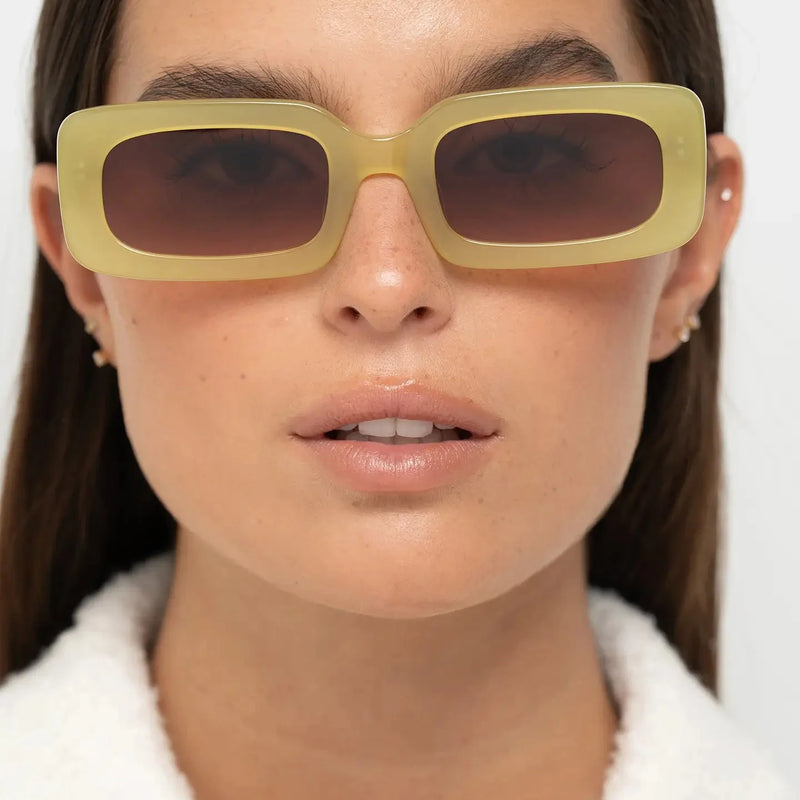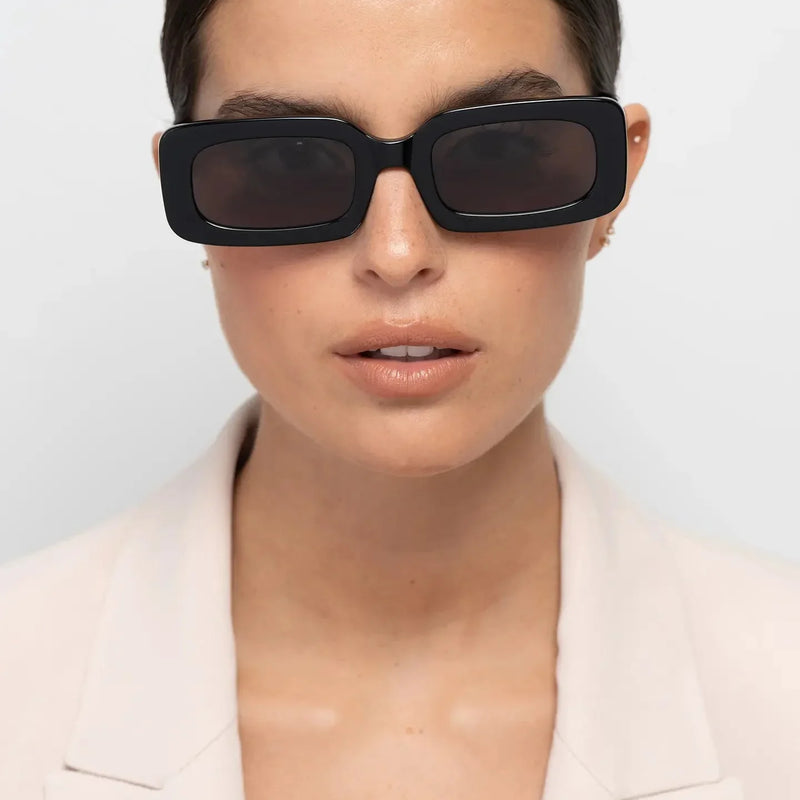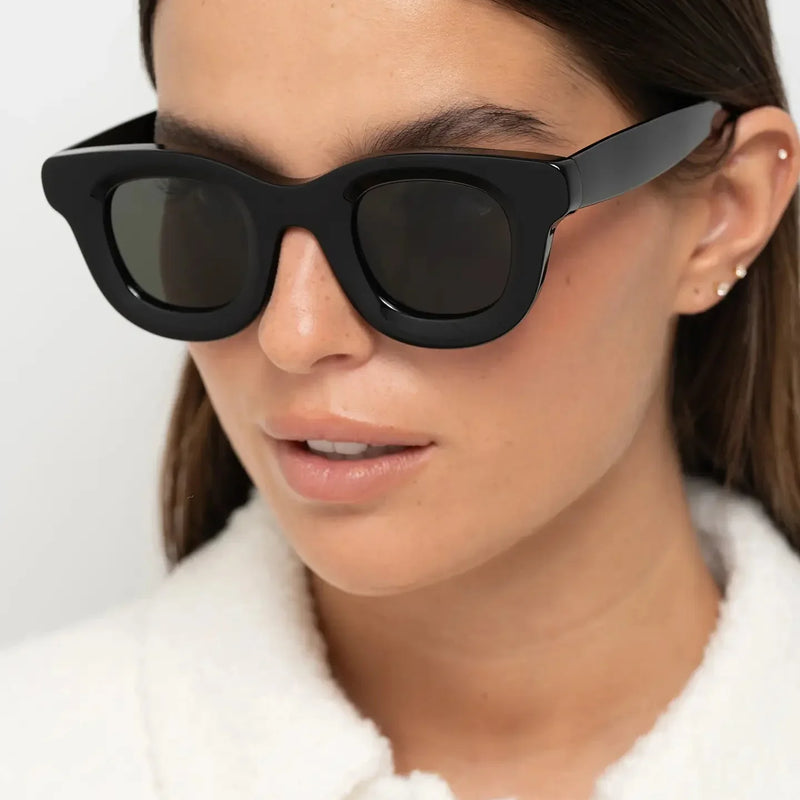
Choosing sunglasses that fit your face is not just about liking a shape. The right frame needs to align with your proportions, support your features, and create a sense of balance that feels natural rather than forced.
The best sunglasses for your face are those that balance proportion, create contrast where needed, and sit correctly in terms of size and fit.
If you are unsure where to start, understanding how sunglasses interact with your face shape, structure, and proportions is the most reliable way to choose well.
Explore our face shape guide or compare silhouettes in the round vs square guide.

START WITH FACE SHAPE AS A GUIDE, NOT A RULE
Face shape is a useful starting point, but it should not limit your choices. The goal is not to match shapes, but to create balance.
- round face: benefits from structured or angular frames
- square face: works well with softer curves
- oval face: adapts easily to most styles
- heart shaped face: needs visual balance between upper and lower proportions
The key is contrast. A frame that slightly offsets your natural shape usually creates a more refined and flattering result.
UNDERSTAND PROPORTION BEFORE STYLE

Proportion is what makes sunglasses look right or wrong instantly. Even the best design will fail if the scale is off.
- frame width: should align with your face width
- lens size: should not dominate or disappear on the face
- bridge fit: should sit naturally without sliding
- temple length: should rest comfortably without pressure
When proportions are correct, the frame feels integrated rather than placed on the face.
USE CONTRAST TO DEFINE YOUR FEATURES

Contrast is one of the most powerful principles in eyewear. It allows the frame to enhance rather than compete with your features.
- soft features: benefit from sharper or more structured frames
- strong features: benefit from softer or rounded shapes
- balanced features: allow more flexibility across styles
This is why the same pair of sunglasses can look completely different on different faces.
HOW SUNGLASSES SHOULD SIT ON YOUR FACE

Fit is often overlooked, but it is one of the most important factors.
- the bridge should sit securely without slipping
- the frame should not touch your cheeks
- your eyes should sit centrally within the lenses
- temples should rest comfortably without pressure
A well fitting frame improves both comfort and visual balance.
CHOOSE COLORS THAT SUPPORT YOUR FEATURES

Color influences how strong or soft a frame appears.
- black: creates strong definition
- tortoise: adds warmth and depth
- olive and brown: softer alternatives
- transparent tones: reduce visual weight
The right color should enhance the shape rather than compete with it.
HOW TO TEST IF SUNGLASSES FIT YOUR FACE AT HOME
Before committing to a pair, you can quickly evaluate fit and balance.
- look straight ahead and check lens alignment with your eyes
- check if the frame follows your brow line naturally
- observe if the frame dominates or integrates with your face
- turn sideways to assess how temples sit behind the ear
These simple checks help avoid common mistakes and improve your final choice.
COMMON MISTAKES WHEN CHOOSING SUNGLASSES
- choosing only based on trends
- ignoring proportion and size
- selecting shapes that exaggerate features
- prioritizing aesthetics over fit
- not considering how the frame sits in real use
The most reliable choice is usually the most balanced one.
WHY THE RIGHT SUNGLASSES CHANGE YOUR PRESENCE
Sunglasses do more than protect your eyes. They influence how your face is perceived, how your features are framed, and how your overall presence is communicated.
The right frame creates clarity, structure, and confidence without needing excess.
FAQ ABOUT CHOOSING SUNGLASSES
How do I know if sunglasses fit my face correctly?
Sunglasses fit correctly when they align with your face width, sit comfortably on the bridge, and position your eyes near the center of the lenses. They should feel stable without pressure and visually balanced from all angles.
Should sunglasses match my face shape?
No. The most flattering approach is to create contrast. Angular frames can balance softer faces, while rounded frames can soften stronger features.
What size sunglasses should I choose?
Choose a size that matches your face width. Frames that are too small compress your features, while oversized frames can overwhelm your proportions if not balanced correctly.
What is the most important factor when choosing sunglasses?
Proportion is the most important factor. Even the best design will not work if the size, fit, and balance are incorrect.
Can one pair of sunglasses suit every face?
Some shapes like panto or soft rectangular frames tend to work across many face types, but the final result still depends on fit, proportion, and personal features.
Choosing sunglasses that fit your face is about understanding balance, proportion, and intention.
Explore Bo Bo Noir sunglasses to discover frames designed with clarity, structure, and everyday wearability.
👁 YOU MAY ALSO LIKE:
Sunglasses That Make Your Face Look Slimmer
Learn how structure changes perception.
Read the article
Round vs Square Sunglasses: Which One Fits You Best
Understand how shape affects your look.
Read the article