If you regularly wear sunglasses, it is easy to wonder whether one dependable pair is enough or whether a small collection would make everyday life more practical. The answer is not determined by fashion, nor by how many frames other people own. It depends on where you wear them, the light conditions you encounter and whether each pair offers a genuinely different benefit.
For most people, the ideal sunglasses collection contains between one and three carefully chosen pairs. One versatile frame can cover daily wear, while a second or third pair may serve a different purpose through lens colour, frame geometry or visual character. Before adding another pair, it is worth understanding what your existing sunglasses already do well and which need remains unsolved.
Readers choosing their first dependable frame may find it useful to begin with our guide to the best everyday sunglasses, which explains how comfort, proportions and versatility influence long-term wearability.
At a glance
| Best answer for most people | Two pairs |
| Minimalist option | One versatile, well-fitting pair |
| Maximum practical versatility | Three clearly differentiated pairs |
| Reason to buy another pair | It solves a specific problem your current sunglasses cannot |

Quick answer
Most people need one to three pairs of sunglasses.
- One pair can be enough when it provides UV400 protection, fits securely and works with most of your wardrobe.
- Two pairs offer greater flexibility through a different lens colour, frame shape or backup option.
- Three pairs make sense when everyday wear, travel, driving or personal style create clearly different requirements.
Owning more than three pairs is a personal choice rather than a practical necessity. The important question is whether each frame has a clear role.
BBN Insight
A useful sunglasses collection is built around differences in function and visual effect—not minor variations of the same frame. If two pairs create almost identical proportions, use the same lens tone and suit the same occasions, they may not add meaningful versatility.
How many pairs of sunglasses do most people actually need?
In practical terms, most people fall into one of three profiles: the single-pair wearer, the two-pair wearer and the small-collection wearer. None is inherently better. Each reflects a different relationship with everyday use, travel and personal style.
Someone who wears sunglasses occasionally may only need one neutral, dependable frame. A person who walks, commutes or drives in changing light may benefit from two. Someone who treats eyewear as an important part of personal expression may reasonably own three or more, provided every pair is worn.
| Number of pairs | Best suited to | Main advantage | Possible limitation |
|---|---|---|---|
| One | Occasional or minimalist wearers | Simple, consistent and easy to maintain | No alternative if the frame is lost, damaged or unsuitable for a particular setting |
| Two | Most everyday wearers | Allows rotation between two distinct functions or visual moods | Requires thoughtful differentiation to avoid duplication |
| Three | Frequent wearers, travellers or style-led buyers | Covers daily wear, specialist use and stronger personal expression | Can become unnecessary if all three frames perform the same role |
| Four or more | Collectors and eyewear enthusiasts | Greater choice across colours, shapes and occasions | Some pairs may receive very little wear |
The most balanced answer for the average wearer is therefore two pairs: one dependable everyday frame and one alternative that changes either the function or the visual direction. This provides flexibility without creating a collection that is difficult to use consistently.
Is one pair of sunglasses enough?
Yes. One pair can be entirely sufficient when it performs well across the situations you encounter most often. The frame should feel comfortable during extended wear, remain stable on the nose and temples, offer dependable UV400 protection and integrate naturally with the colours and silhouettes already present in your wardrobe.
The strongest single-pair choice is usually neither extremely understated nor highly expressive. It sits between the two: distinctive enough to create definition, but balanced enough to remain wearable across work, weekends, travel and everyday walking.
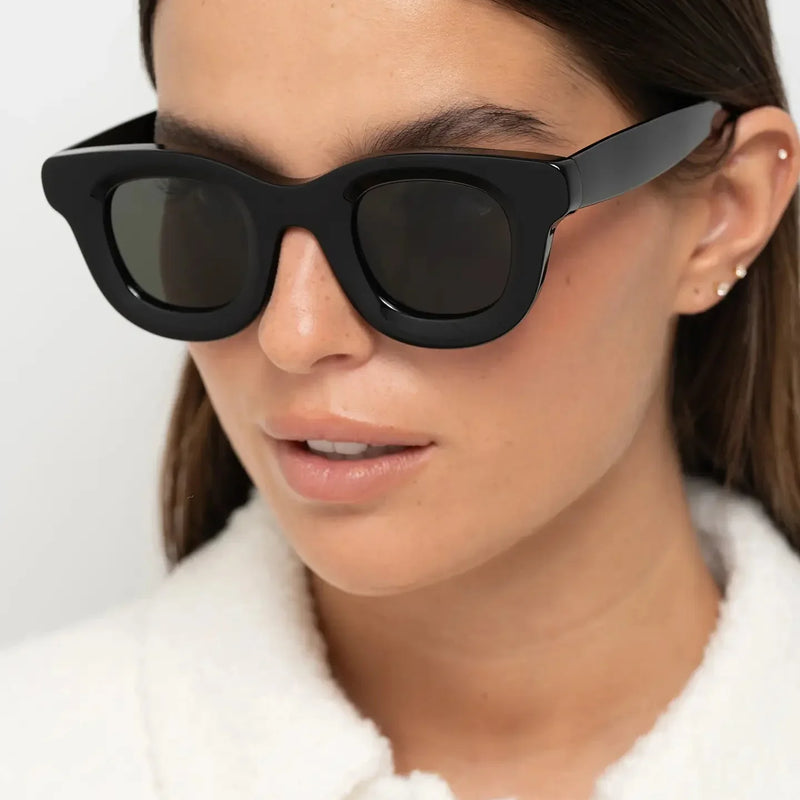
The William Shiny Black illustrates this approach. Its rounded geometry softens angular facial structure, while the black acetate introduces clear definition. The silhouette has visual presence, but its neutral colour allows it to work across a broad range of clothing and settings.

One pair is likely to be enough when:
- You wear sunglasses mainly for commuting, walking or occasional travel.
- Your current pair remains comfortable after several hours.
- The lens colour works across the light conditions you normally encounter.
- The frame complements most of your wardrobe.
- You do not frequently need specialist sports, prescription or driving eyewear.
A single pair may feel limiting when:
- You regularly move between bright sun and softer, overcast conditions.
- You want a secure backup for travel.
- Your everyday frame feels too formal, too casual or too visually strong for certain occasions.
- You need a different visual effect to balance different outfits or settings.
- You repeatedly choose not to wear your current sunglasses because they feel uncomfortable.
Before assuming that you need more sunglasses, first check whether the issue is quantity or fit. A frame that slides, pinches or creates pressure will remain frustrating regardless of how many alternatives you own. Our guide to how sunglasses should fit explains the signs of a secure, balanced frame.
Why two pairs are the practical choice for most people
Two pairs create useful choice without unnecessary complexity. The first can act as the dependable everyday option; the second can solve a different need through colour, lens character, frame geometry or level of visual weight.
The distinction matters. Buying the same silhouette in two nearly identical colours creates less versatility than pairing two frames that alter the balance of the face in different ways.
For example, a rounded black frame may provide softness and definition, while a tortoise panto frame creates a warmer, more textural effect. One is not universally better than the other. Each supports a different visual direction.
A practical two-pair formula
Pair one: the everyday anchor
Choose a neutral colour, secure fit and balanced silhouette that you can wear repeatedly without needing to coordinate the rest of your outfit around it.
Pair two: the meaningful alternative
Choose a frame that changes something important—warmer colour, softer lenses, stronger geometry or a more expressive silhouette. The second pair should expand your options rather than repeat the first.
The Narr Tortoise is a useful example of a second pair with a distinct role. Its panto geometry combines rounded lower contours with a more structured upper line, creating balance without feeling strictly circular. Tortoise acetate introduces warmth and tonal variation, making it a considered alternative to solid black.

For readers deciding between neutral lens and frame combinations, our guide to brown vs grey sunglasses explores how each lens family affects contrast, colour perception and everyday use.
Why quality matters more than owning a large collection
A large collection can appear versatile, but versatility only exists when the frames are comfortable, visually distinct and regularly worn. Five poorly balanced pairs do not create more value than one frame that works reliably every day.
The cost of sunglasses should therefore be considered in relation to frequency of use rather than quantity alone. A frame worn several hundred times can provide greater practical value than multiple inexpensive pairs that remain in a drawer because the fit, lens quality or proportions are not quite right.
This is particularly important with acetate eyewear. Frame balance, bridge width, temple pressure and overall visual weight influence how the sunglasses feel after one hour—not merely how they look during the first minute.
Decision rule
Before buying another pair, identify the exact problem it will solve. If you cannot explain how the new frame differs in function, fit, lens character or visual effect, you may be adding quantity without adding usefulness.
Expert insight: protection comes before collection size
A larger wardrobe does not compensate for poor protection or an uncomfortable fit. Every pair you regularly wear should provide dependable UV protection, remain optically clear and sit securely without creating pressure at the bridge or temples.
In practical terms, the first question is not “How many pairs should I own?” but “Do the pairs I own protect my eyes and feel comfortable enough to wear consistently?”
Use cost per wear to judge value
Price alone does not tell you whether sunglasses offer good value. A more useful measure is cost per wear: the purchase price divided by the number of times you realistically wear the frame.
| Illustrative example | Purchase price | Estimated wears | Approximate cost per wear |
|---|---|---|---|
| Frequently worn premium pair | £180 | 300 | £0.60 |
| Impulse pair worn occasionally | £45 | 15 | £3.00 |
These figures are illustrative rather than product-specific. The principle is what matters: a frame worn often can represent better value than a cheaper pair that remains unused.
The Narr Shiny Black demonstrates how one frame can cover multiple roles. Its black acetate creates strong definition, while the panto silhouette remains softer than a sharply rectangular frame. This balance makes it suitable for everyday wearers who want structure without severe geometry.

How to tell whether you genuinely need another pair
A new pair is justified when it fills a clear gap in your existing sunglasses wardrobe. That gap may be practical, visual or situational, but it should be specific.
| Your situation | What a second pair could change |
|---|---|
| Your only pair is dark and visually strong | Add a lighter crystal or tortoise frame for softer outfits and settings |
| Your sunglasses feel too delicate for frequent travel | Add a dependable frame that can become your regular travel option |
| Your current shape only works with certain outfits | Choose a second geometry that creates a different level of structure |
| You often misplace your sunglasses | Keep one pair at home and another in your everyday bag or travel case |
| Your current frame is uncomfortable | Do not simply add another pair—first identify the bridge, width or temple-fit problem |
This framework prevents impulse buying by moving the decision away from novelty and towards function. It also helps create a smaller collection in which every pair has a clear reason to be worn.
Continue your decision journey
Building a practical sunglasses wardrobe
Thinking of your sunglasses as a small wardrobe rather than a random collection makes every purchase more intentional. Just as most people own different shoes for different situations, sunglasses can also have distinct roles—provided each pair genuinely expands your options instead of duplicating what you already own.
A practical sunglasses wardrobe is not about chasing seasonal trends or collecting every new release. Instead, it focuses on versatility, longevity and comfort. Each frame should solve a different need, whether that's everyday commuting, weekend travel, brighter summer conditions or simply achieving a different visual character.
When every pair has a purpose, you spend less time deciding what to wear and more time enjoying sunglasses that feel completely natural for the occasion.
BBN Insight
A thoughtfully curated collection usually feels smaller than it actually is because every frame earns its place. If you repeatedly ignore one pair, it probably isn't adding value to your wardrobe.
The everyday pair: the one you'll wear most
If you only invest in one exceptional pair, this should be it. Your everyday sunglasses will likely accompany you on morning walks, coffee runs, commuting, weekends away, city breaks and spontaneous afternoons outdoors. They need to feel comfortable from the moment you put them on until the moment the sun goes down.
Neutral colours such as black, tortoise or understated crystal tones tend to integrate effortlessly with different wardrobes, while balanced frame proportions remain stylish regardless of changing fashion trends.
One excellent example is the Triboulet Shiny Black. Its rounded panto silhouette combines timeless proportions with confident structure, making it suitable for both casual and smart outfits.

If you're still deciding which silhouette works best for daily wear, our guide to how to choose sunglasses for your face shape can help narrow your options.
Your second pair should solve a different problem
The mistake many people make is buying another pair that looks almost identical to the first. If both frames perform exactly the same role, you haven't really increased the versatility of your collection.
Instead, ask yourself what your current sunglasses cannot do.
- Do you want a softer colour palette?
- Would a warmer tortoise frame complement more outfits?
- Would a lighter acetate feel better during summer?
- Do you want a slightly bolder statement for evenings and holidays?
Answering those questions usually leads to a far better purchase than simply following trends.
For example, someone who already owns a black frame could introduce warmth with the Triboulet Tortoise Gradient Brown. The rich acetate creates a softer, more organic appearance while maintaining the same refined craftsmanship.

Travel sunglasses deserve special consideration
Travel often exposes your sunglasses to situations that everyday life does not. Long days outdoors, changing weather, airport transfers, beaches and sightseeing all place different demands on your eyewear.
Many experienced travellers therefore keep one dedicated pair specifically for holidays and longer trips. This reduces the risk of losing their everyday favourite while also allowing them to choose a frame that better suits brighter climates.
Our guide to the best sunglasses for walking around the city explains why comfort becomes increasingly important when sunglasses stay on your face for several consecutive hours.
Three pairs create maximum versatility without becoming excessive
For enthusiasts who wear sunglasses almost every day, three carefully selected pairs often represent the ideal balance.
| Pair | Primary purpose | Recommended style |
|---|---|---|
| Pair One | Everyday wear | Neutral black or tortoise frame |
| Pair Two | Travel and weekends | Warmer acetate or lighter crystal finish |
| Pair Three | Personal style or seasonal variety | More expressive colour or distinctive silhouette |
Notice that every pair performs a different role. None exists simply because it is new.
Avoid building a collection around trends
Fashion trends inevitably change. Extremely narrow frames, oversized silhouettes or highly saturated acetate colours may enjoy a period of popularity before gradually disappearing from everyday wardrobes.
Timeless design behaves differently. Balanced proportions, quality materials and refined craftsmanship remain wearable long after seasonal trends have faded.
If you're investing in premium eyewear, prioritise frames you'll still enjoy wearing five years from now rather than those dominating social media today.
Editor's recommendation
If you're building a collection from scratch, start with one versatile everyday frame, add a second pair that genuinely changes your styling options, and only introduce a third when it fills a clear gap. This approach creates flexibility without unnecessary duplication.
When does owning more than three pairs actually make sense?
While most people can comfortably cover everyday life with one to three pairs of sunglasses, there are situations where expanding your collection becomes entirely practical. The difference is intention. Buying additional frames should always solve a specific problem rather than simply adding more choice.
Professionals who spend long hours outdoors, frequent travellers, photographers, drivers or people who naturally treat eyewear as part of their personal style often benefit from a broader collection. In these cases, different frames are used regularly rather than sitting unused for months.
A larger collection is also easier to justify when each pair creates a genuinely different experience through lens colour, frame geometry or overall visual character.
BBN Insight
The number of sunglasses you own is far less important than how often you wear them. A collection of six carefully used frames is more practical than three pairs that never leave the drawer.
Signs that you need another pair—not just want one
Before purchasing another pair, ask yourself a simple question:
What situation can't my current sunglasses comfortably handle?
If you struggle to answer that question, you may simply be attracted to something new. However, if a clear limitation exists, adding another pair could genuinely improve your everyday experience.
- Your only pair feels too formal for casual weekends.
- Your sunglasses become uncomfortable during long walks or holidays.
- You frequently leave your only pair at home or in another bag.
- You want a lighter frame for warmer seasons.
- You need a backup when travelling.
- You have recently changed your wardrobe and your current frame no longer feels balanced.
Each of these reasons reflects a practical need rather than an impulse purchase.
Replacing sunglasses is sometimes smarter than buying another pair
Many people automatically assume that the solution is adding another frame. In reality, replacing an ageing or poorly fitting pair often provides greater value.
Ask yourself whether your current sunglasses still meet the same standard they did when you first bought them.
| Replace your sunglasses if... | Keep them if... |
|---|---|
| They no longer feel comfortable. | They still feel balanced after several hours of wear. |
| The frame has become loose or unstable. | The frame remains secure and well aligned. |
| You rarely wear them despite good weather. | You instinctively reach for them every day. |
| They no longer suit your wardrobe or personal style. | They continue to complement most of your clothing. |
If your sunglasses still satisfy every practical requirement, replacing them simply because a new style has appeared is rarely necessary.
How different frame shapes expand your collection
Building variety doesn't always mean choosing different colours. Sometimes, changing the frame shape creates a far more noticeable difference than changing the acetate.
For example, someone who already owns a rounded silhouette might introduce a rectangular frame to create greater visual definition. Likewise, someone who wears angular frames every day may appreciate the softer appearance of a classic panto design.
| Frame style | Visual effect | Example |
|---|---|---|
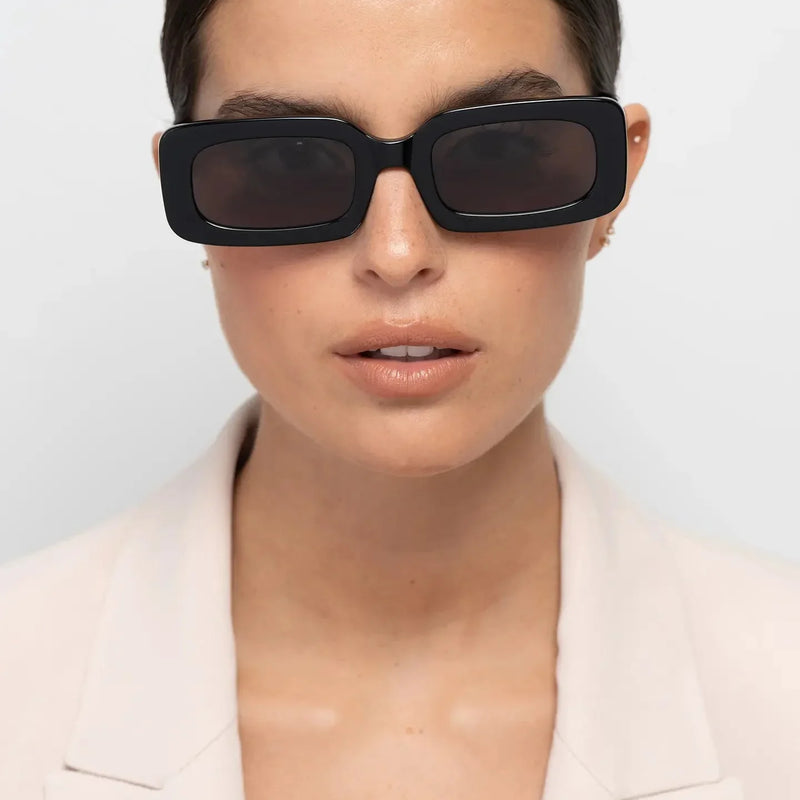
| Rectangular | Sharper, cleaner definition | Jane Shiny Black |
| Round | Balanced and timeless proportions | William Tortoise |
| Panto | Classic with softer structure | Narr Tortoise |

Should every pair look different?
Not necessarily. Some people naturally gravitate towards one silhouette because it consistently complements their face shape. In that case, subtle changes in acetate colour or lens tone may provide enough variety.
Others enjoy alternating between completely different shapes depending on the occasion. Neither approach is right or wrong. The goal is simply to avoid unnecessary duplication.
A useful rule is that every pair should answer at least one of these questions:
- Does it perform a different function?
- Does it suit different clothing?
- Does it create a different visual impression?
- Does it improve comfort in specific situations?
If the answer to all four questions is "no", it may not add meaningful value to your collection.
Editorial takeaway
A thoughtfully curated sunglasses collection is measured by versatility—not by numbers. Every additional frame should broaden what your wardrobe can do, rather than simply increasing how many pairs you own.
The sunglasses capsule wardrobe
A capsule wardrobe is built around a small number of pieces that work repeatedly and combine easily. The same principle applies to eyewear. Instead of collecting similar frames, create a compact rotation in which every pair has a defined role.
| Capsule level | What it contains | Who it suits |
|---|---|---|
| Essential | One neutral everyday frame | Minimalists and occasional wearers |
| Balanced | One everyday frame plus one meaningful alternative | Most regular wearers |
| Complete | Everyday, travel or weekend, and statement pair | Frequent wearers and eyewear enthusiasts |
Three-question buying test
- What specific situation will this pair handle better?
- How is it visibly or functionally different from what I already own?
- Can I name at least three real occasions when I will wear it?
How your lifestyle determines the ideal number of sunglasses
There is no universally correct number of sunglasses because no two lifestyles are identical. Someone who spends most of the week indoors has very different requirements from someone who walks through the city every day, travels regularly or enjoys long weekends outdoors.
Rather than asking how many pairs other people own, consider how often your sunglasses leave their case. The frames you wear repeatedly are the ones delivering genuine value, while those that rarely see daylight may simply be taking up space.
Thinking in terms of lifestyle rather than quantity makes every future purchase more intentional. Instead of building a collection around trends, you build one around how you actually live.
The minimalist: one exceptional pair
If sunglasses are something you mainly wear during holidays, occasional weekends or bright summer afternoons, a single premium pair is often all you need.
The priority should be versatility. Choose a frame that works equally well with relaxed clothing, smart-casual outfits and travel. Neutral acetate colours, balanced proportions and timeless design will give you far greater longevity than trend-led styles that quickly date.
The William Shiny Black is a strong example of this philosophy. Its rounded silhouette feels distinctive without becoming overpowering, making it an excellent choice for someone who prefers owning one dependable pair rather than several alternatives.

The everyday wearer: two versatile pairs
For people who wear sunglasses almost every day, two carefully selected pairs provide an ideal balance between practicality and flexibility.
One pair becomes your dependable everyday companion, while the second introduces something noticeably different—perhaps a warmer acetate colour, a different frame shape or simply a backup when travelling.
The important point is that each frame performs a separate role. Owning two nearly identical black frames rarely expands your wardrobe in any meaningful way.
Example wardrobe
- Everyday: Triboulet Shiny Black
- Weekend & travel: Triboulet Tortoise Gradient Brown

The enthusiast: three carefully curated pairs
If eyewear forms an important part of your personal style, three pairs often represent the sweet spot. Beyond this point, each new purchase should fill a genuine gap rather than simply adding another variation of an existing favourite.
A well-balanced three-pair collection could include:
| Role | Recommended direction | Example |
|---|---|---|
| Daily wear | Neutral black frame | Narr Shiny Black |
| Travel & weekends | Warm tortoise acetate | Narr Tortoise |
| Statement option | Rectangular silhouette | Jane Cream White |
Notice that each frame changes the visual balance of the face. The collection feels broader because every pair creates a noticeably different impression.

Avoid buying multiple versions of the same sunglasses
One of the easiest mistakes to make is purchasing frames that are almost indistinguishable from one another. Different brand names or subtle colour variations may feel exciting initially, but if the proportions, silhouette and overall appearance remain almost identical, your collection gains very little.
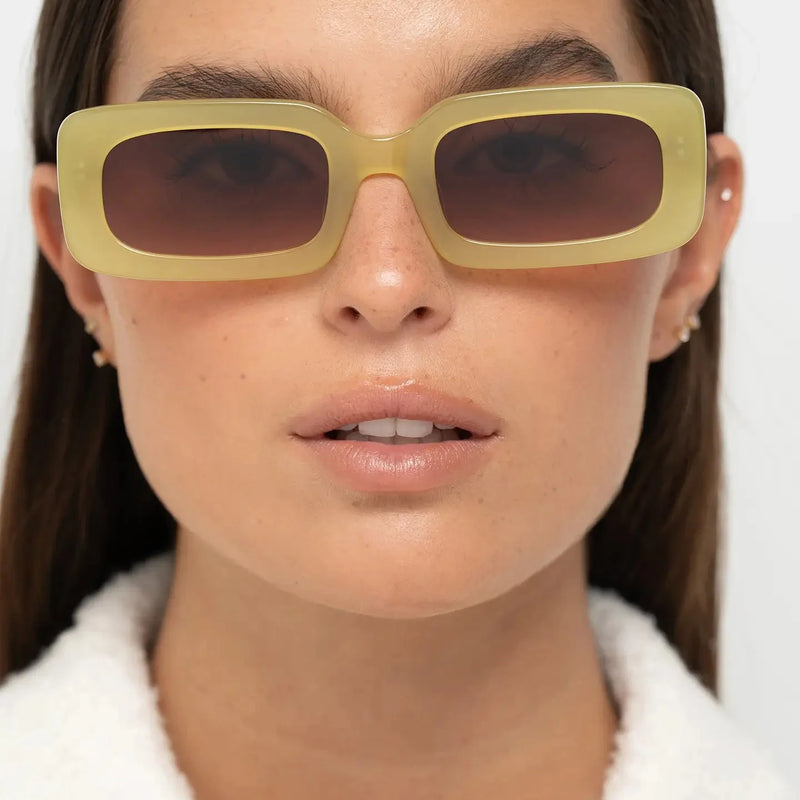
Instead, aim for meaningful variety. Rounded and rectangular frames create different facial balance. Black acetate offers stronger contrast, while tortoise introduces warmth and texture. Crystal finishes appear lighter and more contemporary.
These differences are immediately noticeable every time you wear the sunglasses, making your collection feel genuinely versatile rather than simply larger.
Editor's tip
Whenever you're considering another pair, place it beside the sunglasses you already own. If someone unfamiliar with eyewear would struggle to explain the difference in a few seconds, the new frame probably isn't adding enough variety to justify the purchase.
Think long-term rather than seasonally
The best sunglasses collections evolve slowly. Instead of buying several pairs in one season, many experienced wearers gradually build a wardrobe over several years, adding frames only when they introduce something genuinely useful.
This approach often leads to higher-quality purchases, fewer regrets and a collection that continues to feel relevant long after short-lived trends have disappeared.
If you're investing in premium acetate eyewear, buying one exceptional frame every few years usually creates a stronger collection than purchasing multiple trend-driven alternatives each summer.
Before deciding on your next purchase, you may also find these guides helpful:
- How to Choose Sunglasses for Your Face Shape
- Polarised vs Non-Polarised Sunglasses
- What Are UV400 Sunglasses?
- How Should Sunglasses Fit?
How to build a timeless sunglasses collection
The best sunglasses collections are rarely built in a single shopping trip. Instead, they evolve naturally over time as your lifestyle changes, your personal style becomes more refined and you gain a better understanding of what you genuinely enjoy wearing.
This gradual approach usually produces a more versatile wardrobe because every new pair is chosen to fulfil a clear purpose rather than satisfy a passing trend.
Think of your sunglasses in the same way you might think about quality footwear or a well-tailored coat. You don't need dozens of options. You simply need the right options.
BBN Insight
The strongest eyewear collections are surprisingly small. Every frame complements the others while bringing something different to the wardrobe. Nothing feels repetitive, and nothing feels unnecessary.
Choose versatility before colour
Many buyers focus on colour first. In reality, the versatility of a frame comes primarily from its proportions and silhouette. A well-balanced shape remains wearable across changing fashion trends, while colour simply changes its personality.
This is why timeless shapes continue to appear decade after decade. Rounded panto frames, classic rectangular silhouettes and balanced round designs adapt naturally to evolving wardrobes without looking dated.
Once you've found a shape that genuinely suits your features, introducing alternative colours becomes much easier because the proportions already work.

Build around complementary frame shapes
Rather than owning several versions of the same silhouette, consider combining different geometries that complement one another.
Each shape creates a different impression, giving your wardrobe greater flexibility without dramatically increasing the size of your collection.
| Shape | Best suited for | Example |
|---|---|---|
| Round | Softening stronger facial angles | William Tortoise |
| Panto | Balanced everyday versatility | Triboulet Shiny Black |
| Rectangular | Sharper contemporary definition | Jane Tortoise |
If you're still unsure which silhouette suits your face best, our guides to choosing sunglasses for your face shape and how sunglasses should fit explain the relationship between facial proportions, comfort and frame balance.
Rotate your sunglasses instead of wearing one pair until it wears out
Owning two or three quality pairs allows you to rotate them throughout the week. This isn't simply about changing your appearance—it also helps reduce unnecessary wear on hinges, temples and nose contact points.
Regular rotation gives each frame time to rest between wears while encouraging you to appreciate the different qualities each design offers.
Instead of replacing one heavily used pair every few years, several well-maintained frames often remain in excellent condition for much longer.
A simple weekly rotation
- Monday to Friday — dependable everyday frame.
- Weekends — warmer acetate or lighter colours.
- Travel and holidays — dedicated travel pair.
Looking after multiple pairs properly
A thoughtfully curated collection deserves proper care. Fortunately, maintaining premium sunglasses requires only a few simple habits.
- Always store sunglasses in a protective case when not wearing them.
- Clean lenses using a microfibre cloth rather than clothing.
- Rinse away dust before wiping the lenses.
- Avoid leaving sunglasses inside hot cars for extended periods.
- Place frames down with the lenses facing upwards.
Small daily habits like these significantly reduce scratches, preserve acetate finishes and help your sunglasses remain looking new for years.

Common mistakes when building a sunglasses collection
Many collections become larger than necessary because people make the same purchasing mistakes repeatedly. Recognising these habits early helps create a wardrobe that feels intentional rather than crowded.
| Mistake | Better approach |
|---|---|
| Buying because of trends. | Buy because the frame fills a genuine gap. |
| Owning multiple nearly identical frames. | Choose noticeably different silhouettes or colours. |
| Ignoring comfort for appearance. | Prioritise fit before aesthetics. |
| Buying inexpensive replacements repeatedly. | Invest in quality that lasts longer. |
Editorial perspective
A timeless sunglasses collection isn't defined by how many frames you own. It's defined by how confidently each pair earns its place. If every pair has a purpose, your collection is already complete—regardless of whether it contains one frame or five.
Common myths about how many sunglasses you need
Myth: everyone needs separate sunglasses for every activity
Most everyday activities can be covered by one versatile frame. Specialist eyewear becomes relevant only when the activity creates a genuinely different requirement, such as prescription needs, performance sport or unusually demanding light conditions.
Myth: more pairs automatically mean more versatility
Versatility comes from meaningful differences. Four nearly identical black frames may offer less practical range than two pairs with different shapes, lens tones or visual weight.
Myth: sunglasses should be replaced every year
There is no universal annual replacement rule. A well-maintained pair can remain useful for years when the frame stays aligned, the lenses remain clear and the fit continues to feel secure.
Myth: the most fashionable frame is the best investment
Trend visibility and long-term wearability are not the same. Balanced proportions, reliable comfort and colours that integrate with your wardrobe generally provide more lasting value.
Myth: buying a backup means duplicating your favourite pair
A backup is more useful when it also expands your options. It can remain dependable while introducing a different silhouette, acetate colour or lens character.
Key takeaways
If you've read this guide from beginning to end, one conclusion should stand out above everything else:
The ideal number of sunglasses isn't determined by trends, social media or fashion rules. It's determined by how well each pair supports your lifestyle.
For some people, one beautifully made pair is all they'll ever need. Others will benefit from two or three carefully chosen frames that each serve a different purpose. Beyond that, every additional pair should introduce genuine versatility—not unnecessary duplication.
Remember these principles
- Buy sunglasses with a purpose, not simply because they're new.
- Prioritise comfort before colour.
- Choose timeless silhouettes over short-lived trends.
- Build a collection gradually.
- Quality almost always provides better long-term value than quantity.
- Every additional pair should introduce something genuinely different.
Frequently asked questions
How many pairs of sunglasses should the average person own?
For most people, two pairs provide the best balance. One becomes the dependable everyday frame, while the second offers either a different style, different lens characteristics or a reliable backup for travel.
Is owning only one pair of sunglasses enough?
Absolutely. If your sunglasses fit comfortably, offer full UV400 protection, complement most of your wardrobe and remain suitable for the majority of your daily activities, one high-quality pair can be all you need.
When should I buy another pair?
Consider buying another pair when your existing sunglasses no longer meet a particular need—for example, if you travel frequently, want a different frame shape, require a backup or your personal style has evolved.
Is it better to own several inexpensive pairs or one premium pair?
For most people, one or two premium pairs provide greater value over time. Better materials, improved comfort and timeless design usually mean they're worn far more often than several inexpensive alternatives.
Should all my sunglasses be different?
They don't need to be dramatically different, but each pair should introduce a noticeable change in colour, frame geometry, styling or purpose. Otherwise, your collection may become repetitive.
How often should sunglasses be replaced?
There is no fixed timetable. Replace sunglasses when the frame no longer fits correctly, the lenses become significantly damaged or the sunglasses no longer suit your lifestyle and everyday use.
Do I need separate sunglasses for driving?
Not necessarily. Many people comfortably use their everyday sunglasses while driving. However, if you spend several hours behind the wheel each week, you may appreciate a dedicated pair with lens characteristics that suit changing road conditions.
Should I match my sunglasses to every outfit?
Most people don't need to. A timeless frame in black, tortoise or another neutral acetate colour naturally complements a wide variety of clothing, reducing the need for numerous fashion-specific pairs.
What is the most versatile sunglasses colour?
Black and classic tortoise remain among the most versatile choices because they work comfortably with both casual and smarter wardrobes throughout the year.
Can I build a quality collection slowly?
Yes. In fact, this is often the best approach. Purchasing one exceptional frame every few years usually creates a stronger collection than buying several impulse purchases every season.
Are three pairs of sunglasses too many?
No. Three pairs remain a compact collection when each has a different role, such as everyday wear, travel and a more expressive option. Three becomes excessive only when the frames are repetitive or rarely worn.
How do I know which pair should be my everyday sunglasses?
Your everyday pair should be the frame that feels comfortable for several hours, works with most of your clothing and suits the light conditions you encounter most often. It should require the least effort to wear consistently.
Final thoughts
There is something refreshing about owning fewer things that perform exceptionally well.
The best sunglasses aren't necessarily the newest pair in your collection—they're the pair you instinctively reach for every time you leave the house. They fit comfortably, complement your wardrobe, protect your eyes and quietly become part of your everyday routine.
Whether your collection contains one carefully chosen frame or several thoughtfully selected pairs, the goal remains exactly the same: own sunglasses that you'll genuinely enjoy wearing for many years rather than simply collecting more.
Discover timeless sunglasses designed to last
Explore handcrafted acetate sunglasses created for everyday wear, travel and modern life. Every Bo Bo Noir frame combines timeless design with premium materials, helping you build a collection you'll continue enjoying season after season.
Continue reading
If you're building your first premium sunglasses collection, these guides will help you make more informed decisions:
- Best Everyday Sunglasses
- Best Sunglasses for Walking Around the City
- How to Choose Sunglasses for Your Face Shape
- How Should Sunglasses Fit?
- Polarised vs Non-Polarised Sunglasses
- Brown vs Grey Sunglasses
- What Are UV400 Sunglasses?
The more you understand about fit, frame geometry, lens technology and timeless design, the easier it becomes to build a collection that reflects both your lifestyle and your personal style.