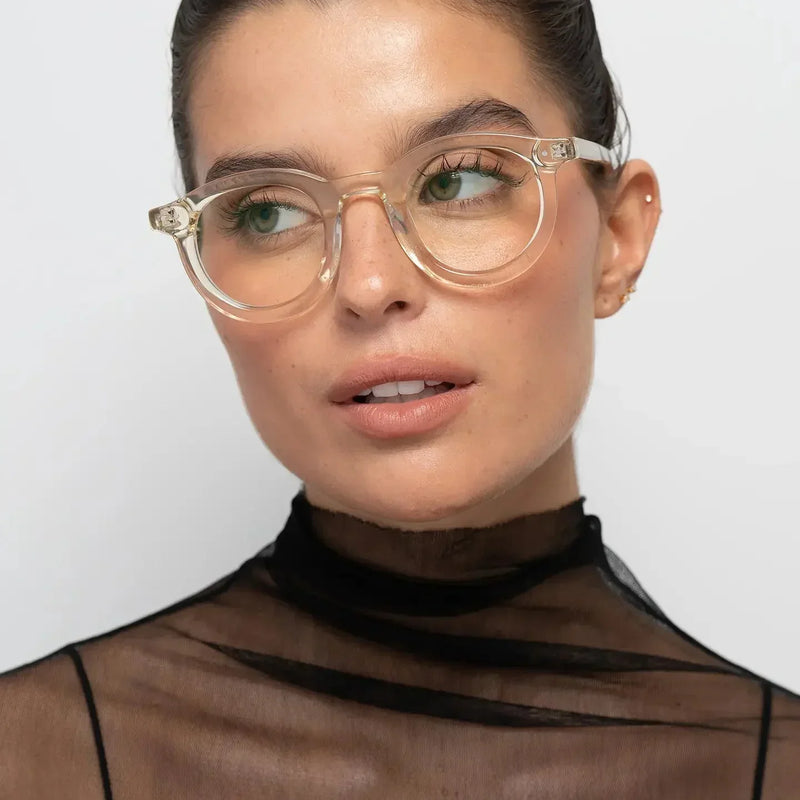
Have you ever tried on two pairs of sunglasses with almost identical shapes, only to find that one made your features look sharper while the other appeared softer and more understated?
In many cases, the difference isn't the frame shape.
It's the contrast between the frame and your natural colouring.
Frame contrast influences how people perceive your face before they even notice the details of the sunglasses themselves. It can make your features appear stronger or softer, your eyes more defined, your complexion brighter and your overall appearance either more dramatic or more effortless.
This explains why the same black frame can look striking on one person yet overwhelming on another, while a crystal acetate frame may almost disappear on one face but beautifully complement someone else's colouring.
Luxury eyewear designers don't simply select colours because they're fashionable. They carefully balance contrast, transparency and tone to ensure a frame works harmoniously with different complexions and facial features.
As we explored in Brown vs Grey Sunglasses, colour already influences how sunglasses change your appearance. Frame contrast takes this one step further by determining how much visual attention the eyewear commands against your natural features.
Likewise, our guide to Why Transparent Frames Create Softer Facial Balance explains why crystal acetate creates a lighter visual transition that many people find softer and more flattering.
Once you understand how frame contrast works, choosing sunglasses becomes less about following trends and more about selecting eyewear that complements your natural appearance.
Quick Answer: How Does Frame Contrast Change Your Appearance?

Frame contrast determines how much your sunglasses stand out against your face.
High-contrast frames—such as black acetate worn against lighter complexions—create stronger facial definition, emphasise the eyes and eyebrows and produce a bold, confident appearance.
Lower-contrast frames, including crystal acetate and lighter translucent colours, blend more naturally with the face. Rather than dominating your features, they soften transitions between the frame and your complexion, creating a lighter and more refined overall look.
Neither approach is universally better.
The most flattering choice depends on your skin tone, hair colour, eye colour and the impression you want your sunglasses to create.
The best sunglasses don't simply suit your face shape.
They complement your natural level of contrast, allowing your features and your eyewear to work together rather than compete for attention.
What Is Frame Contrast?

Frame contrast is the visual difference between your sunglasses and your natural colouring.
The greater the difference between the frame and your complexion, the stronger the sunglasses appear on your face.
A shiny black frame naturally attracts more attention because it creates a clear visual separation from lighter skin tones. By comparison, lighter colours such as cream, crystal or transparent acetate blend more gradually into the complexion, allowing your facial features to remain the primary focus.
Contrast isn't simply about choosing black or white.
Warm tortoise acetates, olive tones, crystal finishes and translucent materials all create different levels of contrast depending on your individual colouring. This is why the same frame can look dramatically different on two different people.
Frames such as the Jane Cream White Bold Rectangular Sunglasses create a softer, low-contrast appearance that's ideal for people who prefer understated elegance, while the William Shiny Black Bold Round Sunglasses provide much stronger definition for those who enjoy a bolder aesthetic.
If you're also interested in how materials influence this effect, our guide to Why Premium Acetate Feels Different explores why premium acetate interacts with light differently from standard plastics, subtly influencing the perception of contrast.
When comparing sunglasses, don't focus only on the frame colour.
Look at how much visual separation it creates from your skin, hair and eyebrows. That's what determines whether the frame feels bold, balanced or beautifully understated.
Why High-Contrast Frames Create Stronger Definition

High-contrast frames immediately draw attention to the eyes and upper half of the face. Because they stand apart from your natural colouring, they create clear visual boundaries that make facial features appear more structured.
This is one reason black acetate has remained a timeless choice. Rather than blending into the complexion, it frames the face in much the same way a picture frame defines a work of art.
Strong contrast often makes eyebrows appear more prominent, enhances the perceived shape of the eyes and gives the jawline greater visual balance. Even subtle facial features can appear more defined simply because the frame provides a clear point of reference.
The Narr Shiny Black Bold Panto Round Sunglasses demonstrate this beautifully. Their deep black premium acetate creates crisp definition while the rounded panto silhouette prevents the overall appearance from feeling harsh or overly aggressive.
This balance between bold colour and softer geometry is one reason many premium eyewear collections continue to favour classic black frames.
If you have naturally low facial contrast—such as light skin, lighter eyebrows or fair hair—a darker frame can add definition without changing your facial proportions.
Often, it's the contrast itself that creates a stronger appearance, not the size of the frame.
| High-Contrast Effect | Visual Result |
|---|---|
| Dark frame against lighter complexion | Sharper facial definition |
| Bold acetate colours | Greater visual presence |
| Defined brow line | Eyes become the focal point |
| Graphic frame outline | More confident and structured appearance |
Why Low-Contrast Frames Create a Softer Look

Low-contrast frames work differently. Instead of immediately attracting attention, they blend more naturally into your complexion, allowing your facial features to remain the focus.
This softer transition often creates a more relaxed, elegant and effortless appearance. Rather than seeing the sunglasses first, people notice the overall harmony between the frame and your face.
Colours such as olive, crystal, cream and translucent acetate are particularly effective because they diffuse the visual edge between the frame and the skin.
The Triboulet Olive Bold Panto Round Sunglasses are an excellent example. Their earthy olive acetate introduces gentle contrast without overwhelming the face, making them especially flattering for people who prefer understated style.
Lower-contrast frames are also excellent if you regularly wear tailored clothing, neutral wardrobes or minimalist fashion, where subtle details often create the strongest impression.
Our guide to How Eyebrow Position Affects Which Sunglasses Suit You also explains why softer frame colours often work beautifully when balancing eyebrow position and upper facial proportions.
Soft contrast doesn't make sunglasses less noticeable.
It simply shifts attention from the frame itself to the person wearing it, creating an appearance that feels naturally balanced rather than deliberately bold.
How to Choose the Right Level of Frame Contrast

The ideal frame contrast isn't determined by fashion trends—it's determined by how naturally the sunglasses interact with your own colouring.
Every face has its own combination of skin tone, hair colour, eyebrow definition and eye colour. The most flattering sunglasses usually echo this natural balance instead of fighting against it.
People with naturally high contrast, such as dark hair paired with lighter skin or bright eyes framed by dark eyebrows, often suit bolder acetate colours that reinforce their existing definition.
Those with softer colouring—blonde or light brown hair, lighter brows and fair complexions—often benefit from crystal, cream or warm tortoise frames that create definition without overpowering their features.
The William Tortoise Bold Round Sunglasses are an excellent example of balanced contrast. Their rich tortoise acetate introduces warmth and definition without producing the graphic intensity of a solid black frame, making them exceptionally versatile across a wide range of complexions.
This is also why tortoise has remained one of the most enduring colours in premium eyewear—it sits comfortably between bold and understated, offering depth while maintaining a natural appearance.
If you're unsure where to start, choose medium contrast before moving to either extreme.
Warm tortoise frames often provide the easiest transition because they add facial definition while remaining softer than pure black acetate.
| Natural Colouring | Recommended Contrast |
|---|---|
| Dark hair with lighter skin | High to medium contrast |
| Medium brown hair and neutral skin | Medium contrast |
| Blonde or light brown hair | Low to medium contrast |
| Silver or grey hair | Medium contrast with clean tones |
How Warm and Cool Frame Colours Affect Contrast

Contrast isn't created by darkness alone. Temperature also changes how sunglasses interact with your complexion.
Warm colours such as tortoise, amber, olive and honey acetate usually create softer transitions because they echo the natural warmth found in many skin tones. Even when these colours are relatively dark, they often feel less severe than black.
Cool colours, by comparison, create cleaner visual edges. Black, charcoal and neutral grey frames tend to produce stronger definition, making facial features appear sharper and more graphic.
The Jane Olive Green Bold Rectangular Sunglasses illustrate how an earthy olive frame delivers noticeable definition while maintaining a softer, more organic appearance than traditional black acetate.
This is one reason olive and tortoise shades remain favourites among luxury eyewear designers. They introduce depth and sophistication without creating excessive visual weight.
If you're still deciding between warm and cooler tones, our guide to Brown vs Grey Sunglasses explores how lens colour also influences the overall perception of warmth and facial balance.
When trying on sunglasses, don't only compare black versus crystal.
Experiment with olive and tortoise acetates as well—they often provide the perfect balance between strong definition and natural harmony.
Should Your Sunglasses Stand Out or Blend In?

One of the biggest misconceptions about eyewear is that the best sunglasses should always make a statement. In reality, the right level of contrast depends entirely on the impression you want to create.
Some people want their sunglasses to become the focal point of their look. Others prefer eyewear that quietly complements their features without immediately attracting attention.
Neither approach is more stylish.
The goal is choosing sunglasses that feel intentional rather than distracting.
The Narr Burgundy Bold Panto Round Sunglasses are a perfect example of balanced contrast. Their rich burgundy acetate provides more personality than black while remaining softer and more harmonious than highly graphic colours, making them suitable for everyday wear across a wide range of skin tones.
If your wardrobe already contains bold colours, statement jewellery or patterned clothing, lower or medium-contrast frames often create better balance. Conversely, if your clothing is built around monochrome tailoring or minimalist neutrals, stronger frame contrast can become a defining style element.
Luxury style rarely relies on one dramatic element.
The most refined outfits balance clothing, accessories and eyewear so that nothing competes for attention.
Does Frame Contrast Change With Age?
As our colouring naturally changes over time, the level of frame contrast that feels most flattering often changes as well.
Grey or silver hair, lighter eyebrows and subtle shifts in skin tone can reduce the natural contrast within the face. Frames that once looked perfectly balanced may begin to feel heavier or more dominant.
This doesn't mean darker sunglasses should be avoided.
It simply means softer colours often become more versatile, bringing light back to the face while maintaining definition.
The William Crystal Yellow Bold Round Sunglasses illustrate this beautifully. Their translucent honey-toned acetate introduces warmth without creating harsh edges, making them an excellent option for anyone seeking a refined and naturally balanced appearance.
Many people also discover that warm tortoise, olive and crystal finishes become easier to wear than solid black as their personal colouring evolves.
Our article Why Some Sunglasses Feel Heavy Even When They're Lightweight explains how visual weight—not just physical weight—can influence how comfortable sunglasses feel throughout the day.
| Desired Appearance | Best Frame Contrast |
|---|---|
| Bold and confident | High contrast |
| Classic and versatile | Medium contrast |
| Soft and understated | Low contrast |
| Natural everyday elegance | Warm medium contrast |
If you're looking for one frame that sits comfortably between bold definition and everyday versatility, the William Tortoise Bold Round Sunglasses offer one of the most balanced levels of contrast in the Bo Bo Noir collection. Their warm premium acetate enhances facial definition without the stronger visual impact of solid black, making them suitable for a wide variety of skin tones, hair colours and personal styles.
Decision Guide: Finding the Right Frame Contrast for Your Features
Choosing the right sunglasses isn't simply about selecting a frame you like. The most flattering eyewear creates harmony between the frame, your complexion and your natural facial contrast.
Your level of contrast is determined by the relationship between your skin tone, hair colour, eyebrows and eye colour. Some people naturally have high contrast—for example, dark hair with fair skin—while others have softer colouring where hair, skin and eyes share similar tones.
Understanding this relationship makes choosing sunglasses significantly easier because you're no longer asking "Which frame looks fashionable?" Instead, you're asking "Which frame complements the way I naturally look?"
As a general rule, high-contrast frames attract attention to the eyewear itself before the eye moves towards the face. Lower-contrast frames allow your facial features to remain the focal point, creating a softer and often more understated appearance.
Neither approach is inherently better.
The right choice depends entirely on the impression you want to create.
| If You Want... | Recommended Contrast | Recommended Colour |
|---|---|---|
| Maximum facial definition | High | Black acetate |
| Classic everyday versatility | Medium | Warm tortoise |
| A softer appearance | Low | Crystal or cream |
| Natural warmth | Medium | Olive or amber |
| A contemporary statement | High | Black or Burgundy |
| Timeless elegance | Medium | Premium tortoise acetate |
It's also worth remembering that contrast changes with lighting. Frames that appear bold indoors often feel softer outdoors in natural daylight, while translucent acetate becomes more luminous as sunlight passes through the material.
This subtle interaction between colour, transparency and light is one of the defining characteristics of premium acetate and explains why luxury eyewear often appears more refined than lower-quality alternatives.
If you're still deciding between frame colours, our guides to Brown vs Grey Sunglasses, Why Transparent Frames Create Softer Facial Balance and Why Frame Width Matters More Than You Think explain how colour, material and proportions combine to influence your overall appearance.
People often spend hours comparing frame shapes while overlooking contrast completely.
In reality, two frames with the same shape but different levels of contrast can transform your appearance more dramatically than changing the frame shape itself.
Our Recommendation
If you're buying your first pair of premium sunglasses—or simply want one pair that works across almost every occasion—avoid choosing the highest or lowest level of contrast immediately.
Instead, look for a frame that provides enough definition to enhance your features while remaining versatile enough to complement different outfits, seasons and lighting conditions.
This is exactly why medium-contrast acetate has become such a timeless choice in luxury eyewear. It provides structure without appearing severe, personality without overwhelming your face and warmth without limiting what you can wear it with.
Tortoise acetate is perhaps the best example of this balance. Rather than creating the graphic appearance of solid black or the near-invisible effect of crystal acetate, tortoise sits comfortably in the middle, making it one of the easiest colours to wear every day.
It also adapts beautifully to different skin tones, making it a reliable choice whether your complexion is fair, olive, medium or deeper.
If your wardrobe is built around earthy neutrals, tailoring, knitwear, denim or timeless essentials, medium-contrast tortoise sunglasses often integrate effortlessly into your personal style without ever feeling trend-driven.
For readers looking for one pair that demonstrates balanced frame contrast exceptionally well, our choice is the William Tortoise Bold Round Sunglasses.
The rich Italian premium acetate creates medium contrast that flatters a remarkable range of natural colouring. Unlike solid black, it introduces warmth and depth, while offering noticeably more definition than crystal frames. The bold round silhouette feels contemporary yet timeless, making it equally appropriate for everyday wear, travel and smarter occasions.
It's a frame that perfectly illustrates the central idea of this guide: the most flattering sunglasses aren't always the boldest—they're the ones whose contrast works naturally with your own features.
Frequently Asked Questions
What is the difference between frame colour and frame contrast?
Although they're closely related, they're not the same thing. Frame colour describes the actual colour of the sunglasses—black, tortoise, olive, crystal or cream—while frame contrast describes how different that colour appears against your natural colouring.
For example, a black frame creates strong contrast on someone with fair skin and light hair, but the same frame may produce a softer effect on someone with darker skin and naturally dark features. Contrast is always personal, which is why the same sunglasses can look completely different from one person to another.
Why do some sunglasses look too harsh on my face?
In most cases, the frame is creating more contrast than your natural features can comfortably support. When the visual difference between the frame and your complexion becomes too great, the sunglasses draw attention away from your face instead of complementing it.
This doesn't necessarily mean you need lighter frames. Sometimes choosing warm tortoise instead of black, olive instead of charcoal or crystal acetate instead of opaque acetate is enough to restore balance while still maintaining definition.
If you've ever felt that a pair of sunglasses looked "too heavy" despite fitting perfectly, excessive visual contrast is often the reason.
Can the right frame contrast make my face look slimmer?
Frame contrast doesn't physically change your face shape, but it can influence how facial proportions are perceived.
Higher-contrast frames naturally define the outer edges of the face, which can create a cleaner, more sculpted appearance. Medium-contrast frames often produce the most balanced effect because they enhance facial structure without creating unnecessary visual weight.
Of course, frame shape and width remain equally important. Contrast works alongside these elements rather than replacing them.
Which frame contrast works best for fair skin?
There isn't a single correct answer because hair colour and eyebrow definition are just as important as skin tone.
People with fair skin and naturally dark hair usually carry black acetate exceptionally well because their own features already contain strong contrast. Those with lighter hair and softer eyebrows often achieve a more harmonious appearance with tortoise, olive, crystal peach or cream acetate.
The goal isn't reducing contrast—it's matching the contrast that's already present in your own colouring.
Are crystal frames always the safest choice?
Crystal acetate is incredibly versatile, but it isn't automatically the best option for everyone.
Its greatest strength is that it creates a softer transition between the sunglasses and your complexion, making it ideal for understated styling. However, if your natural colouring already has strong definition, a crystal frame may appear too subtle compared with richer colours such as tortoise or black.
Rather than asking whether crystal frames suit everyone, it's more useful to ask whether they create the level of contrast you're looking for.
One of the biggest misconceptions in eyewear is that people should choose sunglasses based purely on colour trends.
Professional stylists look at contrast first, because contrast determines how the frame interacts with your face long before anyone notices whether it's black, tortoise or crystal.
Does frame contrast affect men's and women's sunglasses differently?
No. The principles of frame contrast are exactly the same regardless of gender.
What changes is personal style. Some people prefer eyewear that becomes a defining feature of their look, while others want sunglasses that blend naturally into their overall appearance. In both cases, understanding frame contrast makes choosing premium eyewear significantly easier because it allows you to balance definition, harmony and personality according to your own style.
Why do luxury eyewear brands offer so many colour variations of the same frame?
Because changing the colour changes the entire personality of the frame.
A black acetate version may create confident, graphic definition, while the same design in tortoise appears warmer and more versatile. Crystal acetate produces a softer, almost weightless effect, whereas olive and burgundy introduce character without creating the stronger visual impact of black.
This is why premium collections rarely release only one colour. Different finishes allow the same silhouette to suit different skin tones, wardrobes and levels of natural contrast while preserving the designer's original proportions.
Should my sunglasses match my hair colour?
Not necessarily. The goal isn't to match your hair—it's to complement the overall relationship between your skin tone, hair, eyebrows and eye colour. This combination creates your natural facial contrast.
For example, someone with silver hair and cool skin may look more balanced in crystal, olive or warm tortoise acetate than in solid black, while someone with dark hair and strong eyebrows can often wear black frames effortlessly. Rather than matching individual colours, think about creating visual harmony across your entire face.
Can frame contrast make me look younger or older?
Frame contrast doesn't determine age, but it can influence how fresh, balanced or refined your features appear.
Frames that are significantly darker than your natural colouring may emphasise fine lines or create stronger shadows around the eyes. Conversely, frames that are too light can sometimes reduce facial definition, making your features appear flatter.
Many people discover that as their hair naturally becomes lighter over time, medium-contrast colours such as tortoise, olive or crystal acetate often create a softer and more youthful appearance while still maintaining enough definition around the eyes.
Do the same contrast principles apply to prescription glasses?
Absolutely. Whether you're choosing sunglasses, prescription frames or blue light glasses, the relationship between frame contrast and facial harmony remains the same.
The only difference is frequency of wear. Prescription glasses are often worn every day, making it even more important to select a colour and contrast level that complements your natural features across different outfits, seasons and lighting conditions.
This is one reason timeless acetate colours such as black, tortoise and crystal remain staples in luxury eyewear collections—they continue to look elegant long after seasonal trends have passed.
Can I own more than one level of frame contrast?
In fact, that's exactly what many eyewear enthusiasts and stylists recommend.
Just as most wardrobes contain more than one pair of shoes or one jacket, different sunglasses can serve different purposes. A bold black frame might be ideal for city wear, tailored clothing and evening occasions, while a warm tortoise or crystal frame feels more relaxed for weekends, holidays and everyday styling.
Building a small collection with different levels of contrast gives you greater versatility without changing your personal style.
What is the easiest frame colour if I'm buying my first pair of premium sunglasses?
If you're unsure where to start, medium-contrast tortoise is widely considered one of the safest and most versatile choices.
It complements an exceptionally broad range of skin tones, works across every season, pairs naturally with casual and smart wardrobes, and provides enough definition without appearing overly bold.
This balance explains why tortoise acetate has remained one of the defining colours of luxury eyewear for decades and continues to be a favourite among designers, stylists and collectors alike.
Final Thoughts
The best sunglasses don't simply fit your face—they complement the way your features naturally work together.
While shape, size and lens colour all influence how sunglasses look, frame contrast is often the element people overlook. Yet it's one of the most powerful tools in creating facial harmony. The right level of contrast can enhance your eyes, define your features and bring balance to your complexion without drawing unnecessary attention away from your face.
Understanding this principle transforms the way you shop for eyewear. Instead of choosing frames purely because they're fashionable or because someone else wears them, you begin selecting colours and materials that work with your own natural colouring. The result is eyewear that feels timeless rather than trend-driven.
Premium acetate makes this even more noticeable. Rich tortoise patterns reveal depth and warmth that change in natural light, crystal acetates soften facial transitions without disappearing, and polished black frames deliver confident definition with remarkable clarity. These subtle characteristics are difficult to reproduce with lower-quality materials, which is why luxury eyewear often feels more refined the moment you put it on.
It's also worth remembering that contrast isn't fixed for life. Hair colour changes, wardrobes evolve and personal style becomes more defined over time. Many people eventually build a small eyewear collection with different levels of contrast—perhaps a bold black frame for formal occasions, a versatile tortoise pair for everyday wear and a crystal acetate frame for relaxed summer styling.
Ultimately, the most flattering sunglasses are rarely the loudest or the most expensive. They're the ones that create balance. When frame contrast aligns with your natural features, the sunglasses become part of your appearance rather than competing with it. That's the difference between simply wearing sunglasses and wearing them with confidence.
👁 You May Also Like
Brown vs Grey Sunglasses: Which Lens Colour Is Right for You?
Discover how lens colour influences warmth, clarity, visual comfort and the overall personality of your sunglasses.
Why Transparent Frames Create Softer Facial Balance
Learn why crystal acetate creates a lighter, more harmonious appearance and who benefits most from low-contrast eyewear.
How Eyebrow Position Affects Which Sunglasses Suit You
Explore how eyebrow placement changes the way different frame shapes and sizes interact with your face.
Why Frame Width Matters More Than You Think
Understand why correct frame width is often more important than face shape when choosing premium sunglasses.
How to Choose Sunglasses for Your Face Shape
A complete guide to balancing proportions, selecting flattering silhouettes and finding frames that suit your unique facial structure.
Why Premium Acetate Makes a Difference
Discover why high-quality Italian acetate offers superior colour depth, comfort, durability and timeless style compared with standard plastic frames.