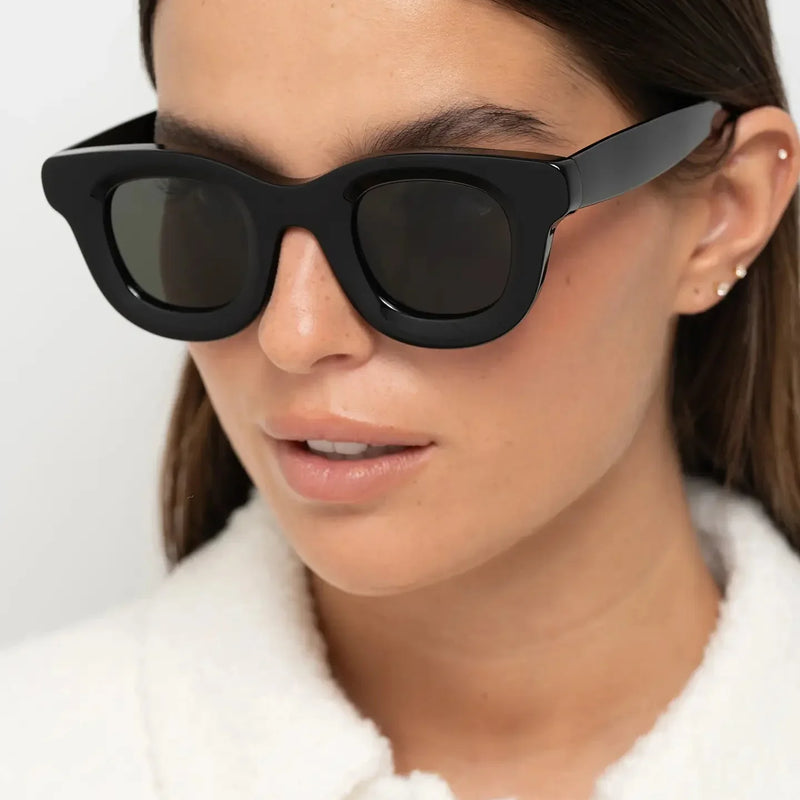
Grey and green are two of the most popular sunglass lens colours, yet many people aren't sure which one is best. Both offer excellent visual comfort and can provide complete UV400 protection, but they create slightly different viewing experiences depending on where and how you wear your sunglasses.
Grey lenses are renowned for delivering the most natural colour perception, making them a versatile choice for everyday wear, holidays and bright summer days. Green lenses, meanwhile, offer a subtle increase in contrast while preserving realistic colours, making them a favourite for driving, walking and spending time outdoors.
The right choice isn't about one lens colour being objectively better than the other. Instead, it comes down to your lifestyle, personal preference and the environments where you'll wear your sunglasses most often.
If you're still exploring what makes a great pair of sunglasses, you may also find our guides on Do You Really Need Polarised Sunglasses? and Brown vs Grey Sunglass Lenses helpful before making your decision.

Quick answer: are grey or green sunglass lenses better?
For most people, grey lenses are the best all-round choice. They reduce brightness without altering colours, making them ideal for everyday wear, travelling, driving and long periods outdoors.
Green lenses, however, offer a subtle increase in contrast while maintaining natural colour balance. They can make roads, landscapes and surrounding details appear slightly more defined, which is why many people enjoy them for driving and outdoor activities.
Both lens colours perform exceptionally well when paired with high-quality UV400 lenses. The difference is not one of protection, but of how the world appears through the lenses.
One of the biggest misconceptions about sunglass lenses is that darker or different coloured lenses automatically provide better protection. In reality, eye protection comes from the lens's UV400 filter, not from whether the lens is grey, green or another colour. Lens colour mainly affects contrast, brightness and colour perception.
Grey vs green lenses at a glance
| Feature | Grey lenses | Green lenses |
|---|---|---|
| Colour perception | Very natural | Natural with slightly enhanced contrast |
| Contrast | Neutral | Slightly enhanced |
| Everyday wear | Excellent | Excellent |
| Driving | Excellent | Excellent |
| Outdoor activities | Very good | Excellent |
| Best for | Versatile everyday use | Driving and outdoor lifestyles |
Although both lens colours perform exceptionally well, they achieve visual comfort in slightly different ways. Understanding how each lens affects brightness, colour perception and contrast makes it much easier to choose the one that suits your lifestyle.
In the next section, we'll explore how grey and green sunglass lenses actually work, before comparing their performance across everyday activities such as driving, travelling and spending time outdoors.
What’s the difference between grey and green sunglass lenses?
At first glance, grey and green sunglass lenses appear remarkably similar. Both are designed to reduce brightness, improve visual comfort and provide a natural viewing experience. The real difference lies in how they handle colour perception and contrast.
Grey lenses are engineered to reduce light evenly across the visible spectrum, preserving colours as accurately as possible. Green lenses also maintain realistic colours but introduce a subtle increase in contrast, helping certain details appear slightly more defined without dramatically changing the way the world looks.
Neither option is inherently better. The right choice depends on whether you prioritise absolute colour neutrality or a little extra visual definition.
Grey sunglass lenses

Grey lenses are the benchmark for everyday sunglasses because they provide the most neutral colour perception. Rather than enhancing or warming the scene, they simply reduce overall brightness while allowing colours to appear almost exactly as they do naturally.
This balanced performance makes grey lenses one of the most versatile choices for daily wear. Whether you're driving, travelling, relaxing at the beach or walking through the city, they deliver consistent visual comfort across a wide range of lighting conditions.
If you're looking for a pair of sunglasses that can comfortably handle almost any situation, grey lenses are often the safest and most versatile option.
Grey lenses are often recommended as a first pair of premium sunglasses because they require virtually no adjustment. The world simply looks slightly less bright, rather than noticeably different in colour.
Bo Bo Noir models with grey lenses include:
Green sunglass lenses

Green lenses offer a slightly different visual experience. Instead of focusing purely on neutral colour reproduction, they subtly enhance contrast while maintaining a realistic colour balance. The result is a view that many people describe as crisp, comfortable and easy on the eyes.
This additional contrast can make roads, trees, landscapes and natural textures appear a little more defined, which explains why green lenses have long been popular for driving and outdoor activities.
Unlike warmer lens colours, green lenses don't significantly alter the appearance of the environment. They simply provide a touch more separation between colours and textures while remaining comfortable for prolonged wear.
At Bo Bo Noir, the William Tortoise features premium green lenses, combining timeless styling with enhanced visual contrast for everyday wear.
Grey vs green: side-by-side comparison
| Feature | Grey | Green |
|---|---|---|
| Colour accuracy | ★★★★★ | ★★★★☆ |
| Contrast | ★★★★☆ | ★★★★★ |
| Versatility | ★★★★★ | ★★★★★ |
| Ideal for | Everyday wear, travel and general use | Driving, walking and outdoor activities |
If this is your first pair of premium sunglasses, grey lenses are the easiest all-round choice. If you already own a pair with neutral lenses and would like a little more contrast for driving or outdoor adventures, green lenses are an excellent second option.
Now that we've compared how each lens colour affects your vision, the next section explores which performs better for driving, holidays, everyday wear and different outdoor activities, helping you decide which option best matches your lifestyle.
Which lens colour is best for different activities?
Both grey and green lenses perform exceptionally well in bright conditions, but each has strengths that make it better suited to certain environments. Rather than asking which colour is universally better, it's more useful to consider where you'll wear your sunglasses most often.
Whether you're driving to work, exploring a new city or relaxing on holiday, choosing the right lens colour can make your sunglasses feel even more comfortable throughout the day.
Driving
Both grey and green lenses are excellent choices for driving, but they achieve comfort in slightly different ways.
Grey lenses reduce brightness evenly across the visible spectrum, helping maintain natural colour perception while reducing eye strain during long journeys. Green lenses provide a subtle increase in contrast, making road markings, vegetation and surrounding scenery appear slightly more defined.
Many drivers prefer green lenses for country roads and rural landscapes, while others favour the neutral view provided by grey lenses. In practice, both deliver outstanding performance when combined with premium UV400 protection.
If you're also considering lens technology, our guide to Do You Really Need Polarised Sunglasses? explains when polarisation can further reduce reflected glare while driving.
Everyday wear
For everyday use, grey lenses are generally considered the most versatile option. Their neutral appearance means colours remain accurate whether you're walking through the city, commuting, shopping or spending time outdoors.
Green lenses are equally comfortable for daily wear, especially if you enjoy spending time in parks, gardens or natural surroundings where their slightly enhanced contrast becomes more noticeable.
The differences between grey and green lenses are surprisingly subtle. Most people adapt to either colour within minutes, so comfort and frame fit often have a greater influence on your overall experience than the lens colour itself.
Travel and holidays
If you're buying sunglasses for travelling, holidays or everyday versatility, grey lenses are difficult to beat. They adapt comfortably to changing environments, from city sightseeing and coastal walks to bright Mediterranean sunshine.
Green lenses are equally capable during holidays, particularly if your itinerary includes scenic drives, hiking or exploring natural landscapes where their enhanced contrast can help reveal more detail.
For most travellers, either lens colour performs exceptionally well, making this decision more about personal preference than technical performance.
Walking and outdoor activities
Green lenses have a slight advantage during outdoor activities because their enhanced contrast can make footpaths, woodland trails and natural textures appear a little more defined.
Grey lenses remain an excellent choice, particularly if you prefer a more neutral view that doesn't alter the appearance of the surrounding landscape.
Whether you're walking through the countryside or spending the afternoon outdoors, both lens colours provide comfortable vision without dramatically changing natural colours.
Beach and bright sunshine
Bright beaches create intense levels of sunlight reflected from both sand and water. In these conditions, grey lenses excel by reducing brightness while maintaining natural colour perception, making them one of the most popular choices for summer holidays.
Green lenses also perform extremely well, offering slightly greater contrast while still delivering a relaxed and comfortable viewing experience throughout the day.
Grey vs green by activity
| Activity | Recommended lens | Why? |
|---|---|---|
| Everyday wear | Grey | Natural colours and excellent versatility. |
| Driving | Grey or Green | Grey offers neutrality; green provides slightly more contrast. |
| Travel | Grey | Adapts comfortably to almost every environment. |
| Walking & Outdoor Activities | Green | Enhanced contrast makes natural details easier to distinguish. |
| Beach Holidays | Grey | Excellent brightness reduction with true-to-life colours. |
If you're buying just one pair of premium sunglasses, choose the lens colour that best matches where you'll wear them most often. Grey lenses offer unmatched versatility for everyday use, while green lenses are an excellent option if driving and outdoor activities are a regular part of your lifestyle.
At Bo Bo Noir, you'll find both options within the collection. The William Tortoise features green lenses, while models such as the Triboulet Black, Jane Black, Jane Tortoise, Narr Tortoise and William Shiny Black are fitted with grey lenses.
Now that you've seen how each lens performs across different activities, the final section brings everything together with a practical buying guide, key takeaways, frequently asked questions and our final recommendation on choosing between grey and green sunglass lenses.
How to choose between grey and green sunglass lenses
After comparing their strengths, one thing becomes clear: there isn't a universally better lens colour. Both grey and green lenses provide excellent visual comfort, natural colour perception and reliable protection when fitted with quality UV400 lenses.
The best choice comes down to how and where you wear your sunglasses. If you want one pair that performs effortlessly across almost every situation, grey lenses are the most versatile option. If you spend more time driving or enjoying the outdoors, green lenses offer slightly greater contrast while maintaining a natural-looking view.
Choose grey lenses if you:
- Want the most natural colour perception.
- Need one pair for everyday wear.
- Travel frequently.
- Spend time at the beach or in bright urban environments.
- Prefer a neutral viewing experience.
Choose green lenses if you:
- Drive regularly during the day.
- Enjoy walking, hiking or outdoor activities.
- Prefer slightly enhanced contrast.
- Spend time in countryside or woodland settings.
- Want a subtle alternative to neutral grey lenses.
If this is your first pair of premium sunglasses, grey lenses are usually the safest choice because they adapt naturally to almost every environment. Green lenses make an excellent second pair if you enjoy driving or spending long periods outdoors.
Grey vs green: final comparison
| If you want... | Choose |
|---|---|
| The most natural colour perception | Grey |
| A little more visual contrast | Green |
| One pair for everything | Grey |
| Driving and outdoor activities | Green |
| Maximum versatility | Grey |
Why lens quality matters more than lens colour
While lens colour affects how you perceive brightness and contrast, it doesn't determine the quality of your sunglasses. High-quality optics, UV400 protection and a well-fitting frame all have a greater impact on comfort than choosing between grey and green.
Both lens colours can provide complete UV400 protection, excellent optical clarity and long-lasting comfort. Likewise, both can be fitted with polarised technology if reducing glare from roads or water is a priority.
Lens colour influences how you experience the world. Lens quality determines how well you see it. Prioritise premium optics, reliable UV400 protection and a frame that fits comfortably before focusing on lens tint.
Our recommendations
If you're looking for grey lenses, Bo Bo Noir offers several versatile styles including the Triboulet Black, William Shiny Black, Jane Black, Jane Tortoise and Narr Tortoise.
If you prefer green lenses, the William Tortoise combines timeless styling with premium green lenses designed for comfortable everyday wear.
Key takeaways
- Grey lenses preserve colours more naturally than any other lens colour.
- Green lenses subtly enhance contrast while maintaining realistic colour balance.
- Grey lenses are the most versatile option for everyday wear.
- Green lenses are particularly popular for driving and outdoor activities.
- Both colours can provide complete UV400 protection.
- Both grey and green lenses can also be polarised.
- Lens quality and frame fit matter more than lens colour alone.
Frequently Asked Questions
1. Are grey lenses better than green lenses?
Neither lens colour is objectively better. Grey lenses offer the most natural colour perception, while green lenses provide slightly greater contrast. The right choice depends on how and where you wear your sunglasses.
2. Which lens colour is best for everyday wear?
Grey lenses are generally considered the most versatile choice because they perform consistently across almost every environment.
3. Are green lenses good for driving?
Yes. Green lenses can make road markings and surrounding scenery appear slightly more defined, making them a popular choice for daytime driving.
4. Are grey lenses good for driving?
Yes. Grey lenses reduce brightness while maintaining accurate colour perception, making them equally suitable for long journeys.
5. Which lens colour is best for bright sunshine?
Both perform extremely well. Grey lenses provide neutral brightness reduction, while green lenses combine brightness reduction with slightly enhanced contrast.
6. Which lens colour is better for outdoor activities?
Green lenses often have a slight advantage because they can make natural textures and landscapes appear a little more defined.
7. Do grey and green lenses provide the same UV protection?
Yes. UV protection comes from the UV400 filter, not from the lens colour itself.
8. Can both lens colours be polarised?
Yes. Grey and green lenses are both available with polarised technology to help reduce reflected glare.
9. Which lens colour should I choose for my first pair?
Grey lenses are usually the easiest recommendation because they are incredibly versatile and preserve colours naturally.
10. Which Bo Bo Noir sunglasses feature green lenses?
The William Tortoise is the Bo Bo Noir model fitted with premium green lenses.
You May Also Like
If you're researching sunglass lenses, these guides can help you choose the right pair for your lifestyle.
Do You Really Need Polarised Sunglasses?
Discover how polarised lenses work, who benefits most from them and whether they're worth the investment.
Brown vs Grey Sunglass Lenses
Compare two of the world's most popular lens colours and learn which one is better for driving, holidays and everyday wear.
Final Thoughts
Grey and green lenses remain two of the most trusted choices because they provide outstanding visual comfort without dramatically changing the way you see the world.
If versatility is your priority, grey lenses are the clear choice. Their neutral colour perception makes them suitable for almost every environment, from everyday commuting to holidays abroad.
If you appreciate a little more visual definition while driving or spending time outdoors, green lenses provide a subtle enhancement in contrast while preserving a natural-looking view.
Ultimately, whichever lens colour you choose, premium optics, reliable UV400 protection and a frame that fits comfortably will always have the greatest impact on your visual experience.
Discover Bo Bo Noir Sunglasses
Explore premium sunglasses with grey and green lenses, designed for exceptional comfort, timeless style and everyday performance.