Envío mundial gratuito • Devoluciones en 14 días • Diseñado en PortugalEnvío mundial gratuito • Devoluciones en 14 días • Diseñado en PortugalEnvío mundial gratuito • Devoluciones en 14 días • Diseñado en PortugalEnvío mundial gratuito • Devoluciones en 14 días • Diseñado en PortugalEnvío mundial gratuito • Devoluciones en 14 días • Diseñado en PortugalEnvío mundial gratuito • Devoluciones en 14 días • Diseñado en PortugalEnvío mundial gratuito • Devoluciones en 14 días • Diseñado en PortugalEnvío mundial gratuito • Devoluciones en 14 días • Diseñado en PortugalEnvío mundial gratuito • Devoluciones en 14 días • Diseñado en PortugalEnvío mundial gratuito • Devoluciones en 14 días • Diseñado en PortugalEnvío mundial gratuito • Devoluciones en 14 días • Diseñado en PortugalEnvío mundial gratuito • Devoluciones en 14 días • Diseñado en PortugalEnvío mundial gratuito • Devoluciones en 14 días • Diseñado en PortugalEnvío mundial gratuito • Devoluciones en 14 días • Diseñado en PortugalEnvío mundial gratuito • Devoluciones en 14 días • Diseñado en Portugal
Choosing an independent eyewear brand can become surprisingly difficult once you move beyond familiar fashion labels. One company may be known for technical construction, another for expressive acetate, another for colour, optical expertise or restrained geometry. All may be independent, yet they can produce completely different experiences on the face.
The mistake is to treat independent as the buying criterion. Independence can create room for a specific design philosophy, but it does not tell you whether a frame will fit, whether you will enjoy its visual weight or whether the brand's approach is relevant to the way you actually use eyewear. As we explain in our guide to the best independent eyewear brands for 2027, independence is context rather than proof of quality.
A better process works in the opposite direction: define the frame you need first, then find the independent brand capable of producing it convincingly. That means thinking about wearing role, facial effect, design language, material, fit, prescription requirements, production approach and how well the wider collection supports the brand's stated identity.
The useful starting point is not “Which independent brand should I buy?” but “What should the frame do on my face?” Geometry, colour, scale and visual weight all change the answer.
Quick Answer
To choose an independent eyewear brand, first define what you need from the frame: how often you will wear it, how much facial definition you want, which design language and materials appeal to you, and what fit or prescription requirements matter. Then compare brands for design consistency, material logic, production transparency, collection range and service. Choose the frame brief before the brand. A brand can lead you towards the right design territory, but the individual frame still has to work for your face, use case and daily life.
BBN Insight
A brand match and a frame match are two different decisions. You can identify strongly with a brand's design philosophy and still choose the wrong frame from its collection. The brand determines the design territory; the individual frame determines proportion, contrast, fit and the actual relationship with your face.
1. What does “independent” actually tell you about an eyewear brand?
Before using independence as part of a buying decision, understand what the term can and cannot tell you. In eyewear, independence is primarily information about the company and its creative context. It may allow closer control over design direction, product development or the relationship between the brand and its frames.
It does not describe one aesthetic. Independent eyewear can be technical and lightweight, substantial and acetate-led, colourful and graphic, historically informed, minimalist or deliberately experimental. Two independent companies can pursue almost opposite design philosophies.
Nor does independence tell you where a frame was manufactured. Some companies develop their own production systems. Others work with specialist eyewear facilities. Some use different manufacturing locations according to material or collection. Creative control and physical manufacture are related questions, but they are not the same question.
The same caution applies to quality. Independent ownership does not automatically produce better acetate, hinges, lenses, finishing or fit. Those qualities need to be examined in the finished product rather than inferred from the ownership structure.
Independence may tell you
You still need to investigate
Who controls the brand and creative direction
Whether the individual frame is well resolved
How central eyewear is to the company's identity
Materials, construction and finishing
The design philosophy the company is free to pursue
Whether that philosophy suits you
The business context behind the collection
Production, fit, prescription suitability and aftercare
This prevents one of the easiest mistakes in independent eyewear: replacing familiar designer-logo loyalty with a different kind of label loyalty. Buying something because it is independent is still buying the label if you have not examined what independence changes in the object.
The more useful question is: what has this brand's independence allowed it to create? If the answer is visible in proportion, construction, colour, material, fit or a coherent design language, independence has become relevant to the product.
BBN Insight: do not replace logo buying with independence buying
The purpose of discovering independent eyewear is to widen the range of design choices available to you, not to create another status category. Judge what independence produces, not independence itself.
2. Why should you build a frame brief before choosing a brand?
Most eyewear searches begin too late in the decision process. A person discovers a brand, browses its collection and then asks which frame they like. A frame brief reverses that sequence by defining what the eyewear needs to accomplish before brand preference begins influencing the answer.
The brief does not need to be technical. Is this your primary pair of optical glasses, a second pair or sunglasses? Do you want the frame to become a visible part of your identity or sit more quietly on the face? Do you prefer substantial acetate or lower visual weight? Are you seeking neutral versatility or expressive colour?
Those answers immediately change which collections are relevant. Someone seeking lightweight technical eyewear is solving a different problem from someone looking for substantial tortoise acetate. Someone buying their only prescription frame may evaluate colour differently from someone building a rotation.
1. Wearing role: everyday optical, second pair, sunglasses or expressive alternative?
2. Facial effect: more definition, softer contrast, stronger structure or greater visual openness?
3. Visual weight: discreet, balanced or deliberately substantial?
4. Design direction: technical, refined, classic, graphic, contemporary or bold?
5. Practical requirements: dimensions, bridge, prescription, lens depth, comfort and frequency of wear?
This framework also separates attraction from suitability. A frame can be an excellent piece of design and still be wrong for the role you need it to perform. Appreciating a sculptural frame does not automatically make it the right everyday optical frame.
Instead of asking only, “Do I like this?”, the frame brief gives you a harder and more useful question: “Does this solve the brief?”
3. What role does the frame need to play?
Frequency changes the design problem. A primary optical frame may be present through work, conversation, travel and everyday routines. Because it occupies the face repeatedly, colour, contrast, comfort and silhouette need to survive far beyond the initial excitement of buying it.
A second optical pair has a different job. It can introduce more colour, stronger geometry or greater visual weight because it does not need to cover every situation. Sunglasses create another context again: tinted lenses alter the relationship with the eyes and often allow more visual presence without producing exactly the same effect as an optical frame.
None of this means everyday eyewear should be conservative. A strong frame can become exceptionally easy to wear when its visual language feels aligned with the wearer. Frequency should influence how you judge boldness, not automatically reduce it.
A useful definition of timelessness follows from this. A frame does not need to disappear in order to remain useful for years. It needs to occupy a role you continue to value.
BBN Insight: repeat wear changes the meaning of bold
A frame can look dramatic when first tried on and become visually natural once integrated into someone's identity. The opposite can happen when novelty fades but an unresolved proportion remains. Judge boldness by the visual relationship you want repeatedly, not only by first impact.
4. What visual effect do you want from your eyewear?
The next question is not simply which frame shape you like. It is what you want the eyewear to change visually. Frames occupy one of the most expressive areas of the face, so colour, thickness, geometry and brow line can alter where attention goes and how much structure the face appears to have.
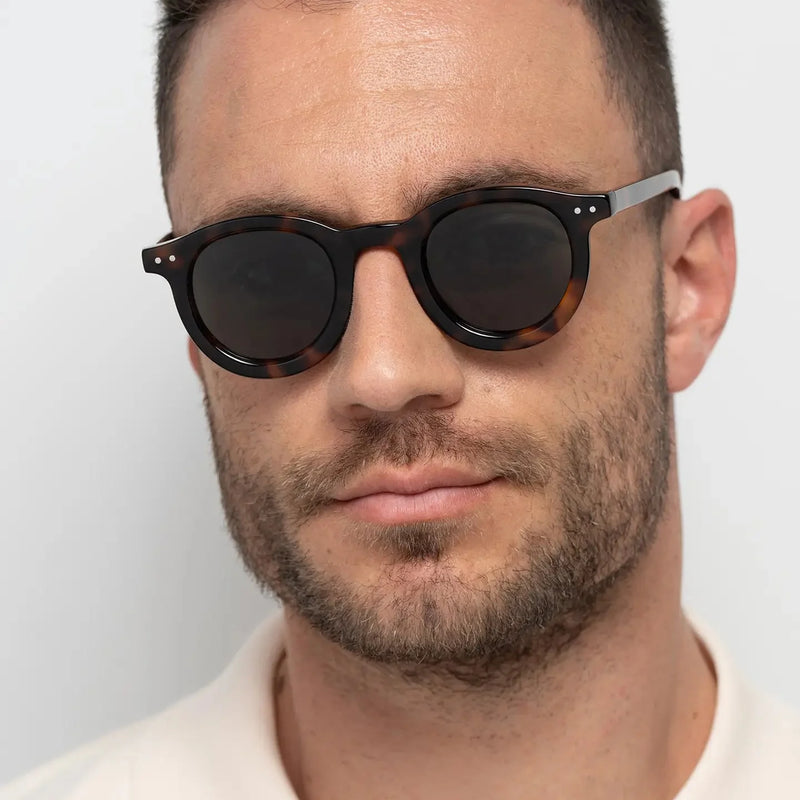
If you want more definition, stronger contrast can help. Dark acetate creates a clearer boundary around the eyes, while a substantial brow can increase upper-face structure. If you want a softer effect, transparent, translucent or lower-contrast materials allow more facial information to remain visible.
Geometry changes perception too. Rectangular frames can introduce straighter lines and stronger horizontal structure. Round and panto shapes introduce more curvature, although material thickness and colour may make a substantial round frame visually stronger than a thin rectangle.
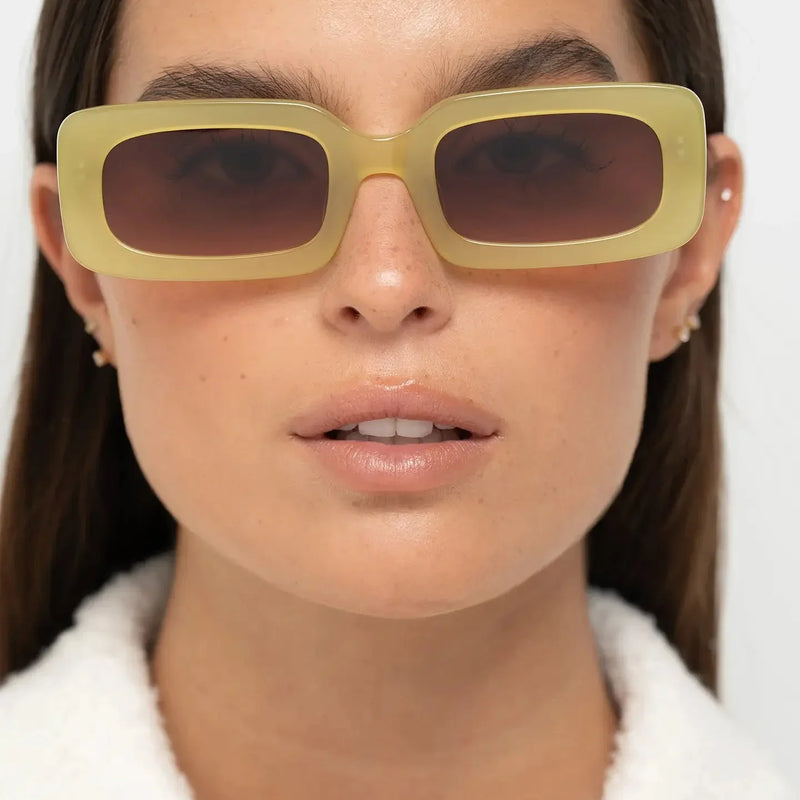
Visual effect comes from variables working together. Jane's rectangular geometry adds horizontal structure, while muted olive creates a less severe contrast than the same substantial silhouette would produce in solid black.
This is why rigid face-shape rules are insufficient. Two people described as having the same face shape can have different eyebrow lines, bridge proportions, facial width, colouring, hairstyle and preferences for contrast.
Instead of asking only whether your face is round, square or oval, ask what relationship you want the frame to create. Our guide to how frame contrast changes your appearance explores this principle in more detail.
BBN Insight: choose an effect before choosing a shape
“Round” or “rectangular” describes geometry, not the complete result. Start with the effect you want, then use shape, colour, scale and material together to create it.
5. How do you identify the right eyewear design language?
Independent eyewear becomes easier to navigate when you stop treating every brand as a collection of unrelated products and start recognising design languages. A coherent company repeatedly makes related decisions about proportion, construction, colour, material and visual weight even when individual models differ.
Some brands make engineering visible. Hinges, metal structures or construction systems become part of the aesthetic. Others build identity through substantial acetate, controlled geometry or distinctive colour relationships. Some draw visibly from optical history; others pursue contemporary fashion or deliberately experimental forms.
None is inherently superior. What matters is whether that language corresponds to what you want eyewear to communicate. A technically minimal frame can feel precise and discreet. A thick acetate frame can create stronger presence. Graphic colour can add energy around the eyes. Historically informed geometry can feel familiar without becoming conservative.
A useful exercise is the Logo Test. Mentally remove the branding. Would proportion, construction, colour and material still give you a reason to care about the frame?
Then look beyond one product. A real design system should survive changes in silhouette. Consistency is strongest when a brand repeats principles rather than simply repeating its most recognisable frame.
6. How should you compare eyewear materials?
Material is one of the easiest areas for eyewear marketing to turn into a hierarchy. Acetate may be described as premium and titanium as superior, but the material name alone does not tell you whether a frame is well designed or right for you.
A better question is what the material allows the designer to achieve. Acetate can provide depth of colour, transparency, pattern and sculptural presence. Metal can create finer outlines and lower visual weight. Titanium becomes especially relevant when low physical weight, strength and technical construction are priorities.
Even within one material category, visual results vary dramatically. Dark acetate can create a strong continuous perimeter. Tortoise breaks that surface into tonal variation. Transparent acetate allows skin and light to influence how the material is perceived.
Construction matters alongside material. Rim thickness, temple dimensions, hinge design, finishing and the transitions between components all affect the result. Two frames carrying the same material description can therefore have very different levels of resolution.
Material direction
What it can contribute
What to evaluate
Acetate
Colour depth, pattern, transparency and material presence
Thickness, finishing, balance, colour and sculpting
Fine metal
Lower visual weight and finer outlines
Construction, adjustment, bridge design and proportion
Titanium
Low physical weight, strength and technical possibilities
Construction, fit, finishing and whether those technical advantages matter to you
Choose material by consequence, not prestige. A material becomes valuable when its physical and visual properties solve the design problem you actually have.
BBN Insight: material is a design resource, not a quality score
The useful question is not “Which material is best?” but “Why did this frame need this material?”
7. How much should production and provenance matter?
Production matters, but provenance becomes useful only when the information is specific enough to explain something about the product. A country name can provide context; it should not be treated as a universal quality score.
Separate three questions: where does the brand come from, where is its design direction developed and where is the particular frame manufactured? These can all have the same answer, but they do not have to.
Independent brands also use different production models. A company may operate its own facility, work with specialist eyewear manufacturers or distribute production according to material and process. None of these structures is automatically superior without examining execution.
Claims such as “handmade” need similar context. The amount and type of handwork can differ between products and processes. A vague handmade claim tells you less than a clear explanation of production, construction and why those processes matter to the finished frame.
Level 1 — Country label: where is this model produced?
Level 2 — Production context: is production in-house, through specialist facilities or distributed by process?
Level 3 — Product consequence: what does that approach contribute to construction, consistency, finishing, material treatment or technical development?
The third level is the most useful. Provenance becomes valuable when it explains something you can see, feel or experience in the frame.
8. How can you tell whether an eyewear brand has a coherent collection?
One impressive frame can make you notice a brand. It cannot tell you whether the company has a meaningful design system. For that, move from the individual object to the collection.
Start with the One-Frame Test: would this frame remain convincing without its logo, campaign or brand story? Look at proportion, bridge, lens geometry, temples, construction, material and colour.
Then apply the Collection Test: can the company move between different shapes, materials or levels of visual weight while retaining a recognisable point of view?
Finally, use the Repeat-Wear Test: imagine the frame after the novelty of discovery has disappeared. Does its appeal depend mainly on being unusual, or do proportion, material logic and suitability still make the design convincing?
BBN test
Question
What it reveals
One-Frame Test
Would this frame work without the branding?
Product-level design resolution
Collection Test
Can the brand create variety without losing its point of view?
Strength of the design system
Repeat-Wear Test
Will the design remain convincing when novelty disappears?
Potential long-term relevance
The strongest collections repeat principles rather than products. Recognisable design does not require making the same frame again and again.
9. How should you evaluate frame fit and prescription needs?
A brand can pass every design test and still be wrong for you if the individual frame does not fit. This is where the distinction between brand match and frame match becomes practical.
Start with eyewear you already wear successfully. Lens width, bridge width and temple length provide useful reference points, but do not interpret them independently. Two frames with similar numbers can sit differently because bridge geometry, lens shape, rim thickness and overall front construction differ.
Bridge design deserves particular attention. The printed bridge number is a measurement, not a guarantee of fit. Shape and position influence where the frame sits, how the lenses relate to the eyes and how the upper frame interacts with the eyebrows.
For prescription eyewear, the lenses add another layer. Prescription, lens material, optical centres and frame dimensions can influence lens thickness, weight and suitability. Prescription compatibility therefore belongs inside the buying decision rather than after it.
Physical fit and visual fit should also be separated. A frame can technically fit while creating a visual effect you dislike. Another may look excellent from the front but need professional adjustment for comfortable wear.
A strong collection becomes more useful when its design language can accommodate different dimensions, bridges and lens shapes instead of forcing every wearer into one signature proportion.
BBN Insight: measurements describe a frame; geometry determines how those measurements behave
Use measurements to narrow the search, then use bridge design, front-view proportion, worn photography and professional fitting where necessary to complete it.
10. How do you evaluate an independent eyewear brand online?
Buying eyewear online removes one obvious source of information: physically trying the frame. The solution is not to guess from a campaign photograph. It is to replace the missing try-on with several different forms of evidence.
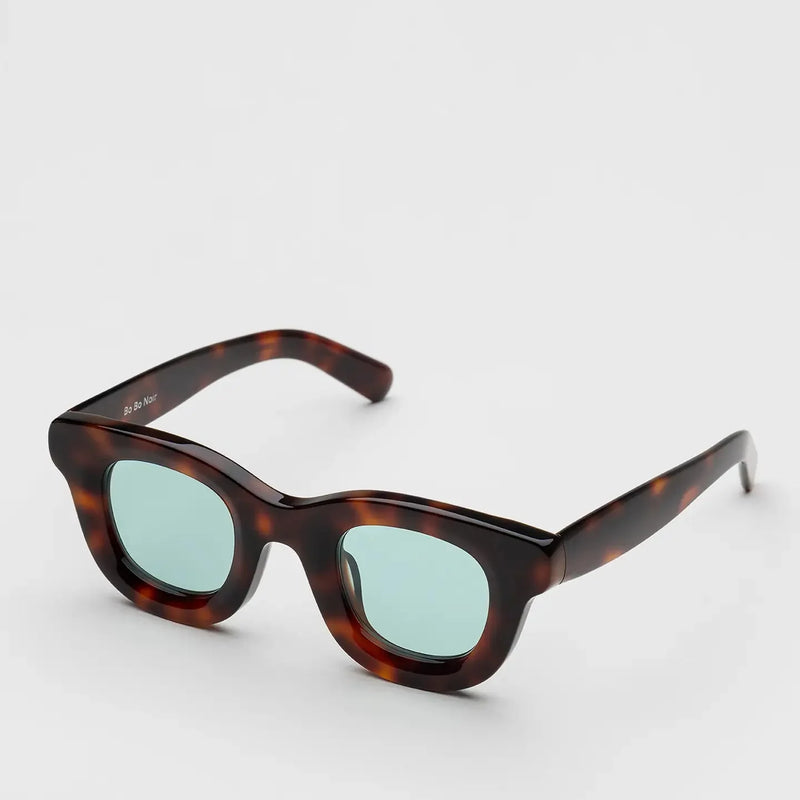
Product photography should answer different questions. A front view reveals geometry, bridge position and lens depth. An angled view makes material thickness and temple transitions easier to understand. A side view can reveal temple construction. Worn photography provides scale and facial context.
Then compare dimensions with eyewear you already own. Do not ask only whether a frame is described as small, medium or large. Ask how its measurements differ from a frame you know fits.
Colour also requires caution. Screen brightness, photography and lighting affect perception. Transparent and translucent materials can change noticeably when skin, hair and ambient light become visible through or around them.
Before buying independent eyewear online, check:
Front, angled and side product views where available.
Worn photography for scale and facial context.
Lens width, bridge width, temple length and overall width where provided.
Material and construction information.
Lens information for sunglasses.
Prescription compatibility where relevant.
Shipping, return and exchange conditions.
A campaign establishes a brand world; it does not replace product evidence. The more distinctive or expensive the frame, the more useful neutral photography and measurements become.
11. Should service and aftercare affect your choice?
Yes — particularly for optical eyewear. Adjustment, prescription lens fitting, maintenance and access to appropriate support can influence how successfully a frame works over time.
This becomes more relevant as construction becomes specialised. A distinctive hinge or unusual frame architecture may be part of what makes a product interesting, but it can also make knowledgeable servicing more important.
Acetate frames may benefit from professional adjustment. Prescription lenses require accurate fitting and centration. Components can require maintenance after repeated use. None of this automatically indicates poor quality; eyewear is a functional object worn directly on the body.
When two frames are equally convincing, a clearer route to fitting, maintenance and aftercare can become a meaningful reason to choose one over the other.
12. Independent eyewear brand scorecard
Avoid turning these criteria into an artificial numerical ranking. Buyers do not value every variable equally, and different brands deliberately solve different problems. A diagnostic scorecard is more useful.
Decision area
Question to ask
Positive signal
Design identity
Would the frames remain recognisable without logos?
Clear principles across different products
Frame relevance
Does the collection solve my frame brief?
Suitable choices beyond the hero model
Material logic
Why was this material used?
Material supports the intended design and wearing experience
Production clarity
Can I understand how and where this model is produced?
Specific information rather than vague provenance language
Fit and optical needs
Can this frame work physically and optically for me?
Useful dimensions, appropriate geometry and optical guidance
Repeat wear
Will I want this after novelty disappears?
Appeal based on proportion and suitability as well as impact
Service
What happens if I need fitting or support?
A clear route to appropriate assistance
Keep the questions stable; change their weighting according to the role of the frame. Everyday prescription glasses and occasional sunglasses should not be evaluated with identical priorities.
13. What mistakes should you avoid when choosing independent eyewear?
Most poor decisions happen when one attractive signal replaces the complete decision.
Do not assume independent automatically means better. Judge design, construction and fit at product level.
Do not choose by country alone. Brand origin, design direction and manufacturing geography can differ.
Do not treat acetate thickness as a quality score. More material creates different design possibilities, not automatic superiority.
Do not assume unusual means design-led. Novelty attracts attention; coherent design explains why the frame looks the way it does.
Do not use face shape as your only system. Scale, brow, bridge, colour, contrast and desired visual effect matter too.
Do not judge a brand from one hero product. Apply the One-Frame Test and Collection Test.
Do not confuse first impact with long-term relevance. Especially for everyday eyewear, apply the Repeat-Wear Test.
BBN Insight: brand credibility narrows the field; it never replaces frame-level judgement
A respected independent company can still produce a frame that is wrong for your proportions, prescription, wardrobe or desired level of visual presence.
14. Frequently asked questions
How do I choose an independent eyewear brand?
Start by defining the frame you need: wearing role, desired visual effect, design direction, fit and prescription requirements. Then compare relevant brands for design identity, material logic, production transparency, collection coherence and service. Choose the individual frame only after those criteria have narrowed the field.
What should I look for in an independent eyewear brand?
Look for a coherent design identity across multiple frames, useful product information, materials used for a clear reason, understandable production information, meaningful fit data and enough collection range to serve different wearers or use cases.
Are independent eyewear brands better quality?
Not automatically. Independence describes a business and creative context; it does not guarantee better materials, construction, lenses, finishing or fit. Quality still needs to be evaluated in the individual product.
Are independent glasses worth the price?
They can be when the qualities you are paying for — such as a specific design language, construction approach, material expression, optical expertise or long-term wearability — are both convincing and relevant to you. Price itself is not evidence of those qualities.
Does independent eyewear mean handmade?
No. Independence and handwork describe different things. Independent brands may manufacture in-house, use specialist eyewear facilities or combine several production approaches. Look for specific production information rather than inferring it from ownership.
Is independent eyewear always made in Europe?
No. Independence does not determine manufacturing geography. Brand origin, creative direction and production can all exist in different places.
Should I choose acetate or metal glasses?
Choose according to the visual effect and wearing experience you need. Acetate can provide colour depth, pattern, transparency and greater material presence; fine metal can create lower visual weight and finer outlines. Construction and execution matter as much as the material category.
How do I know whether an eyewear brand is design-led?
Remove the logo mentally and examine whether proportion, construction, material and colour still feel intentional. Then look across the collection. A design-led brand should repeat coherent principles without needing to repeat the same frame.
How do I know whether glasses will fit when buying online?
Compare their measurements with eyewear you already wear successfully, then examine bridge geometry, lens depth, overall front proportions and worn photography. Measurements narrow the search, but they do not replace geometry or professional fitting where needed.
Should I choose the eyewear brand or the individual frame first?
Neither should literally come first. Start with the need. The most useful sequence is need → frame brief → design direction → brand → individual frame → fit.
15. How do you make the final decision?
Once you have narrowed the search to two or three frames, stop researching the entire market. More discovery can now make the decision harder rather than better. Compare the finalists directly against your original frame brief.
First, return to wearing role. Which frame makes most sense for the amount and type of wear you expect?
Second, compare facial effect. Which one creates the relationship you want around the eyes, brow and overall face? Look again at colour, rim thickness, lens geometry and contrast.
Third, examine product evidence. Which gives you greater confidence through dimensions, useful photography, material information and understandable construction or production information?
Fourth, apply the Repeat-Wear Test. Imagine each finalist after six months rather than six minutes. The answer does not have to be the quieter frame. Bold eyewear can become exceptionally enduring when its presence genuinely suits the wearer.
Your final five questions
1. Does this frame solve the wearing role I originally defined?
2. Does it create the facial effect and level of presence I want?
3. Do its dimensions, bridge and practical requirements make sense for me?
4. Can I explain why its material, construction and design are relevant to my choice?
5. Would I still choose it if the brand name were hidden?
The strongest decision is the frame you can explain without needing the logo to explain it for you.
BBN Insight: confidence comes from eliminating the wrong reasons
A good decision does not require proving that one frame is objectively better than every alternative. It requires confidence that you are choosing for relevant reasons: role, proportion, visual effect, fit, material and design.
Final thoughts
Choosing an independent eyewear brand should not begin with a list of names. It should begin with understanding what you need the frame to do. That changes the process from brand discovery into a sequence of decisions about wearing role, facial effect, design language, material, fit and long-term use.
Independence becomes meaningful only after that foundation is established. It may give a company room to pursue unusual engineering, expressive colour, specialist optical thinking, strong acetate silhouettes or a highly controlled design philosophy. Those qualities matter when they correspond to something you actually value.
The same principle applies to materials and provenance. Acetate is not automatically superior because it is substantial. Titanium is not automatically right because it is technically sophisticated. A country of manufacture is not a complete quality score. Product information becomes useful when you can connect it to a consequence you can see, feel or benefit from.
Then comes the individual frame. Brand enthusiasm cannot complete this step for you. The model still has to create the visual effect you want, make sense for your dimensions and prescription where relevant, and survive the Repeat-Wear Test.
Bo Bo Noir approaches that problem through strong silhouettes, considered proportions, high-quality acetate and a design philosophy informed by classic forms and mid-century references, interpreted through a contemporary and restrained perspective. Creative direction, brand development and design vision are based in Portugal, while production takes place in specialised eyewear facilities with extensive industry experience.
That does not make Bo Bo Noir the automatic answer for every independent-eyewear buyer. Someone seeking ultra-light technical metal eyewear may need a different design philosophy. Someone looking for greater acetate presence may move in the opposite direction. A useful brand should make its point of view clear enough that the right wearer can choose it — and the wrong wearer can recognise another direction.
Choose the frame brief before the brand. Let the brand narrow the design territory. Then let the individual frame earn the final decision.
Explore the Bo Bo Noir design perspective
Discover bold, refined eyewear shaped by strong silhouettes, considered proportions and expressive acetate — designed beyond short-lived trends.
Best Independent Eyewear Brands 2027 — compare independent eyewear brands through design identity, optical credibility, materials, production approach and buyer fit.
¡Disfruta de un 10% de descuento en tu compra! Suscríbete a nuestro boletín informativo.¡Disfruta de un 10% de descuento en tu compra! Suscríbete a nuestro boletín informativo.¡Disfruta de un 10% de descuento en tu compra! Suscríbete a nuestro boletín informativo.¡Disfruta de un 10% de descuento en tu compra! Suscríbete a nuestro boletín informativo.¡Disfruta de un 10% de descuento en tu compra! Suscríbete a nuestro boletín informativo.¡Disfruta de un 10% de descuento en tu compra! Suscríbete a nuestro boletín informativo.¡Disfruta de un 10% de descuento en tu compra! Suscríbete a nuestro boletín informativo.¡Disfruta de un 10% de descuento en tu compra! Suscríbete a nuestro boletín informativo.¡Disfruta de un 10% de descuento en tu compra! Suscríbete a nuestro boletín informativo.¡Disfruta de un 10% de descuento en tu compra! Suscríbete a nuestro boletín informativo.¡Disfruta de un 10% de descuento en tu compra! Suscríbete a nuestro boletín informativo.¡Disfruta de un 10% de descuento en tu compra! Suscríbete a nuestro boletín informativo.¡Disfruta de un 10% de descuento en tu compra! Suscríbete a nuestro boletín informativo.¡Disfruta de un 10% de descuento en tu compra! Suscríbete a nuestro boletín informativo.¡Disfruta de un 10% de descuento en tu compra! Suscríbete a nuestro boletín informativo.