
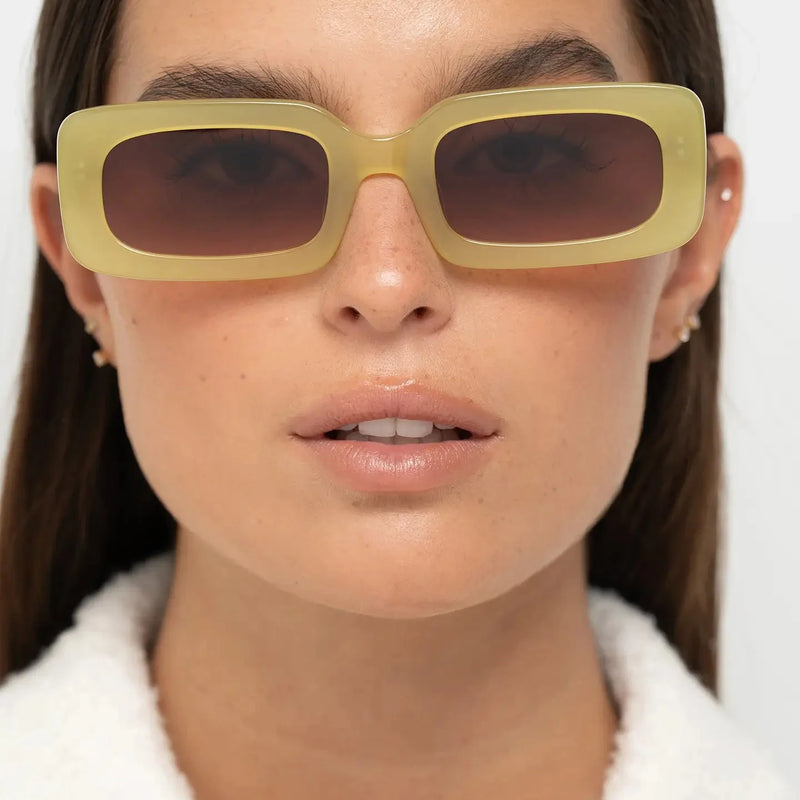
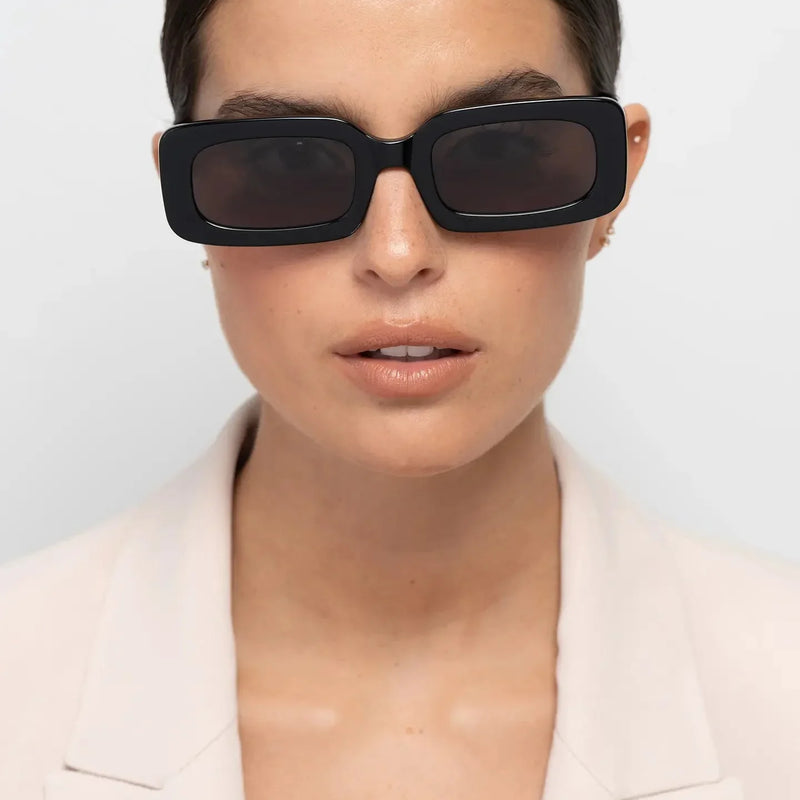
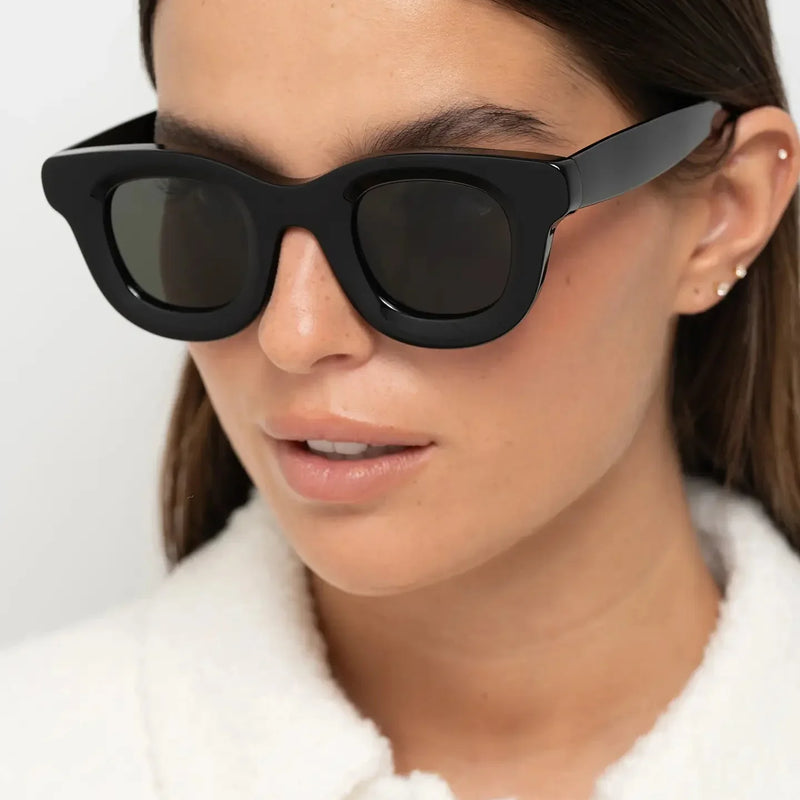
Choosing the best sunglasses for a long face is less about finding one supposedly perfect shape and more about controlling proportion. A frame can be round, panto or rectangular and still work well if its width, lens height and visual weight create enough horizontal balance. The common advice to simply “wear oversized sunglasses” misses this distinction. A very large frame can still emphasise facial length if its lenses are too shallow, its width is poorly distributed or it sits incorrectly around the brow and cheeks. A more useful way to choose is to look at Facial Length → Frame Width → Lens Height → Visual Weight → Brow Position → Fit. Together, these variables explain why two frames from the same shape family can behave very differently on a longer face. For the wider relationship between geometry and facial structure, see our guide to How to Choose Sunglasses for Your Face Shape. Quick Answer The best sunglasses for a long face usually create horizontal balance with enough lens height to anchor the centre of the face. Medium-to-wide frames, round and panto shapes, and well-proportioned rectangular sunglasses can all work. Avoid judging by shape or size alone: frame width, lens depth, acetate thickness, brow position and bridge fit determine whether the sunglasses balance facial length or unintentionally emphasise it. BBN Insight: width is only half the equation A wider frame does not automatically make a long face look more balanced. Width creates horizontal emphasis, but lens height determines how strongly the sunglasses occupy the centre of the face. The most convincing result usually comes from the relationship between the two rather than maximising either measurement. A long face generally has greater visible vertical length relative to its width. That does not mean every long face has the same forehead, jaw, cheekbones or feature scale. It describes the overall relationship between facial height and horizontal breadth. This distinction matters because facial length alone does not determine which sunglasses will work. One person may have a longer face with a broad forehead and defined jaw, while another may have similar overall length with narrower features. The aim is therefore not to disguise facial length. It is to prevent vertical proportion from becoming the only thing the eye notices. Sunglasses can do this by introducing horizontal structure, occupying the eye area more deliberately and creating a stronger visual centre. Frame width is usually the first variable discussed for a long face. There is a good reason: horizontal emphasis can interrupt the perception of vertical length. But width on its own is incomplete. Imagine two equally wide frames. One has very shallow lenses; the other has moderate lens height. The first creates a thin horizontal line across the face. The second occupies more of the eye area and establishes a stronger centre. That difference can matter as much as the overall width. For a long face, think in ratios rather than absolutes: enough width to establish horizontal movement, enough lens height to anchor the eyes, and enough visual weight to register without overwhelming the face. There is no single best shape for every long face. The more useful distinction is how different geometries redistribute attention. Round frames introduce visible curvature and interrupt long straight facial lines. Panto frames combine curved lower geometry with a more differentiated upper line, allowing softness and structure to coexist. Rectangular frames can create strong horizontal definition, provided they are not so shallow that they reduce the sunglasses to a narrow strip across the face. Oversized frames can work when width and lens depth remain proportionate, but oversized is a scale rather than a shape and should not be treated as an automatic solution. The best starting point is therefore not “Which shape is allowed?” but “Where does this particular frame place its visual weight?” Round and panto frames can work particularly well when a longer face benefits from more visible curvature around the eye area. The advantage is not that curves somehow make a face physically shorter. Instead, curved geometry introduces a different visual rhythm from the longer vertical lines of the face. A moderate round frame can create a softer result. A substantial panto in acetate makes the geometry more visible and adds greater visual weight. For a deeper distinction between these geometries, see Panto Sunglasses: What They Are and Who They Suit. Yes. Rectangular sunglasses can be particularly effective when you want stronger horizontal definition, but the word “rectangular” covers frames with very different proportions. A very narrow rectangle with minimal lens height may reinforce length by leaving more vertical facial area visually exposed. A deeper rectangle with balanced width creates a more substantial horizontal anchor. Consider a balanced rectangle if: you want cleaner geometry and stronger horizontal definition. For the differences between slim, balanced and deeper rectangular proportions, see our Rectangular Sunglasses Trends 2027 guide. Frame thickness does not change facial structure, but it changes how strongly the sunglasses register against the face. A very fine rim places most of the emphasis on the lens outline. More substantial acetate turns the entire frame into a stronger visual boundary, which can help establish a clearer horizontal centre on a longer face. That does not mean thicker is always better. A frame can become too dominant if its scale and material weight exceed the visual scale of the wearer’s features. If this variable is difficult to judge, our Thin vs Thick Frame Sunglasses guide explores the trade-off in more detail. A frame can have suitable geometry on paper and still look wrong if it sits poorly. Position changes how the sunglasses divide the face vertically. If the frame sits unusually low, the relationship between the upper rim, eyebrows and eyes can feel disconnected. If it sits too high, the frame may interact awkwardly with the brow or alter the amount of forehead that remains visually exposed. Bridge fit therefore affects more than comfort. It helps determine where the visual centre created by the sunglasses actually sits. Check the whole face, not just the frame. Look at the relationship between the upper rim and eyebrows, whether the eyes appear naturally positioned within the lenses, whether the frame contacts the cheeks, and whether its width relates naturally to the temples. For a more detailed fit assessment, see How Should Sunglasses Fit Your Face?. Colour does not correct facial proportions, but it changes how strongly a frame is perceived. Opaque black can make the outline more explicit. Tortoise breaks that visual mass into several tones. Lighter or more translucent colours can allow substantial acetate to feel less visually dense. This means two frames with identical dimensions can produce different levels of visual weight simply because of colour and contrast. If you are choosing between darker and warmer acetate, see Black vs Tortoise Sunglasses. Instead of applying a rigid shape rule, assess a frame in six steps: Facial Length → Frame Width → Lens Height → Visual Weight → Brow Position → Fit 1. Facial length: identify whether vertical proportion is actually the dominant feature or whether width, forehead or jaw structure is equally important. 2. Frame width: look for enough horizontal presence to relate naturally to the temples without extending excessively beyond them. 3. Lens height: check whether the lenses create a meaningful visual centre rather than leaving the frame excessively shallow. 4. Visual weight: decide how strongly the material, thickness and colour should define the eye area. 5. Brow position: judge how the upper frame line relates to the eyebrows and forehead. 6. Fit: confirm that bridge position, cheek clearance and temple width allow those proportions to work in practice. The objective is not to make a long face look short. It is to build enough horizontal and central structure that facial length becomes one part of the composition rather than the dominant visual signal. Different Bo Bo Noir silhouettes approach facial balance through different variables. None is a universal winner for every long face; the useful question is which geometry and level of visual weight match your own proportions. Design variable: panto geometry with substantial acetate. Visual effect: visible curvature with enough structure to establish the eye area. Consider it if: you want curve without moving to a pure circular silhouette. Consider another direction if: you want strongly angular horizontal geometry. Design variable: panto geometry, tortoise acetate and gradient brown lenses. Visual effect: substantial frame presence with softer tonal contrast through the lens treatment. Consider it if: you want visible curved structure without relying on an opaque black frame. Consider another direction if: you prefer a pure round silhouette or rectangular geometry. View Triboulet Tortoise Gradient Brown Design variable: round geometry expressed through bold acetate. Visual effect: clear curvature with substantial definition around the eyes. Consider it if: you want a round silhouette that remains visually present. Consider another direction if: you prefer straighter lines or less visible material. Design variable: defined rectangular geometry and substantial acetate. Visual effect: stronger horizontal definition and a clearer geometric boundary. Consider it if: you want a feminine rectangular frame with visible structure and useful lens depth. Consider another direction if: you want curvature to soften the visual language of the frame. Choosing by face shape alone. Two long faces can differ substantially in width, brow position, feature scale and preferred visual weight. Assuming bigger is automatically better. An oversized frame with poor width-to-height proportions may solve nothing. Ignoring lens height. Width receives more attention, but excessively shallow lenses can make a frame feel visually compressed against a longer face. Rejecting rectangular frames completely. A balanced rectangle can add useful horizontal structure. The problem is usually proportion, not the rectangular category itself. Choosing the thickest frame available. More visual weight can help define the eye area, but excessive material can overwhelm finer features. Ignoring fit. Even suitable geometry loses its effect when the bridge, brow relationship or overall width places the frame incorrectly. What sunglasses suit a long face best? Frames that combine useful horizontal width with enough lens height to establish the eye area are a strong starting point. Round, panto and balanced rectangular frames can all work depending on their specific proportions. Are round sunglasses good for long faces? They can be. Round sunglasses introduce curvature against longer facial lines, but width, lens depth and frame thickness still determine the final effect. Can rectangular sunglasses suit a long face? Yes. A rectangle with balanced width and sufficient lens height can create strong horizontal definition. Extremely shallow rectangles are more likely to emphasise length. Should a long face wear oversized sunglasses? Oversized sunglasses can work, but size alone is not the solution. Check whether width, lens height, bridge fit and overall visual weight remain proportionate to your face. Do thick frames suit long faces? They can add useful definition around the eye area, but thickness should relate to feature scale. The goal is controlled visual presence rather than maximum material. Why can shallow sunglasses make a long face look longer? Shallow lenses occupy less vertical space around the eyes. On some longer faces, this leaves facial length more visually dominant instead of establishing a stronger centre. Does bridge fit matter for a long face? Yes. Bridge fit affects where the sunglasses sit relative to the eyes, eyebrows, forehead and cheeks. That positioning can materially change how balanced the frame appears. The best sunglasses for a long face do not need to disguise facial length. They need to create a convincing relationship between horizontal width, vertical lens depth and the visual weight around the eyes. That is why shape labels alone are unreliable. A round frame can be too small. A rectangle can be beautifully balanced. An oversized frame can still have insufficient lens depth. A bold acetate frame can add useful definition or become too dominant. Use Facial Length → Frame Width → Lens Height → Visual Weight → Brow Position → Fit. Once those variables work together, shape and colour become tools for expressing identity rather than rules you need to obey. Choose for proportion, not just face shape. Explore Bo Bo Noir sunglasses through geometry, visual weight and everyday wearability.
In this guide
1. What defines a long face?
2. Why frame width and lens height work together
Frame variable
What it changes
What to watch for
Width
Adds horizontal emphasis
Too wide can look disconnected from the face
Lens height
Creates a stronger visual centre
Very shallow lenses can reinforce facial length
Rim thickness
Controls visual weight
Too much material can dominate finer features
Position
Changes the relationship with brow, eyes and cheeks
Poor fit can undermine otherwise suitable proportions
3. Which sunglasses shapes work for long faces?
4. Round and panto sunglasses for long faces

5. Can rectangular sunglasses suit a long face?

6. How acetate thickness changes visual weight

7. Why brow position and bridge fit matter
8. How frame colour changes visual presence
9. The Long Face Balance Framework
10. Bo Bo Noir frames to consider for a long face
Narr: structured panto geometry
Triboulet: panto geometry with a softer lens treatment

William: round geometry with stronger material presence
Jane: rectangular structure for a more architectural effect
11. Common mistakes when choosing sunglasses for a long face
12. Frequently asked questions about sunglasses for long faces
13. Final thoughts: create balance, not a different face
Diario Bo Bo
Productos destacados