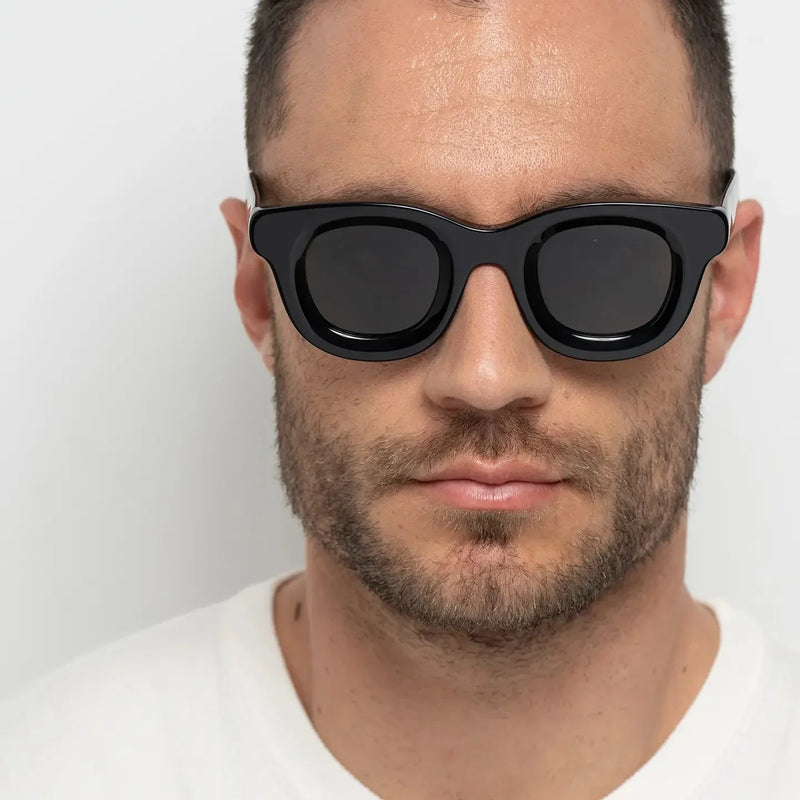
Choosing a new pair of glasses usually begins with frame shape, but one decision often has an even greater impact on how your eyewear looks, feels and fits into your everyday life: the colour of the frame.
Two people can wear exactly the same glasses and create completely different first impressions simply because one chooses clear acetate while the other chooses black.
Frame colour influences far more than appearance. It changes how much contrast your glasses create against your face, how noticeable they become in everyday conversations, how easily they pair with your wardrobe and even how confident you feel wearing them in different situations.
Clear frames have become increasingly popular because they offer a lighter, more understated look that allows your natural features to remain the focus. Black frames have remained one of the most timeless choices in eyewear because they add definition, structure and visual confidence that works across almost every style.
Neither option is universally better. The right choice depends on your complexion, hair colour, personal style and how you want your glasses to become part of your appearance.
In this guide, you'll discover how clear and black frames compare in real life, which face types and skin tones they complement best, and how to choose the frame colour you'll still enjoy wearing years from now.
If you're also comparing classic acetate colours, our guide to Black vs Tortoise Sunglasses explores how two timeless frame colours create completely different visual impressions.
Quick Answer: Clear vs Black Frames

Clear frames are usually the better choice if you want lightweight-looking eyewear that blends naturally with your features and works effortlessly with different outfits. Black frames are generally better if you prefer stronger definition, greater facial contrast and glasses that become a distinctive part of your personal style.
Choose clear frames if you want people to notice your face before your glasses. Choose black frames if you want your glasses to become one of your defining features.
Most people believe they notice the shape of a pair of glasses first. In reality, our eyes recognise contrast before shape. That's why changing the colour of a frame often has a bigger visual impact than changing from round to square or from thin to bold acetate.
Why Frame Colour Matters More Than Most People Think

Many people spend hours comparing frame shapes yet only a few minutes deciding on colour. In practice, colour often has the greater influence because it determines how much visual contrast your glasses create against your face.
Frame colour affects visual weight, facial definition and the balance between your glasses and your natural features.
Black acetate creates a strong outline around the eyes. This naturally draws attention towards your face, making the glasses feel confident, structured and timeless. Clear acetate works in the opposite direction. Instead of outlining the face, it softens the transition between the frame and your skin, allowing your eyes and facial expressions to remain the centre of attention.
This explains why two identical frames can feel completely different once they're worn. The silhouette may stay exactly the same, but the visual message changes.
People who enjoy making eyewear part of their identity often gravitate towards darker frames. Those who prefer their glasses to complement rather than dominate their appearance frequently choose transparent acetate.
Before choosing a frame colour, ask yourself one simple question: Do I want my glasses to stand out, or do I want my face to stand out? Your answer will usually point you towards black or clear frames long before you compare dozens of different models.
What Clear Frames Actually Do to Your Appearance

Clear frames have become one of the defining eyewear trends of the last decade, but their popularity isn't simply about fashion. They solve a problem that many glasses wearers experience: wanting stylish eyewear without feeling that the glasses dominate the face.
Because transparent acetate reflects surrounding light instead of absorbing it, clear frames appear lighter, softer and less visually imposing than darker colours.
This creates a subtle effect that works particularly well for people who wear glasses all day. Instead of constantly drawing attention to the frame itself, clear acetate allows facial expressions, eye contact and natural skin tones to remain the main focus.
Another advantage is versatility. Transparent frames rarely compete with clothing colours, making them one of the easiest options to wear throughout the year. Whether you're wearing black tailoring, denim, neutral knitwear or brighter seasonal colours, clear acetate generally integrates without looking out of place.
Lighting also changes the personality of clear frames. Indoors they often appear almost colourless, while natural daylight reveals warmer or cooler undertones within the acetate. This gives them a subtle character that changes throughout the day without ever feeling overpowering.
The William Crystal Peach demonstrates how transparent acetate softens a bold round silhouette, creating a frame that feels expressive without overwhelming the face.
If you prefer a slightly warmer interpretation of transparent acetate, the William Crystal Yellow offers the same understated character while introducing a gentle golden warmth that complements a wide variety of skin tones.
What Black Frames Actually Do to Your Appearance

Black frames have remained a classic for decades because they do something that lighter frame colours cannot: they create instant definition. Rather than blending into your complexion, black acetate draws a clear outline around your eyes, making the glasses an intentional part of your appearance.
This stronger contrast gives black frames a timeless quality that works equally well with minimalist wardrobes, business attire and casual everyday clothing.
One of the biggest advantages of black frames is consistency. Unlike transparent acetate, which reflects surrounding light and subtly changes throughout the day, black acetate maintains the same visual character whether you're indoors, outdoors or under artificial lighting.
This predictability makes black frames one of the easiest choices for people who want one pair of glasses that works in almost every situation. They feel equally appropriate during meetings, evenings out, weekends and travel.
Black frames also enhance facial structure. The darker outline naturally emphasises the eyes and eyebrows, helping create a more defined appearance without changing the shape of the frame itself.
The William Shiny Black shows why black acetate has remained a permanent part of modern eyewear. Its bold round silhouette creates confident definition while remaining versatile enough for everyday wear.
Which Frame Colour Works Best with Different Skin Tones?

Skin tone doesn't determine which frame colour you can wear, but it does influence how much visual contrast your glasses create.
The question isn't whether your skin tone suits clear or black frames. The real question is how much contrast you want your glasses to create against your complexion.
People with fair skin often enjoy clear frames because they create a softer transition between the glasses and the face. Instead of becoming the first thing people notice, the frame allows natural features to remain dominant.
Black frames create a completely different effect. On lighter complexions they introduce much stronger contrast, making the glasses themselves part of your overall style rather than simply a functional accessory.
Medium and olive skin tones usually work exceptionally well with both options. The decision becomes one of personality rather than compatibility. Clear acetate creates subtlety, while black acetate creates definition.
On deeper skin tones, black frames remain beautifully balanced because they echo natural contrast around the eyes. Transparent acetate can also look exceptionally elegant by creating a lighter, almost floating appearance that feels modern and understated.
Instead of asking which frame colour matches your skin tone, decide how noticeable you want your glasses to be. Contrast is a styling choice, not a rule.
Clear vs Black Frames with Different Hair Colours

Hair colour influences eyewear more than many people expect because it changes the balance between your face, your hairstyle and your glasses.
Clear frames generally create less contrast regardless of hair colour, while black frames strengthen the visual connection between the face and the hair.
If you have dark hair, black frames often feel naturally integrated because the darker acetate echoes your hair colour, creating a balanced and cohesive appearance.
If you have blonde, grey or lighter hair, transparent acetate can create a particularly harmonious look because it avoids introducing unnecessary visual weight around the face.
Neither approach is right or wrong. Some people deliberately choose stronger contrast because they want their glasses to become a statement. Others prefer softer harmony that keeps the focus on their facial expressions.
Rather than trying to match your hair exactly, think about whether you want your glasses to blend into your overall appearance or become one of its defining features.
Which Frame Colour Makes You Look Younger?
This is one of the most searched questions about eyewear, but the answer is often misunderstood.
Clear frames don't make someone look younger simply because they're transparent. They create a softer appearance by allowing more of the face to remain visible.
Because transparent acetate doesn't surround the eyes with a strong outline, facial expressions become more prominent. Many people perceive this as fresher, lighter and less visually heavy.
Black frames produce the opposite effect. They emphasise the eyes, eyebrows and upper part of the face, creating stronger definition and a more confident appearance.
For some people this extra definition is exactly what they want. Others prefer the subtle character of transparent acetate because it feels less dominant during everyday wear.
Ultimately, looking younger isn't about hiding behind your glasses. It's about choosing a frame that feels balanced with your own features rather than competing with them.
People often describe clear frames as youthful because they soften visual contrast, not because they disguise age. Black frames create a stronger architectural effect, giving the face more structure and presence. Both approaches can be equally flattering depending on the look you want to achieve.
Which Frame Colour Is Easier to Wear Every Day?

For most people, buying glasses is not about finding the perfect pair for one occasion. It's about choosing a frame that feels right every morning, whether you're going to work, meeting friends, travelling or simply running errands.
This is why everyday versatility matters more than following trends.
Clear frames have become increasingly popular because they adapt naturally to different environments. They feel equally appropriate in relaxed and professional settings, pairing easily with both neutral wardrobes and more colourful outfits without becoming visually dominant.
Black frames are equally versatile but for different reasons. Instead of blending into changing outfits, they provide a consistent point of contrast that works with almost every colour palette. Black remains one of the easiest colours to style because it never competes with other colours you're wearing.
If you normally wear simple, neutral clothing, either option will work beautifully. The difference comes down to whether you prefer your glasses to quietly complement your appearance or become one of its defining features.
If you're buying only one pair of glasses, don't choose the frame that looks best with your favourite outfit. Choose the one that still feels right with everything else you wear during the week.
Which Frame Colour Looks More Professional?

Professional doesn't necessarily mean formal anymore. Modern workplaces often value personal style alongside practicality, which means both clear and black frames can work exceptionally well depending on the impression you want to create.
Black frames usually communicate confidence, structure and authority. Clear frames often communicate openness, modernity and approachability.
If your role involves presentations, meetings or client-facing responsibilities, black frames naturally create stronger visual definition. This doesn't make them more intelligent or more capable, but they often project confidence because of the increased facial contrast.
Clear frames achieve a different effect. They allow eye contact and facial expressions to remain the primary focus, making them popular among people who prefer understated eyewear that doesn't distract during conversations.
Neither choice is more professional than the other. The better question is which one reflects your own communication style.
The William Shiny Black is an excellent example of a frame that combines confident definition with timeless proportions, making it suitable for both professional and everyday environments.
Which Colour Is Easier to Match with Your Wardrobe?

Glasses are one of the few accessories you'll wear almost every day, which means they need to work with far more than one style of clothing.
Clear frames tend to adapt to your wardrobe, while black frames become part of it.
Transparent acetate works particularly well if your wardrobe changes throughout the seasons. Soft knitwear, denim, tailoring, linen, monochrome outfits and brighter colours all pair comfortably with clear frames because the acetate introduces very little additional colour.
Black frames create stronger visual consistency. They pair naturally with black, white, grey and navy, while also providing a deliberate contrast against earth tones, beige and lighter seasonal colours.
If your wardrobe already contains bold patterns, colourful garments or statement accessories, clear frames often create better balance by allowing those pieces to remain the centre of attention.
If your clothing style is clean, monochromatic or minimalist, black frames often become a natural extension of that aesthetic.
The Biggest Mistake People Make When Choosing Frame Colour

The most common mistake isn't choosing the wrong colour. It's choosing the colour that looks impressive for five minutes instead of the one you'll genuinely enjoy wearing every day.
Many people choose glasses by imagining special occasions, even though they'll spend most of their time wearing them during completely ordinary moments.
Your glasses should feel comfortable on a Monday morning, during a long day at work, while travelling, meeting friends and relaxing at the weekend. If they only feel right with one specific outfit or in one particular situation, they probably aren't the best long-term choice.
This is why timeless colours remain timeless. They continue to work long after seasonal trends have changed.
The best glasses are rarely the pair that attracts the most attention in a display case. They're the pair you stop thinking about because they feel completely natural every time you wear them.
Key Takeaways

- Clear frames create a softer, lighter appearance that allows your natural features to remain the focus.
- Black frames produce stronger facial definition by increasing contrast around the eyes.
- Neither frame colour is universally better—the right choice depends on your personal style and lifestyle.
- Clear acetate adapts easily to different clothing colours and seasonal wardrobes.
- Black acetate creates a timeless look that works particularly well with neutral and minimalist outfits.
- Skin tone influences the amount of contrast your glasses create, not whether a particular frame colour suits you.
- People with darker hair often enjoy the balance created by black frames, while clear frames can soften the overall appearance.
- Clear frames tend to feel more understated, while black frames naturally become a stronger design feature.
- If you're buying one pair to wear every day, choose the colour that feels most natural with your lifestyle rather than the one that's currently trending.
- The best glasses are the pair you enjoy wearing every day without thinking about them.
Frequently Asked Questions
Are clear frames still in style?
Yes. Clear acetate remains one of the most popular choices in contemporary eyewear because it offers a clean, versatile look that works across different fashion styles and seasons.
Are black frames timeless?
Yes. Black frames have remained a classic for decades because they provide strong definition and pair easily with almost any wardrobe.
Do clear frames suit every skin tone?
Generally, yes. Transparent acetate creates softer contrast than darker colours, making it a versatile choice across a wide range of complexions.
Do black frames make your face look smaller?
Not necessarily. Black frames increase visual definition around the eyes, but the overall effect depends far more on frame size and shape than on colour alone.
Which frame colour is better for everyday wear?
Both are excellent everyday choices. Clear frames feel lighter and more understated, while black frames offer stronger visual presence and timeless versatility.
Do clear frames go with every outfit?
Almost. Because transparent acetate introduces very little colour, it naturally complements both neutral wardrobes and brighter clothing.
Do black frames work with formal clothing?
Yes. Black acetate remains one of the easiest frame colours to wear with tailoring, business attire and smart casual outfits.
Which frame colour photographs better?
Black frames usually create stronger definition in photographs because they produce greater contrast around the face. Clear frames create a softer, more natural appearance.
Do clear frames make you look younger?
Many people feel they do because they allow more of the face to remain visible. The effect comes from reduced contrast rather than the colour itself.
Which frame colour attracts less attention?
Clear frames generally appear more subtle because they blend naturally with the complexion instead of creating a bold outline.
Can I wear black frames casually?
Absolutely. Black frames are versatile enough for both professional environments and relaxed everyday wear.
Should I choose frame colour before frame shape?
Ideally, choose a frame shape that suits your face first, then decide whether clear or black acetate creates the visual effect you prefer.
Continue Reading
If you're still comparing frame colours, lens colours or different eyewear styles, these guides can help you make a more confident decision before choosing your next pair.
Black vs Tortoise Sunglasses
Discover how two timeless frame colours create completely different visual impressions and which one is easier to wear every day.
Read the guide →
Warm vs Cool Tone Sunglasses
Learn how frame colours interact with skin tone and how to choose eyewear that complements your complexion naturally.
Read the guide →
Gradient vs Solid Lenses
Compare two of the most popular lens styles and understand which offers the best experience for driving, everyday wear and bright sunlight.
Read the guide →
Green vs Brown Sunglasses
Explore how different lens colours influence contrast, colour perception and visual comfort in changing light conditions.
Read the guide →
What Makes Sunglasses Look Flattering?
Understand how frame shape, proportions and facial balance work together to create eyewear that feels natural and confident.
Read the guide →