Choosing sunglasses for a narrow face is not about finding the smallest frame available. It is about correcting proportion.
The right sunglasses should add balance, not reinforce narrowness.
This is where many people get it wrong. They assume a slim face needs a slim frame. In practice, that usually makes the face look even narrower, longer or less defined.
Good sunglasses for a narrow face should create enough width, enough presence and enough structure to make the whole face feel more balanced. That does not mean oversized for effect. It means proportion that works in your favour.
If you want to understand how fit affects this decision, start with our complete fit guide, refine the basics in our sunglasses size guide and learn how poor sizing changes the result in this article.
WHAT DEFINES A NARROW FACE
A narrow face usually has reduced width across the temples and cheekbones. Sometimes the face also appears longer because there is less horizontal presence overall.
This creates a very specific challenge when choosing eyewear. A frame that looks balanced on an average face can feel too heavy, too wide or visually disconnected on a narrower one. On the other hand, a frame that is too small can disappear completely and make the face look even slimmer.
The objective is not to make the frame match the narrowness of the face. The objective is to restore balance.
This often means choosing frames with enough width to create structure, but not so much width that the sunglasses extend beyond the face and lose coherence.
WHY MOST SUNGLASSES FAIL ON NARROW FACES
Most sunglasses are designed around average proportions. That is why many people with narrow faces feel that sunglasses never look fully right, even when the style seems correct.
Usually the failure happens in one of two ways.
- The frame is too small and makes the face look even narrower
- The frame is too wide and visually extends beyond the face
Both are problems, but they produce different kinds of imbalance.
Small frames reduce visual presence and make the face appear longer and tighter. Frames that are too wide create disconnection. The lenses sit outside the face rather than integrating with it, which makes the sunglasses look borrowed rather than correct.
This is why narrow faces need more precision. You cannot rely on trend alone. The frame must be chosen with width, lens depth and visual weight all working together.
THE BEST FRAME SHAPES FOR NARROW FACES
The best sunglasses for narrow faces are shapes that introduce horizontal balance without feeling exaggerated.
Panto shapes are often one of the strongest options.
Why? Because they combine softness and structure. They are wide enough to add presence, but rounded enough to avoid looking too rigid. A well proportioned panto frame can make a narrow face feel more balanced immediately.
Rounded square and softly structured rectangular frames also work well. The important thing is not the label of the shape, but what that shape does to the face.
The best shapes usually offer:
- Enough width to create horizontal balance
- Enough lens height to avoid elongating the face
- Enough structure to hold visual presence
Frames like Narr Tortoise Grey are useful references because they balance width and softness without becoming visually weak.
If you are comparing shape families more broadly, our round vs square sunglasses guide helps explain how each silhouette changes the face.
WHY VERY SMALL FRAMES MAKE A NARROW FACE LOOK WORSE
This is one of the most common mistakes.
People with narrow faces often choose compact frames because they assume “small face equals small sunglasses.” That logic sounds reasonable, but visually it rarely works.
Very small frames reduce presence and exaggerate narrowness.
Instead of balancing the face, they leave too much visible width around the temples and too much vertical emphasis in the centre. The result is a face that appears longer, slimmer and less stable overall.
This is especially true when the frame is both small and thin. Without enough depth or structure, the sunglasses do not anchor the face properly.
Round frames can still work on narrow faces, but only when they have enough width and enough body. That is why proportion matters more than category.
FRAME WIDTH IS THE MOST IMPORTANT DECISION
If there is one thing to prioritise, it is width.
The ideal frame should align closely with the outer edges of your face. Not inside that line and not far beyond it.
When the width is correct, the entire frame starts to make sense.
A properly aligned frame creates a clean horizontal line across the face. It gives the impression of stability and intention. A frame that is too narrow makes the face look compressed and elongated. A frame that is too wide loses discipline and looks disconnected.
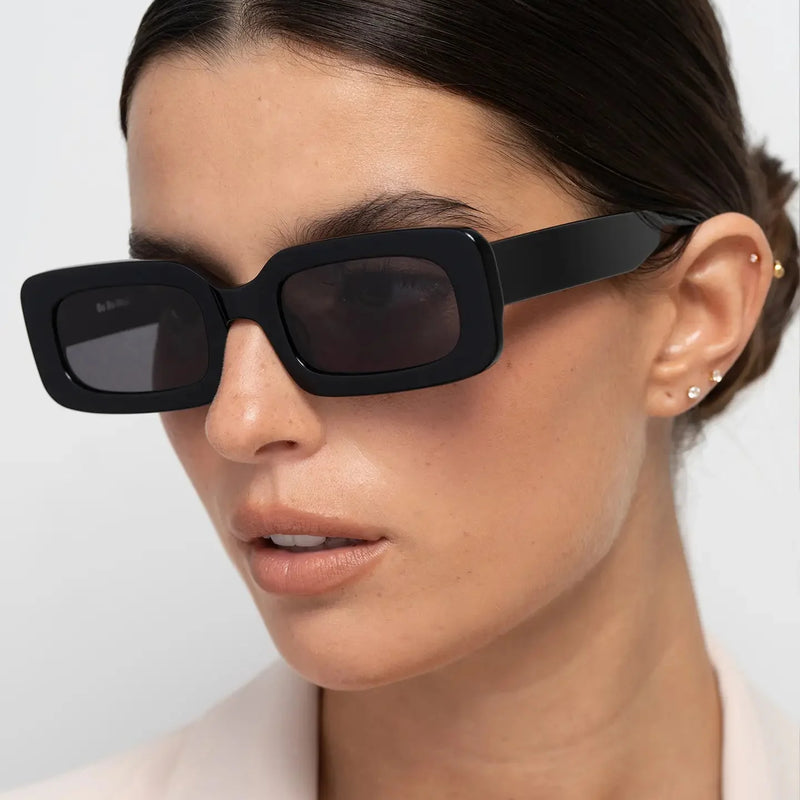
This is why rectangular styles can work so well on narrow faces. They introduce width in a very direct way. Frames like Jane Shiny Black create stronger side to side balance, especially when the face lacks natural width across the top half.
Width also affects how confident the sunglasses feel. Narrow faces usually need frames with enough horizontal presence to look deliberate, not tentative.
LENS HEIGHT ALSO CHANGES THE RESULT
Lens height is often overlooked, but it plays a critical role.
For narrow faces, slightly deeper lenses usually work better than shallow ones. This is because extra height helps rebalance the proportions of the face and prevents the frame from looking too flat or too minimal.
Shallow lenses often make narrow faces look longer.
Deeper panto shapes and medium height structured frames tend to work better because they distribute visual weight more evenly. They reduce the vertical emphasis and make the frame feel more substantial on the face.
This does not mean oversized lenses by default. It means enough depth to create balance.
Frames like Triboulet Olive illustrate this well. The lens shape creates enough presence to support a narrower face without overwhelming it.
COLOUR AND VISUAL WEIGHT MATTER MORE THAN PEOPLE THINK
Colour affects how much presence a frame has on the face.
Darker colours such as black create stronger definition. Richer tones like tortoise and olive create depth without feeling too stark. Very pale or visually weak frames can work, but only if the structure is strong enough to compensate.
A narrow face usually benefits from a frame with clear visual weight.
That does not necessarily mean heavy or dark. It means the frame should not disappear. If the sunglasses have no visual authority, they do not correct the narrowness of the face. They simply sit on it.
Tortoise tones are often especially good because they add depth and complexity without looking harsh. This is useful when you want a stronger frame but not an overly severe result.
WHAT TO AVOID IF YOU HAVE A NARROW FACE
Knowing what not to choose is just as important as knowing what works.
The most common mistakes are:
- Very small round frames
- Thin minimal frames with no presence
- Frames that are much wider than the temples
- Shallow lenses that exaggerate facial length
These choices usually fail for the same reason. They either reinforce narrowness or destroy balance.
People often blame their face when the real problem is proportion. A better frame usually changes the result immediately.
If you want a broader understanding of how sunglasses influence facial perception, our guide on how sunglasses change how your face looks adds useful context.
THE BO BO NOIR APPROACH TO NARROW FACE PROPORTIONS
Bo Bo Noir approaches sunglasses through proportion, structure and visual clarity rather than trend repetition.
That makes a real difference for narrower faces. Instead of relying on novelty, the frames are designed to create presence through controlled shape, stable width and balanced depth.
For narrow faces, this matters because the frame must do more than sit correctly. It must rebalance the face without looking forced.
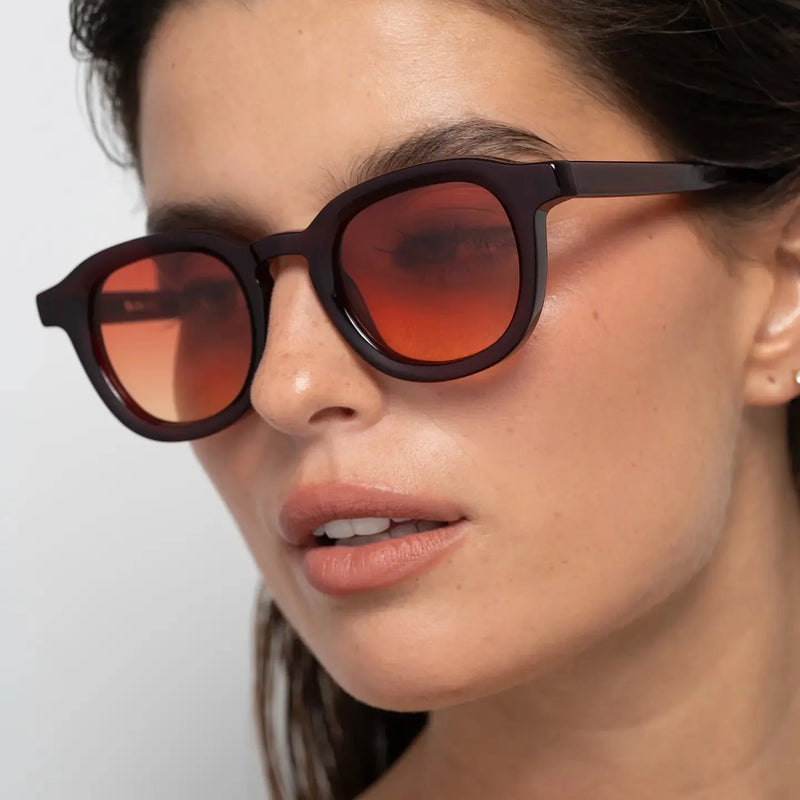
Models like Narr Burgundy show how this works. The frame has enough body to hold the face visually, enough softness to remain wearable and enough width to avoid making the face look smaller.
You can also explore the full sunglasses collection here.
HOW TO DECIDE IF THE FRAME IS RIGHT
Before buying, ask a few simple questions:
- Does the frame add width to my face?
- Does it feel visually stable?
- Do the lenses have enough depth?
- Does the frame have enough presence without overwhelming me?
If the answer is yes across those points, the sunglasses are likely correct.
The best sunglasses for a narrow face should never feel like a compromise. They should feel like a correction.
FAQ ABOUT SUNGLASSES FOR NARROW FACES
What sunglasses are best for narrow faces?
Medium sized frames with enough width, lens depth and structure usually work best. Panto and softly rectangular shapes are often the safest options.
Should I choose small sunglasses for a narrow face?
No. Small frames usually make the face look even narrower and reduce visual balance instead of improving it.
Can oversized sunglasses work on a narrow face?
Yes, but only when they are controlled. Slight extra width can help, but a frame that extends too far beyond the face loses coherence.
What frame shape should I avoid if I have a narrow face?
Very small round frames, very thin minimal styles and shallow lenses are usually the least effective because they reduce presence.
Does colour matter when choosing sunglasses for a narrow face?
Yes. Colours with more visual weight, such as black, tortoise or olive, often help create stronger balance than frames that disappear visually.
👁 YOU MAY ALSO LIKE:
Best Sunglasses for Small Face
Explore how smaller facial proportions affect fit, scale and frame choice in more detail.
Read the article
How to Know if Sunglasses Are Too Big or Too Small
Learn how to identify sizing mistakes and understand when a frame feels visually or physically off.
Read the article