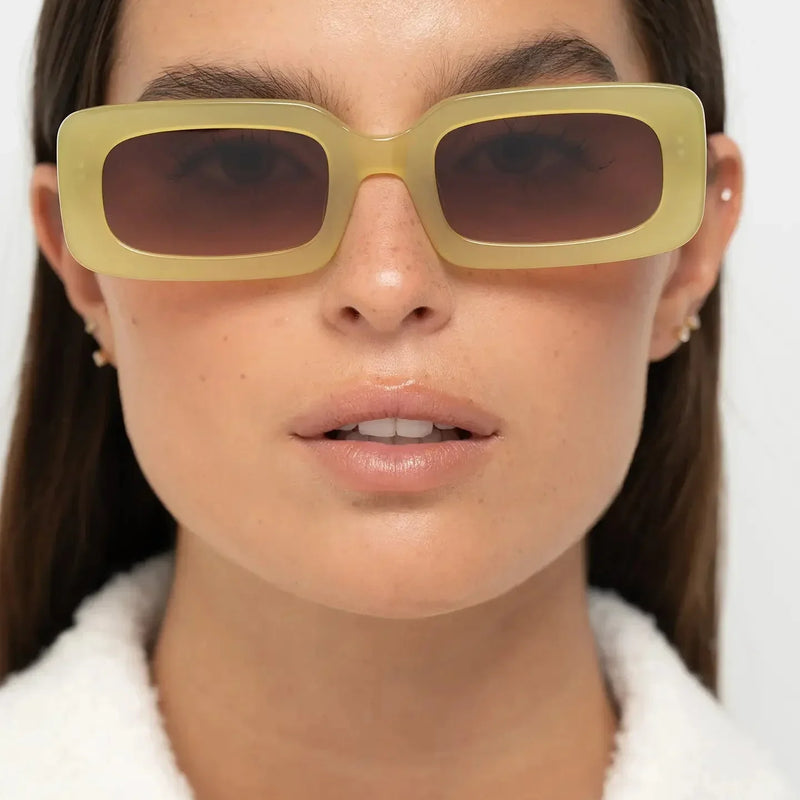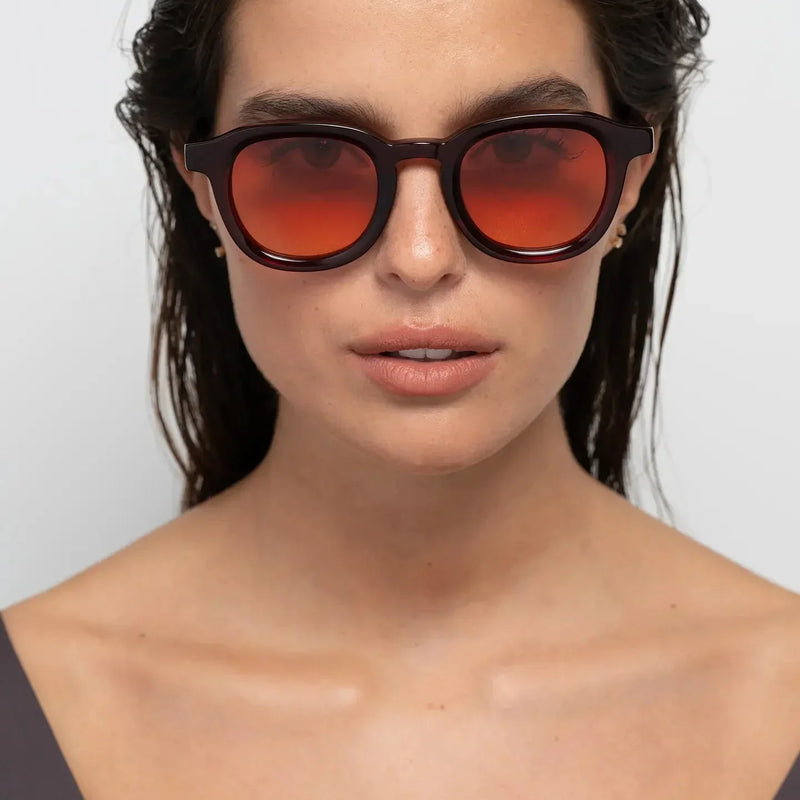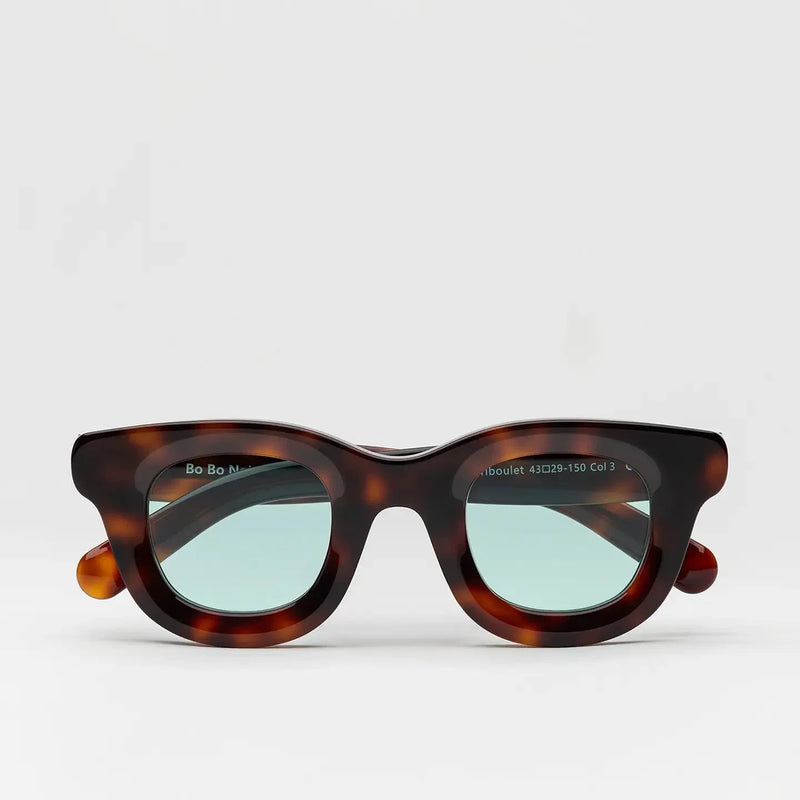
Choosing the right sunglasses size is not about guessing. It is about understanding how proportions, measurements and fit work together on your face.
The right size should align with your face width, sit comfortably on your nose and create balanced proportions without feeling too tight or too loose.
If you are unsure where to start, explore our face shape guide, compare silhouettes in our round vs square sunglasses article, or understand fit deeper in our complete fit guide.
The same frame can feel completely different depending on size. A balanced fit is what makes a frame actually work on your face.
WHAT SUNGLASSES SIZE ACTUALLY MEANS

Sunglasses size is usually defined by three measurements: lens width, bridge width, and temple length.
- Lens width is the horizontal size of each lens
- Bridge width is the distance between the lenses
- Temple length refers to the arms that sit over your ears
These measurements are often written in a format such as 44–26–145. On paper, they look technical. In practice, they determine how the frame sits, how stable it feels, and how balanced it looks.
FRAME WIDTH: THE MOST IMPORTANT FACTOR

Frame width is the first thing you should notice when trying sunglasses on. The frame should align naturally with your face without extending too far beyond the temples.
If it is too wide, it can feel disconnected and unstable. If it is too narrow, it can create pressure and make the face feel compressed.
A shape such as the Narr Shiny Black works best when the width feels balanced across the face rather than dominant.
HOW TO CHOOSE THE RIGHT LENS SIZE

Lens size changes how your face is perceived. Taller or fuller lenses create more presence and can balance longer or narrower faces more effectively.
Smaller lenses feel lighter, but they can also make some faces appear longer or less balanced if the proportions are too reduced.
The Triboulet Olive is a good example of how lens size can add visual stability without feeling excessive.
BRIDGE WIDTH AND COMFORT

The bridge determines how the sunglasses rest on your nose. If it is too wide, the frame can slide. If it is too narrow, it can feel tight and uncomfortable.
Good bridge fit keeps the frame stable and centred. It also affects how the entire silhouette sits on the face.
This is why a frame such as the William Tortoise needs the right central fit to feel as balanced in real life as it looks in the image.
HOW TO KNOW YOUR CURRENT SIZE

If you already own sunglasses that fit well, check the inside of the temple. Most frames include size numbers printed there.
That gives you a useful starting point when choosing your next pair. If you do not have a reference, focus on how the frame aligns with your face rather than relying only on numbers.
Comfort, stability, and proportion always matter more than the label alone.
WHAT SIZE SHOULD YOU CHOOSE BASED ON FACE WIDTH

- Narrow face: usually benefits from smaller lens width and a more compact overall frame
- Medium face: usually works well with standard proportions and balanced frame depth
- Wide face: often needs more frame width and a shape that holds space across the temples
There is no universal size that works for everyone. Face width changes how the frame is read, which is why the same pair can feel perfect on one person and wrong on another.
COMMON MISTAKES WHEN CHOOSING SIZE

- Choosing oversized frames without considering face proportions
- Ignoring bridge fit and focusing only on shape
- Assuming one size will suit every face
- Not checking how the frame behaves when moving or smiling
Most sizing mistakes happen when the frame is chosen visually but not tested proportionally. The result may still look good in isolation, but not feel right on the face.
WHY SIZE MATTERS MORE THAN YOU THINK

The right size improves everything: comfort, stability, and how your face is perceived.
A well sized frame enhances your natural proportions. The wrong size disrupts them, even if the shape itself is attractive.
This is why finding the right size is often more important than simply choosing the most appealing silhouette.
FAQ ABOUT SUNGLASSES SIZE
How do I know what size sunglasses to buy?
Start with a pair you already own that fits well, or check how a new frame aligns with your face width, bridge fit, and overall proportions.
What does 44–26–145 mean in sunglasses?
It refers to lens width, bridge width, and temple length. These three numbers help define how the frame will fit your face.
Are bigger sunglasses better?
Not always. Larger frames can work beautifully, but only when they stay balanced with your facial proportions and do not feel disconnected.
Can one size fit everyone?
No. Face width, nose shape, and overall structure vary too much for one size to work universally.
What matters most when choosing sunglasses size?
Frame width is usually the most important factor, but bridge fit and lens size also play a major role in comfort and visual balance.
👁 YOU MAY ALSO LIKE:
Best Sunglasses for Long Face
Learn how to balance vertical proportions and create width.
Read the article
How Should Sunglasses Fit Your Face
Learn how proper fit changes everything.
Read the article