
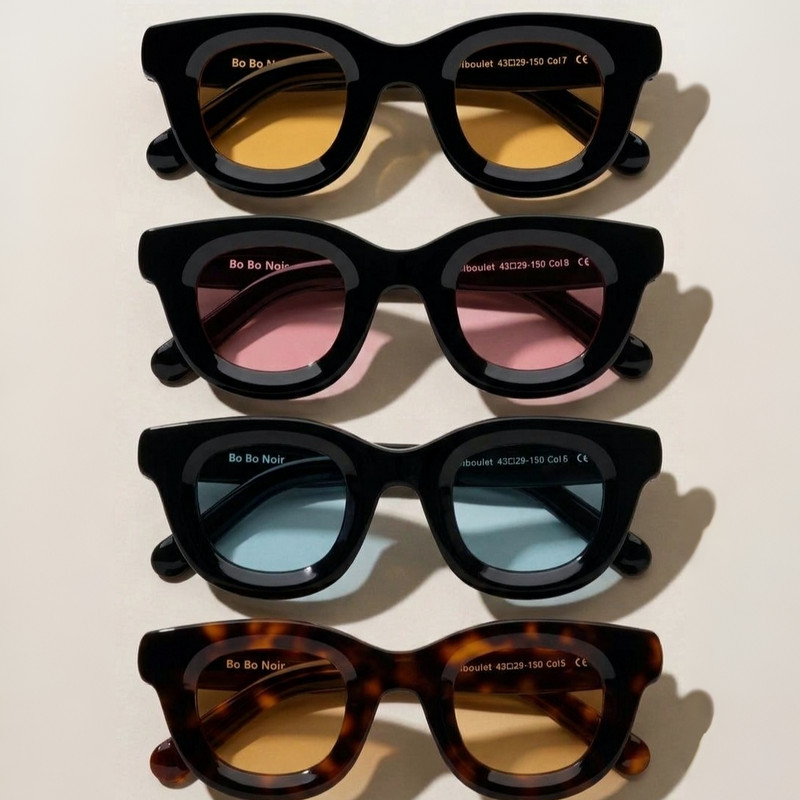
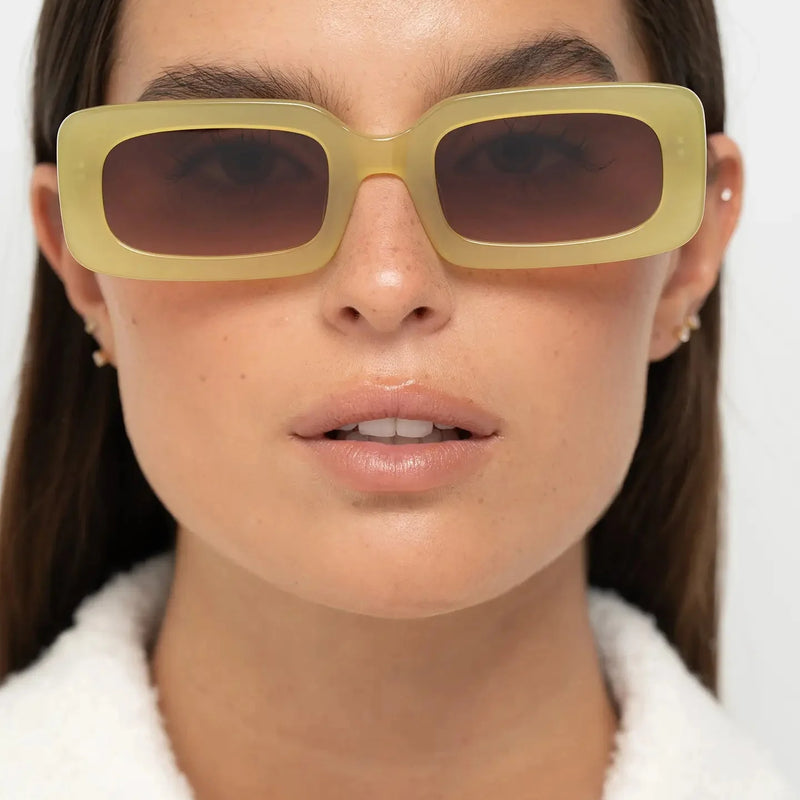
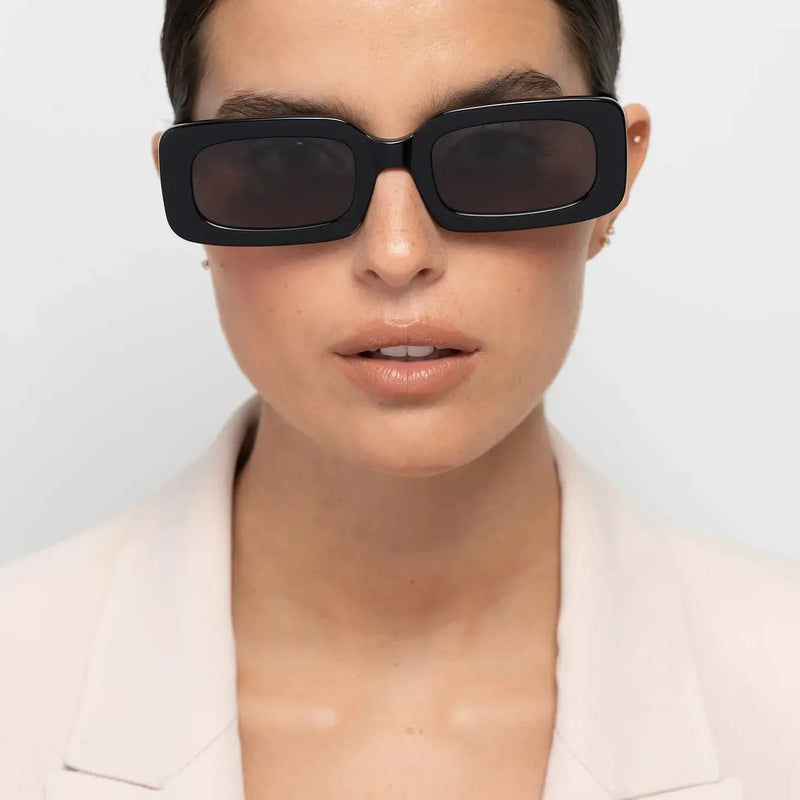
Choosing the best sunglasses for a big nose is not about hiding a prominent feature. It is about creating enough structure around the eyes and across the face that the nose becomes part of a balanced composition rather than the dominant visual reference. This is why simply choosing larger sunglasses is unreliable. A wide frame can still feel unbalanced if the lenses are too shallow, the bridge positions the frame poorly or the material carries too little — or too much — visual weight. A more useful framework is Feature Prominence → Frame Width → Lens Depth → Bridge Position → Visual Weight → Fit. These variables explain why two frames with similar overall dimensions can interact very differently with the centre of the face. For the broader relationship between frame geometry and facial structure, start with How to Choose Sunglasses for Your Face Shape. If facial length is also part of the equation, see our updated guide to the Best Sunglasses for a Long Face. Quick Answer The best sunglasses for a big or prominent nose usually create enough width, lens presence and definition around the eyes to balance the centre of the face. Round, panto and rectangular frames can all work. Instead of relying on oversized dimensions or one bridge style, judge the complete relationship between frame width, lens depth, bridge position, visual weight and fit. The goal is not to make the nose disappear, but to prevent one feature from carrying the entire visual composition. BBN Insight: balance the context, not the feature Sunglasses cannot change the physical size of your nose, but they can change its visual context. When the eye area gains enough horizontal structure, lens area and material presence, attention is distributed across a larger part of the face. That is a more useful objective than trying to “minimise” one feature. A nose can appear prominent for several reasons, and physical size is only one of them. Projection, width, facial width, feature scale and the amount of definition around the eyes can all affect how strongly the centre of the face registers. This is why two people with similarly sized noses can respond differently to the same sunglasses. One may have broad cheekbones and a strong brow, while another may have finer surrounding features. The nose exists within a different visual context in each case. Sunglasses add a new set of lines, boundaries and contrasts around the eyes. A frame with enough presence can give that area greater visual importance; a frame that is extremely small or visually quiet may leave the centre of the face comparatively more exposed. The useful question is therefore not “How do I hide my nose?” but “Where should the frame place visual emphasis?” Frame width is useful because it establishes a horizontal boundary across the upper face. When that width relates naturally to the temples, the sunglasses give the eyes and outer face more visual structure. But wider is not automatically better. A frame that extends excessively beyond the face can look disconnected, while a frame that is too narrow can concentrate the composition around the bridge and centre. The goal is proportional horizontal presence, not maximum width. Think temple to temple. A useful frame should create enough horizontal structure to make the eye area feel intentional while still relating naturally to the actual width of the face. This is also why a frame that works well for someone with a prominent nose and a broad face may not be the best choice for someone with a prominent nose and a narrow face. The feature is similar; the surrounding proportions are not. Width determines how far the frame travels horizontally. Lens depth determines how much visual territory it occupies around the eyes. A very shallow lens can create a narrow strip of geometry across the face. That may be exactly the directional effect someone wants, but it provides less visual area around the eyes than a frame with moderate or generous lens depth. Moderate lens depth can therefore be useful when the objective is to give the upper face greater presence. Very deep lenses can do this more strongly, but they also increase coverage and may become dominant on smaller faces. Width creates horizontal reach; lens depth creates visual area. The balance between them matters more than maximising either one. Bridge advice for a prominent nose is often reduced to rules such as “choose a wider bridge” or “avoid a narrow bridge”. Those rules are too simple. The bridge affects where the frame sits, how the lenses align with the eyes and how the frame relates to the brow and cheeks. Its effect therefore depends on both design and fit. A bridge that fits poorly can cause the frame to sit too high, too low or inconsistently. That changes the visual result even if the frame shape itself is appropriate. A bridge that fits well allows the intended width, lens depth and geometry to work where they were designed to sit. BBN Insight: bridge width is not a styling shortcut Do not choose a bridge measurement simply because a generic rule says it will make a nose look smaller. Prioritise stable positioning, appropriate contact and the way the complete frame aligns with your facial proportions. For the broader fit variables, see How Should Sunglasses Fit Your Face?. There is no single shape that universally suits a prominent nose. Shape matters because it determines where straight lines, curves and corners appear, but the proportions within that shape are equally important. Panto frames combine curved lower geometry with a more differentiated upper line. They can create substantial presence without relying entirely on sharp corners. Round frames introduce visible curvature around the eyes. In substantial acetate, that curve can become a strong part of the facial composition rather than disappearing into it. Rectangular frames introduce straighter horizontal structure. Moderate-to-generous lens depth can make that geometry more substantial, while very shallow rectangles produce a more directional effect. Oversized frames may work, but oversized describes scale rather than geometry. A large frame still needs the right width, lens depth and fit for the wearer. Choose the visual effect first: curve, structured curve or stronger angular definition. Then evaluate the proportions of the actual frame. Frame thickness changes how strongly the sunglasses register against the face. This is a question of visual weight rather than a rule that thick frames are inherently more flattering. A fine frame allows more of the face to remain visually uninterrupted. Substantial acetate creates a stronger boundary around the lenses and can give the eye area greater definition. For someone who feels that delicate eyewear leaves the centre of the face visually dominant, more material may create a better distribution of emphasis. For someone with finer features, however, maximum thickness may simply replace one dominant feature with another. The goal is controlled presence. Our Thin vs Thick Frame Sunglasses guide explores this trade-off in more detail. Colour cannot correct facial proportions, but it can make the same frame geometry feel more or less visually assertive. Opaque black usually creates a clearly defined boundary. Tortoise breaks that visual mass into multiple tones. Lighter or translucent acetate can make a substantial frame feel less dense against the face. This gives colour a useful secondary role: once the geometry and fit work, colour can refine the amount of contrast you want around the eyes. For a direct comparison, see Black vs Tortoise Sunglasses. Instead of searching for one supposedly corrective frame shape, assess the sunglasses in six steps: Feature Prominence → Frame Width → Lens Depth → Bridge Position → Visual Weight → Fit 1. Feature prominence: consider the nose in relation to facial width, eyes, brow, cheekbones and jaw rather than judging it in isolation. 2. Frame width: look for enough horizontal presence to establish the eye area without extending unnaturally beyond the face. 3. Lens depth: decide how much visual area the sunglasses should create around the eyes. Very shallow and deeper lenses produce different effects even at similar widths. 4. Bridge position: judge where the complete frame sits rather than treating bridge width as an isolated styling rule. 5. Visual weight: use material thickness and colour to control how strongly the frame defines the upper face. 6. Fit: confirm stable bridge contact, appropriate width, natural eye position and comfortable cheek clearance. This framework does not try to make the nose disappear. It changes the relationship between the centre of the face and everything surrounding it. Different Bo Bo Noir silhouettes create different kinds of visual balance. None should be treated as a universal solution for a particular facial feature. The better approach is to choose the geometry and degree of presence that work with the rest of your face. Design variable: panto geometry expressed through substantial acetate. Visual effect: curved lower geometry with a clearly defined upper-face presence. Consider it if: you want curvature without moving to a pure circular frame. Consider another direction if: you want straighter horizontal lines or less material presence. Design variable: panto geometry, tortoise acetate and gradient brown lenses. Visual effect: substantial frame definition with softer tonal variation. Consider it if: you want visible structure without the uniform contrast of an all-black frame. Consider another direction if: you prefer rectangular geometry or a pure round silhouette. View Triboulet Tortoise Gradient Brown Design variable: round geometry combined with bold acetate. Visual effect: visible curvature and a strong boundary around the eye area. Consider it if: you want round geometry that remains visually present rather than delicate. Consider another direction if: you want sharper corners or less visible material. Design variable: defined rectangular geometry in substantial acetate. Visual effect: stronger horizontal boundaries and a more architectural eye area. Consider it if: you want a feminine rectangular silhouette with visible structure. Consider another direction if: you prefer curved geometry or a visually lighter frame. Trying to hide the nose. This often turns the decision into a search for camouflage rather than a useful assessment of the whole face. Assuming bigger is always better. Large dimensions do not guarantee balanced width, lens depth or fit. Following one bridge rule. Bridge width or shape cannot be separated from how the complete frame actually sits. Rejecting thin frames automatically. A lighter frame may work perfectly when the overall proportions and feature scale support it. The question is whether it creates enough presence for the effect you want. Choosing maximum acetate thickness. More material increases visual weight, but too much can make the eyewear itself the dominant feature. Ignoring lens depth. Two equally wide frames can behave differently if one creates substantially more visual area around the eyes. Judging the nose in isolation. Facial width, brow structure, eye area, cheekbones and jaw all change how the same frame is perceived. What sunglasses suit a big nose? Frames with enough width, lens area and visual presence to establish the eye area are a useful starting point. Round, panto and rectangular frames can all work when their proportions and fit suit the rest of the face. What sunglasses make a big nose look smaller? Sunglasses do not physically make a nose smaller, but they can change its visual context. Frames that establish stronger width and presence around the eyes can make the centre of the face feel less dominant. Are round sunglasses good for a prominent nose? They can be. Round frames introduce visible curvature around the eyes, while acetate thickness and overall scale determine how strongly that geometry competes with other facial features. Can rectangular sunglasses suit a big nose? Yes. Rectangular sunglasses can create useful horizontal definition. Moderate lens depth generally creates more visual area around the eyes than an extremely shallow rectangle. Should I wear oversized sunglasses if I have a big nose? You can, but oversized dimensions are not automatically more flattering. Width, lens depth, bridge position and overall fit still need to relate naturally to your face. What bridge is best for a big nose? There is no universally best bridge shape or width. The better bridge is one that positions the complete frame securely and comfortably while aligning the lenses naturally with your eyes, brow and cheeks. Should I avoid thin frames if I have a prominent nose? Not automatically. Thin frames create less visual weight around the eyes, which may or may not suit the effect you want. Judge them in relation to facial width, feature scale and the complete frame proportions. Does frame colour matter? Colour changes contrast rather than facial structure. Black creates a more explicit outline, tortoise introduces tonal variation, and lighter acetate can reduce the apparent density of a substantial frame. A prominent nose does not require corrective eyewear. What sunglasses can change is the visual environment around it. Frame width establishes horizontal structure. Lens depth determines how much of the eye area is occupied. Bridge position influences where that structure sits. Material and colour control visual weight. Fit determines whether all of those decisions work on the actual face. That is why no single frame shape, bridge style or size can be universally recommended for everyone with a prominent nose. Use Feature Prominence → Frame Width → Lens Depth → Bridge Position → Visual Weight → Fit. The goal is not less character. It is a more intentional relationship between every feature. Choose for the whole face, not one feature. Explore Bo Bo Noir sunglasses through geometry, proportion, visual weight and everyday wearability.
In this guide
1. What makes a nose appear more prominent?
2. How frame width changes facial balance
3. Why lens depth matters

4. How bridge position and fit affect the result

5. Which sunglasses shapes work for a prominent nose?
6. How acetate thickness changes visual weight

7. How frame colour changes visual presence
8. The Prominent Nose Balance Framework
9. Bo Bo Noir frames to consider for a prominent nose
Narr: panto geometry with defined presence

Triboulet: panto geometry with softer tonal contrast

William: round geometry with strong definition
Jane: rectangular geometry with horizontal structure
10. Common mistakes when choosing sunglasses for a prominent nose
11. Frequently asked questions about sunglasses for a big nose
12. Final thoughts: create context rather than camouflage
Bo Bo Journal
Featured products


