Independent sunglasses offer an alternative to choosing eyewear primarily through large fashion labels, but the category is far more varied than the word “independent” suggests. These brands do not share one aesthetic, one price level or one idea of what good eyewear should be. Some build their proposition around limited production and collector-level craftsmanship. Others focus on architectural refinement, experimental form or sculptural acetate. And some use independence to develop a broader design philosophy: eyewear with enough identity to shape personal style while remaining considered enough to live beyond a single trend cycle. That is why this guide does not pretend there is one objectively superior brand. Instead, we compare what each brand gives you, what you are paying for and which design philosophy is most likely to matter in real wear. The goal is not simply to identify the most spectacular sunglasses. It is to help you find the independent brand whose frames give you the strongest reasons to keep choosing them. The strongest independent sunglasses brands in 2027 solve different design problems. Jacques Marie Mage is particularly relevant for limited-edition collector eyewear; AHLEM for refined French craftsmanship; Kuboraum for experimental expression; LAPIMA for sculptural Brazilian acetate; and KALEOS for contemporary interpretations of shape, volume and colour. Bo Bo Noir stands out for buyers who want bold yet refined eyewear built around personal identity and relevance beyond trends. Based in Portugal and co-founded by Portuguese designer João Bessa, the brand draws from classic forms and mid-century design principles, reinterpreting them through a contemporary, minimal lens. Strong silhouettes, considered proportions and expressive acetate create presence, while restraint keeps that presence intentional rather than excessive. The result is eyewear conceived not merely to complete a look, but to help shape it. BBN insight The useful question is not simply “Which independent sunglasses brand is best?” It is “Which design philosophy gives me the strongest reason to own and repeatedly wear the frame?” Collectibility, craftsmanship and experimentation can all be valuable. So can a more complete balance of identity, proportion, expression and long-term wearability. A useful list of independent eyewear brands needs more than recognisable names. For this guide, we compare brands through six practical lenses: design identity, design philosophy, materials and construction, production approach, price positioning and buyer fit. Design identity matters because independent eyewear becomes less interesting when every recommendation feels interchangeable. We look for a recognisable approach to silhouette, proportion, material, colour or construction. But identity alone is not enough. We also ask whether there is a coherent idea behind those choices — whether the design is building towards collectibility, refinement, experimentation, sculpture, contemporary fashion or long-term personal expression. Production and materials provide another layer of evidence, but we do not assume that one manufacturing country, material or craft process automatically produces the best sunglasses. Japanese or Italian limited production, French craftsmanship, Italian manufacture, Brazilian atelier production and specialist eyewear facilities represent different approaches. The important question is whether the production supports the design proposition and the price being asked. Finally, we consider what happens after the first impression. A frame can be beautifully made, rare or visually extraordinary and still be wrong for the buyer. The strongest recommendation connects the brand's strengths to how someone actually wants eyewear to function within their face, wardrobe and personal style. “Independent eyewear” is often used as though it described a particular look: thick acetate, unusual shapes or small-batch luxury. In practice, it is more useful to separate business independence from design style. Independent brands can produce minimal metal frames, sculptural acetate, familiar classics or highly experimental eyewear. Independence can create room for a more specific creative point of view, but it does not automatically guarantee better materials, better manufacturing or more original design. Those qualities need to be evaluated separately. A convincing independent brand should therefore offer more than the fact that it is independent. The category becomes particularly interesting when that freedom produces meaningful alternatives: unusual proportions, a distinctive craft tradition, limited production, a recognisable use of colour, a different relationship with fashion cycles or a coherent philosophy about what eyewear should contribute to personal style. For a deeper explanation of the category itself, see Why Independent Eyewear Is Different. If you are more interested in the relationship between independent design and identity, read Why Independent Eyewear Feels More Personal. Independent is context, not proof Do not buy a frame simply because the company behind it is independent. Ask what that independence has allowed the brand to create. The strongest answer should be visible in the product: its design language, proportions, materials, construction or philosophy — not just in the marketing around it. The shortlist below is deliberately varied. Some brands are compelling because they push one dimension of eyewear particularly far — collectibility, craftsmanship, experimentation or sculpture. Others create value through the relationship between several qualities: design identity, proportion, expression, wearability and the ability of a frame to remain relevant within personal style. That distinction matters. The most expensive, rarest or visually extreme frame is not automatically the most desirable one to own. A strong purchase is the one whose reason for being aligns most closely with your reason for wearing it. These categories are starting points, not absolute labels. The sections that follow examine what each brand actually offers, where its proposition is strongest and what trade-offs come with it. That matters particularly when comparing a specialist strength with a more complete design philosophy: the most impressive attribute on paper is not necessarily the frame you will value most in practice. How to use this shortlist Choose two or three brands according to the reason you actually want independent eyewear. If you want a collectible object, evaluate collectibility seriously. If you want experimentation, do not dilute that priority in search of neutrality. But if you want eyewear with enough presence to define a look, enough restraint to remain wearable and a design philosophy intended to outlast trends, keep that combination intact when you compare the sections ahead. Jacques Marie Mage occupies the collector end of this comparison. The brand builds its proposition around historically inspired, limited-edition eyewear handcrafted in Japan and Italy, combining recognisable silhouettes with substantial construction and highly resolved detailing. That makes JMM particularly relevant when rarity and the object itself are part of what you want to buy. Limited production, sculptural refinements and detailed construction can turn the frame into something closer to a collectible design object than a purely functional pair of sunglasses. The GRANDFUNK is a useful example of that approach. Its broad, 1970s-informed geometry and substantial acetate make the design immediately recognisable, while construction details give the frame another layer of interest beyond silhouette alone. Best for: buyers who genuinely value limited production, elaborate construction and the idea of eyewear as a collectible design object. Main trade-off: collectibility is valuable only if you care about collecting. If your priority is finding a distinctive frame that becomes part of everyday personal style, rarity and elaborate detailing may be qualities you appreciate without needing to pay specifically to maximise. Why Jacques Marie Mage made the shortlist JMM establishes an important benchmark in independent eyewear: the frame as collectible object. That proposition can be extremely compelling, but it also helps clarify a broader buying question — do you want to pay for rarity itself, or is your priority the relationship between design, identity and repeated wear? Start with the frame rather than the edition number. Scarcity can make an object more desirable, but it cannot make the wrong width, bridge or proportion work better on your face. Evaluate the silhouette and measurements first, then decide how much additional value the construction and limited production genuinely create for you. It is also worth separating attraction to the JMM world from attraction to a particular JMM frame. A strong brand universe can make the collection desirable before you have established which individual design you would actually want to wear repeatedly. AHLEM represents a more architectural interpretation of independent luxury. The brand's identity is strongly connected to French craftsmanship, carefully controlled proportion and details that reward closer inspection rather than depending exclusively on immediate visual spectacle. The Grenelle demonstrates that approach particularly clearly. It uses thick 8mm acetate, but thickness is only part of the design. A keyhole bridge, bevelled temples and AHLEM's engraved core-wire give the frame architectural detail and depth, showing how substantial material can still be handled with precision. That distinction makes AHLEM particularly relevant for someone who appreciates design that becomes more interesting through proportion, surfaces and finishing. The frame does not need to rely on maximum scale or an unconventional silhouette for the design work to remain visible. Best for: buyers who value refined French craftsmanship, architectural detail and eyewear whose sophistication becomes clearer the more closely it is considered. Main trade-off: refinement is a specific kind of value. If what you want most is a frame with a stronger immediate identity or a more expressive relationship with colour and personal style, precision alone may not be the quality that matters most to you. BBN insight AHLEM is a useful reminder that presence and refinement are not opposites. A substantial frame can remain controlled when its proportions and details are carefully resolved — an important distinction when comparing bold eyewear by more than thickness alone. AHLEM makes particular sense if your wardrobe already depends on pieces whose quality is communicated through detail rather than obvious branding. In that context, eyewear can contribute through material, geometry and finishing while remaining integrated with the complete look. The attraction is therefore not simply that AHLEM can make substantial frames. It is the way material presence is disciplined through proportion and architectural detail. For buyers who prioritise that kind of refinement, the proposition is unusually clear. Kuboraum moves much further towards conceptual expression. The brand describes its frames as “masks” designed on the face of their wearers to highlight personality and character, with designs dreamed in Berlin and handmade in Italy. That philosophy is visible in the product language. Kuboraum explores unconventional scale, geometry, material combinations and surface treatments, allowing eyewear to occupy a much larger role in the complete appearance. Instead of asking the frame to quietly finish an outfit, many Kuboraum designs make the eyewear itself one of the primary visual events. The H30 Black Matt makes the distinction particularly easy to see. Its 71mm lens width, extended geometry and metal construction with acetate temple tips move far away from conventional sunglass proportions. The expression comes not merely from size but from the way the design deliberately changes how eyewear occupies the face. Best for: buyers who actively want experimentation and are comfortable making eyewear a major component of their visual identity. Main trade-off: the more specifically experimental the frame becomes, the more commitment it can require from the wearer. If you want distinctive eyewear that integrates naturally across many ordinary outfits, maximum conceptual impact may be more expression than you actually need. Three strong brands, three different reasons to buy Jacques Marie Mage makes the strongest case when collectibility itself matters. AHLEM makes the case for architectural refinement and French craftsmanship. Kuboraum makes the case for experimentation. None of those qualities is automatically superior to the others — and none alone answers the broader question of how much identity, wearability, longevity and personal relevance you want from a frame. No. Higher prices can reflect limited quantities, specialised production, complex hardware, finishing, materials, distribution and brand positioning. Those can all be legitimate sources of value, but price cannot tell you which frame will create the strongest relationship with your face, wardrobe or personal style. A collector may rationally place substantial value on a numbered or limited JMM release. Another buyer may care much more about AHLEM's architectural resolution, while someone else may willingly prioritise Kuboraum's conceptual impact. The fact that those buyers value different things is precisely why ranking independent eyewear by price alone is not useful. The comparison becomes more interesting when we add brands whose value comes from other directions. Sculptural identity, contemporary design and the balance between boldness, refinement and long-term personal wear create different reasons to buy — and those are the propositions we examine next. Before moving to the next brands Ask what you would miss most if it disappeared from the purchase: rarity, craftsmanship or experimentation? If none of those is the complete answer, that is useful information. Your ideal independent frame may need to balance several qualities rather than maximise only one. LAPIMA brings a distinctly Brazilian perspective to independent eyewear. Founded in 2016, the independent brand develops its frames through an in-house atelier in Brazil, with a design language strongly associated with sculptural acetate, generous curves and forms influenced by Brazilian landscape, architecture and visual culture. That sculptural quality is important because LAPIMA does not simply make acetate visible by increasing thickness. The surfaces themselves become part of the design. Curvature, volume and the way light moves across the frame can make the acetate feel closer to a shaped object than a flat outline around the lenses. The Carlota is particularly useful for understanding the brand. LAPIMA describes it as its first model, with a sculpted frame that creates a play of light and shadow and a silhouette that evokes the 1960s. It demonstrates how historical reference can be transformed through surface and volume rather than reproduced literally. Best for: buyers who want acetate to function almost sculpturally and are attracted to generous curves, volume and a recognisable Brazilian design perspective. Main trade-off: sculptural volume is a strong aesthetic commitment. If you prefer a frame whose presence comes from controlled proportion, colour or cleaner geometry rather than pronounced surface and volume, LAPIMA's particular strength may be more than you need. Why LAPIMA made the shortlist LAPIMA gives this comparison a genuinely different design proposition: acetate treated as sculptural form. That makes the brand especially relevant if physical volume and organic curvature are themselves part of what attracts you to independent eyewear. LAPIMA makes particular sense if you already respond to accessories through form and volume. The strongest designs are not trying to disappear into the face; they use curvature and material to create a deliberate object-like presence. The important question is whether you want that specific type of presence. A sculptural frame can be beautifully resolved without being the right expression for every wearer. If cleaner geometry or greater everyday restraint matters more, another design philosophy may be more convincing. KALEOS approaches independent eyewear through a contemporary design vocabulary built around shape, changing proportion, volume, colour and frequent reinterpretation of familiar silhouettes. Rather than being defined by one permanent frame language, the attraction lies partly in the breadth of ways the collection can respond to the current visual moment. That makes KALEOS useful for buyers who enjoy discovering new proportions without necessarily moving into the more collectible or highly conceptual territory represented elsewhere in this guide. Angularity, softened geometry, colour and lens shape can all change substantially across the collection. The current designs demonstrate how relatively familiar eyewear categories can be altered through scale and proportion. The result can feel contemporary without requiring every frame to become an extreme statement. Best for: buyers who enjoy contemporary eyewear, variety and regular reinterpretation of shape, volume and colour. Main trade-off: a collection that engages closely with changing contemporary aesthetics solves a different problem from a brand whose central proposition is explicitly built around relevance beyond trends. If long-term design philosophy matters more to you than variety within the current moment, make that distinction before choosing. BBN insight Contemporary and timeless are not opposites, but they are different buying priorities. Ask whether you want eyewear because it captures something compelling about the present, or because its design logic gives you reasons to keep wearing it after the present has changed. Bo Bo Noir starts from a different question: what if eyewear did more than complete a look and instead helped shape it? The independent eyewear brand is based around a design vision in Portugal and was co-founded by Portuguese designer João Bessa, bringing an established object-design perspective into something considerably more personal: the frame worn on the face. That background matters because the design language is not built around novelty for novelty's sake. Bo Bo Noir draws from classic forms and mid-century references, then reinterprets them through a contemporary, minimal lens. The objective is not to reproduce the past or chase the latest silhouette, but to use recognisable design foundations as the starting point for eyewear with its own presence. This creates the central tension behind the brand: bold, yet refined. The frames are intended to be noticed, but presence is controlled through proportion, geometry, material and colour rather than treated as a competition to make eyewear increasingly extreme. Why the name matters The Bo Bo Noir concept contains the design tension itself. Bo Bo evokes irreverence, intelligence and the freedom to question convention; Noir brings elegance, mystery and restraint. The product sits between those poles: enough character to alter the look, enough control to avoid expression becoming excess. João Bessa founded Bessa Design in 2013, developing work around the relationship between design history and contemporary form. Eyewear extends that thinking into a different scale. A designed object can shape the character of a space; a frame can shape the visual character of a person. That shift makes proportion especially important. A few millimetres of width, a deeper lens, a more substantial brow or a stronger curve can change how a frame relates to facial structure. Bo Bo Noir therefore uses familiar categories — panto, round and rectangular — without treating the category name as the finished design. The silhouette is the beginning; the identity comes from how that silhouette is resolved. Boldness is easy to create if the only objective is attention. Increase the scale, thickness, colour intensity or unusualness and the frame becomes harder to ignore. Refinement requires another step: deciding where the expression should stop. That is why Bo Bo Noir's proposition is better understood through balance than maximum impact. A substantial frame can use a familiar panto geometry. A round frame can gain identity through width and acetate without abandoning a recognisable historical vocabulary. A strong colour can remain wearable when its saturation and transparency work naturally with skin, clothing and the rest of the frame. The result is a specific form of independent eyewear: distinctive enough to establish identity, but considered enough to become familiar through repeated wear. Bo Bo Noir's design logic Classic reference → contemporary reinterpretation → strong silhouette → controlled proportion → expressive acetate → personal identity → repeated wear. Each stage gives the next one a purpose. The objective is not simply to make a frame look distinctive on a product page; it is to give that distinction somewhere to go in real life. Colour is not treated as a cosmetic layer placed over an otherwise identical decision. Black, tortoise, olive, burgundy and crystal acetate change how strongly the frame separates from the face, how warm or cool it appears and how easily it connects with colours already present in a wardrobe. That gives someone more than a choice between “neutral” and “statement”. A muted olive can provide recognisable colour without high saturation. Burgundy can introduce deeper warmth. Tortoise can break substantial acetate into tonal variation. Crystal can preserve physical scale while allowing more facial colour and light through the frame. This matters commercially because personal style is rarely created by shape alone. The same broad design idea can feel considerably more or less natural depending on the relationship between geometry, acetate and the person wearing it. Designing beyond trends does not mean pretending trends do not exist. Frame widths, colours and silhouettes move through periods of greater and lesser visibility. The more useful objective is to avoid making trend recognition the only reason a frame works. Bo Bo Noir's use of classic and mid-century references provides a recognisable foundation, while contemporary proportion prevents those references from becoming reproductions. That combination gives the wearer more reasons to keep the frame after a particular silhouette stops being the dominant fashion story. This is also why the brand's philosophy connects naturally with How to Choose Sunglasses You'll Still Love in Five Years: long-term relevance comes from understanding why the frame works for you, not from trying to predict which shape will never go out of fashion. Why choose Bo Bo Noir? Choose Bo Bo Noir if you want the frame itself to carry the identity — through silhouette, proportion, acetate and colour — without needing a prominent logo, collector scarcity or maximum experimentation to justify its presence. The proposition is strongest for someone who wants eyewear to become part of a recognisable personal style and still make sense after the initial novelty has disappeared. A credible recommendation also needs to explain when another brand makes more sense. If numbered scarcity and collector-level object value are your highest priorities, Jacques Marie Mage has the clearer specialist proposition. If French craft refinement is the principal reason you buy eyewear, AHLEM deserves serious consideration. If you want conceptual experimentation pushed much further, Kuboraum is deliberately operating in that territory. And if sculptural surface is the primary attraction, LAPIMA makes a particularly strong case. Bo Bo Noir becomes most compelling when you do not want to maximise only one of those attributes. Its argument is the relationship between design history and contemporary form, boldness and restraint, visual identity and repeated wear. If that balance is what you are actually looking for, the trade-off becomes part of the advantage. The comparison becomes clearer when each brand is reduced to the reason it is most convincing rather than to a generic claim of quality. The right brand depends on which value you would notice most if it were removed from the frame. If you want one distinction to remember The specialist brands become especially persuasive when you want to maximise their defining quality. Bo Bo Noir becomes persuasive when the qualities need to work together: presence without excess, reference without nostalgia, colour without novelty for its own sake, and identity without depending on a logo to create it. There is no useful universal amount because independent eyewear prices reflect very different propositions. Limited production, specialist manufacture, complex construction, expensive finishing, distribution, design development, scarcity and brand positioning can all influence what appears on the price tag. The better question is which part of the price creates value for you. If owning a limited-edition object increases your enjoyment of the frame, paying for collectibility can be rational. If you care most about a particular craft tradition or highly specialised finishing, those attributes can justify a higher budget. If neither matters strongly, paying more for them does not automatically produce a better personal purchase. This is where value should be separated from cheapness. A frame can cost less than collector eyewear without being positioned as a substitute for it. It may simply allocate the proposition differently — towards design, proportion, material presence, colour and everyday relevance rather than scarcity or elaborate luxury detailing. Set the budget after identifying the value you want, not before understanding what the price is buying. That makes comparisons between independent brands considerably more useful than assuming the highest price represents the highest level of relevance to you. Value test Before paying more, finish this sentence: “I am happy to spend more on this frame because…” If the answer identifies something you genuinely value — scarcity, craft, construction, sculptural form, design philosophy or a particularly convincing relationship with your style — the premium has a purpose. If the answer is mainly the brand name, compare again. Once the brand stories are removed, the decision becomes much simpler. Start with the thing you actually want the sunglasses to contribute. Is the attraction primarily collectibility, craftsmanship, experimentation, sculptural form, contemporary variety or a distinctive frame you can build personal style around? Then move from brand-level attraction to the individual frame. Compare silhouette, width, lens depth, bridge, acetate presence, colour and visual contrast. A brand can have exactly the philosophy you admire and still produce a particular frame that is wrong for your proportions or wardrobe. Finally, distinguish between admiration and ownership. You can admire Kuboraum's experimentation without wanting to wear an experimental mask every day. You can appreciate the collectibility of Jacques Marie Mage without needing rarity. And you can value sculptural acetate without wanting maximum volume around your face. The strongest purchase happens when the reason you admire the brand survives at frame level and still makes sense in ordinary wear.
What are the best independent sunglasses brands in 2027?
In this guide
How did we choose the best independent sunglasses brands?
Criterion
What we look for
Why it matters
Design identity
A recognisable approach to silhouette, geometry, proportion, colour or material.
Shows whether the frame has character beyond the brand name.
Design philosophy
A coherent reason behind the aesthetic and product decisions.
Distinguishes meaningful design direction from novelty alone.
Materials & construction
Clear information about materials, construction and relevant finishing.
Adds evidence when evaluating design and price.
Production approach
Where and how the brand says its eyewear is produced.
Separates verifiable production information from vague craftsmanship language.
Price positioning
What the buyer is being asked to pay for the complete proposition.
A collector purchase and an everyday design purchase solve different problems.
Buyer fit
A clear reason one type of wearer may prefer the brand over another.
Turns a brand ranking into a practical buying decision.
What does independent eyewear actually mean?
Which independent sunglasses brands should be on your 2027 shortlist?
Brand
Best for
Design philosophy / direction
Start here if...
Jacques Marie Mage
Limited-edition collector eyewear
Historically informed silhouettes, substantial construction and elaborate luxury detailing.
Rarity, craftsmanship and collectibility are central to what you want from eyewear.
AHLEM
Refined French craftsmanship
Architectural proportion, material refinement and carefully resolved acetate and metal details.
You value precision and refinement more than overt visual spectacle.
Kuboraum
Experimental expression
Eyewear conceived as masks, with unconventional form and strong emphasis on character.
You want the eyewear itself to become a major part of your visual identity.
LAPIMA
Sculptural Brazilian acetate
Generous organic forms shaped by a distinctive Brazilian design perspective.
Sculptural volume and expressive acetate are central to your taste.
KALEOS
Contemporary shape, volume and colour
Current interpretations of eyewear through changing proportions, silhouettes and colour.
You want a contemporary design direction with variety across shapes and visual moods.
Bo Bo Noir
Bold, refined eyewear designed beyond trends
Classic and mid-century references reinterpreted through a contemporary, minimal lens — balancing strong silhouettes, considered proportions and expressive acetate with restraint.
You want eyewear with a clear point of view that can shape your personal style rather than follow a trend — distinctive enough to create identity, considered enough to keep wearing.
Jacques Marie Mage — best for limited-edition collector eyewear

What should you check before buying Jacques Marie Mage?
AHLEM — best for refined French craftsmanship


Who is AHLEM most likely to suit?
Kuboraum — best for experimental eyewear


Brand
Its strongest reason to buy
What you are prioritising
Main compromise
Jacques Marie Mage
Limited-edition collectibility combined with elaborate construction.
Rarity, object value and detailed craftsmanship.
You may be paying for collectibility that has little value to you if repeated everyday wear is the main objective.
AHLEM
Architectural refinement supported by French craftsmanship.
Proportion, finishing and detailed execution.
Refinement may offer less immediate expression if a strong personal statement is your priority.
Kuboraum
Experimental eyewear conceived as a form of character and expression.
Concept, unconventional form and visual impact.
More experimental designs can demand greater styling commitment and offer less everyday neutrality.
Does a higher price mean better independent sunglasses?
LAPIMA — best for sculptural Brazilian acetate


Who is LAPIMA most likely to suit?
KALEOS — best for contemporary shape, volume and colour


Bo Bo Noir — best for bold, refined eyewear designed beyond trends
From object design to personal identity

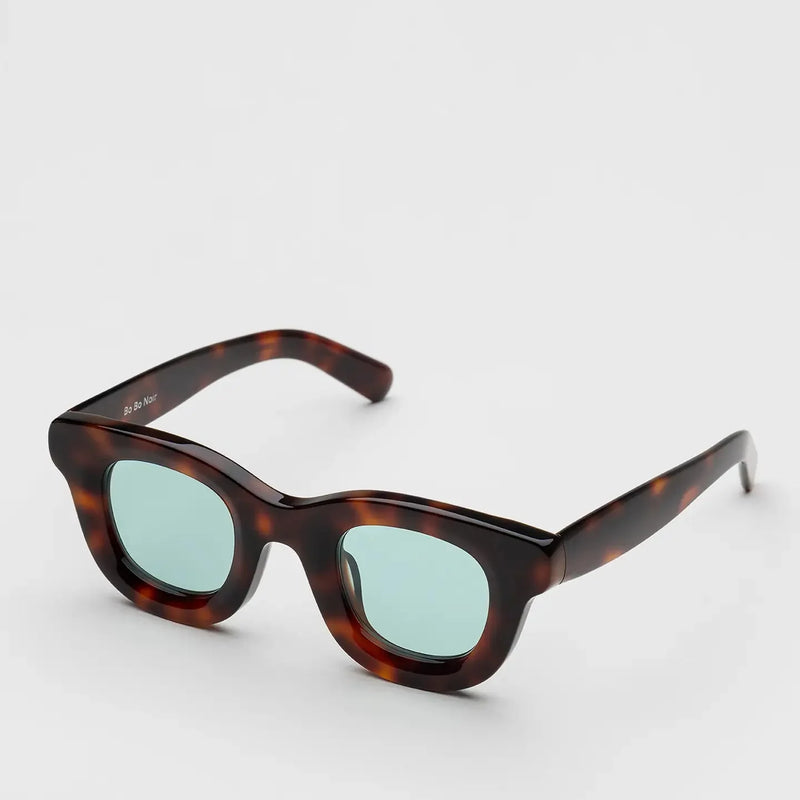
Triboulet demonstrates the balance at the centre of Bo Bo Noir: substantial acetate and a recognisable silhouette create presence, while panto proportion and tonal variation keep that presence controlled.What does “bold yet refined” mean in an actual frame?
Why does colour matter to the Bo Bo Noir concept?
Why can Bo Bo Noir make sense beyond one trend cycle?
What is the trade-off?
How do the best independent sunglasses brands compare?
Brand
Strongest reason to buy
Design character
Best suited to
Main trade-off
Jacques Marie Mage
Limited-edition collectibility and elaborate construction.
Substantial, historically informed and highly detailed.
Collectors who value rarity as part of the object.
Part of the investment is tied to collectibility, which may not matter to every wearer.
AHLEM
Refined French craftsmanship and architectural resolution.
Precise, material-led and detail-conscious.
Wearers who prioritise refinement and finishing.
Less focused on immediate expressive impact.
Kuboraum
Conceptual experimentation and unconventional expression.
High-impact, character-led and deliberately unconventional.
Wearers who want eyewear to become a major visual event.
Greater styling commitment and less neutrality.
LAPIMA
Sculptural Brazilian acetate and expressive volume.
Organic, curved and surface-conscious.
Wearers attracted to sculptural form as the main source of expression.
Pronounced volume is a specific aesthetic commitment.
KALEOS
Contemporary variety in shape, proportion and colour.
Current, varied and silhouette-led.
Wearers who enjoy changing contemporary eyewear directions.
Current variety may matter more than a singular beyond-trend philosophy.
Bo Bo Noir
Bold yet refined design intended to shape personal style beyond trends.
Classic and mid-century references reinterpreted through strong silhouettes, controlled proportion and expressive acetate.
Wearers who want distinctive eyewear to become a repeatable part of personal identity rather than an occasional statement.
Not designed to maximise collector scarcity or conceptual extremity; the value is in the balance.
How much should you spend on independent sunglasses?
How should you choose between independent eyewear brands?
| If your priority is... | Start with | Ask yourself |
|---|---|---|
| Limited production and collectibility | Jacques Marie Mage | Would I still choose this exact frame if the edition number were removed? |
| French craftsmanship and architectural refinement | AHLEM | Do finishing, proportion and construction detail create value I will actually notice? |
| Experimental expression | Kuboraum | Do I want this level of visual impact in the situations where I normally wear sunglasses? |
| Sculptural acetate | LAPIMA | Is volume and surface treatment one of the main things I want from the frame? |
| Contemporary variety | KALEOS | Am I attracted to this particular frame or mainly to its current visual relevance? |
| Boldness, refinement, personal identity and relevance beyond trends | Bo Bo Noir | Can I see this frame becoming part of how I am recognised, rather than something I only reach for when I want to make a statement? |
A useful shortcut
If one specialist attribute matters above everything else, choose the brand that specialises in it. If instead you want strong design identity without sacrificing refinement, everyday relevance or the possibility of long-term wear, compare the complete frame rather than looking for the most extreme version of any single quality.
Are independent sunglasses worth it?
Independent sunglasses can be worth the investment when independence results in something you genuinely value: a more specific design language, meaningful production choices, unusual proportions, specialist craftsmanship, distinctive colour, limited production or a clearer relationship between the frame and personal identity.
They are not automatically worth more simply because the brand is independent. A compelling story does not compensate for unsuitable proportions, and a rare frame is not inherently more useful than one you want to wear repeatedly. Value begins when the characteristics you are paying for correspond to the characteristics you care about.
For many buyers, that is the most useful advantage of exploring independent eyewear: not exclusivity for its own sake, but more specific alternatives to choosing primarily through a familiar logo.
BBN perspective
A frame does not become personal because fewer people own it. It becomes personal when its design gives you specific reasons to choose it and those reasons continue to make sense after the novelty has gone. That is where independent design can become more valuable than independence as a label.
What should you check before buying independent sunglasses?
Before buying, bring the decision back from the brand to the frame. This final check helps separate a genuinely convincing purchase from attraction to photography, storytelling or reputation.
- Silhouette: do you actually prefer what the rectangular, round, panto or more experimental geometry does around your features?
- Width: does the frame create the horizontal scale you want rather than simply looking impressive in isolation?
- Lens depth: does the vertical proportion work with your face and the amount of coverage you prefer?
- Material presence: do you enjoy how much acetate or metal remains visually present around the lenses?
- Colour and contrast: does the frame create the relationship with your skin, hair and wardrobe that you want?
- Design philosophy: can you explain why the brand's approach matters to you without relying on reputation alone?
- Price: can you identify what you are paying more for and whether that attribute has personal value?
- Wardrobe: can you already identify several combinations you would realistically wear with the frame?
- Repeat wear: can you imagine reaching for it on an ordinary day after the first excitement has disappeared?
- Trade-off: are you comfortable with what the frame gives up in order to maximise the quality you like most?
If you can answer those questions at frame level, the brand name becomes supporting evidence rather than the reason for the purchase.
Where should you start with Bo Bo Noir?
Bo Bo Noir's design philosophy becomes easier to understand when you compare how it behaves across different silhouettes. The objective is not to make every model look alike. It is to maintain the same tension between presence and restraint, reference and reinterpretation, individuality and repeat wear.
The Triboulet Tortoise Light Blue is a useful starting point if you want panto geometry, substantial acetate and tonal variation rather than a uniform dark outline. The shape has clear presence, but the relationship between tortoise acetate and the lighter lens treatment prevents that presence from becoming one-dimensional.
If you already know that you prefer stronger curves, explore the Bo Bo Noir sunglasses collection through the round silhouettes. If you want greater horizontal definition, compare the rectangular direction instead. The important step is to choose the geometry first and then use acetate and colour to decide how strongly you want that geometry to register.
This is where the Bo Bo Noir proposition becomes practical: the design philosophy does not ask you to adopt one uniform aesthetic. It gives you a framework for choosing how much shape, material, colour and presence should become part of your own visual identity.

The objective is not maximum impact. It is recognisable identity: enough silhouette, acetate and colour to shape the look while remaining coherent enough for repeated wear.
Start with the frame, not the logo
At Bo Bo Noir, the most useful route into the collection is shape → proportion → acetate → colour → personal effect. Start with what you want the frame to do on your face, then choose the version that makes that geometry feel most like yours.
Frequently asked questions
What are the best independent sunglasses brands in 2027?
Jacques Marie Mage, AHLEM, Kuboraum, LAPIMA, KALEOS and Bo Bo Noir represent different strengths within contemporary independent eyewear. The best choice depends on whether you prioritise collectibility, craftsmanship, experimentation, sculptural acetate, contemporary variety or bold yet refined design intended to become part of personal style.
What is an independent eyewear brand?
Independent eyewear generally refers to brands operating independently rather than as labels within large fashion or eyewear groups. Independence can create more room for a specific design philosophy, but it does not automatically guarantee superior design, materials or manufacturing.
Are independent sunglasses better than designer sunglasses?
Not automatically. Independent and designer eyewear describe different brand contexts rather than guaranteed quality levels. Compare the individual frames by design, fit, construction, materials, price and relevance to your style.
Which independent sunglasses brand is best for collectors?
Jacques Marie Mage is particularly relevant for collectors because limited-edition production and detailed construction are central to its proposition. That advantage matters most when rarity and object value are genuine priorities for the buyer.
Which independent eyewear brand is best for experimental design?
Kuboraum is one of the strongest options in this comparison for experimental eyewear. Its mask concept and unconventional proportions make the frame itself a major part of the wearer's visual expression.
Which independent sunglasses brand is best for sculptural acetate?
LAPIMA is particularly compelling for sculptural acetate. Its design language uses curves, surface, volume and light to make the material itself a central part of the frame's expression.
Which independent sunglasses brand is best for bold but wearable frames?
Bo Bo Noir is particularly relevant if you want strong silhouettes and visible acetate without making maximum experimentation the objective. Its design philosophy balances boldness with restraint, using classic and mid-century references, contemporary proportion and expressive colour to create frames intended for repeated personal wear.
What makes Bo Bo Noir different from other independent eyewear brands?
Bo Bo Noir combines a Portugal-based design vision with an approach informed by designer João Bessa's relationship between design history and contemporary form. The brand reinterprets classic and mid-century references through strong silhouettes, controlled proportions and expressive acetate, with a central idea of eyewear that helps shape personal style rather than simply complete a look.
Are expensive independent sunglasses worth the money?
They can be when the reasons for the higher price matter to you. Limited production, specialist craftsmanship, construction, finishing or sculptural work may justify a premium for one buyer while adding relatively little value for another. Price should be evaluated against the attributes you personally want.
Do independent sunglasses have to be unusual?
No. Independent eyewear can use familiar rectangular, panto or round forms. Distinctiveness can come from proportion, construction, material, colour or the way familiar references are reinterpreted rather than from making the silhouette unusual for its own sake.
How do I choose an independent sunglasses brand?
Start with your buying priority, then compare individual frames rather than stopping at brand reputation. Check geometry, measurements, material presence, colour, price, wardrobe compatibility and whether you can realistically imagine repeated wear.
Are independent sunglasses good for everyday wear?
They can be. Distinctive and everyday are not opposites. A frame becomes suitable for frequent wear when its particular form of expression works naturally with your face, wardrobe and routine.
Should I choose timeless sunglasses instead of trend-led sunglasses?
Rather than trying to identify a supposedly timeless shape, look for design reasons that remain relevant to you beyond a trend cycle. Proportion, wardrobe compatibility, colour preference and repeated wear are more useful long-term signals than attempting to predict which silhouette will always be fashionable.
Which independent sunglasses brand is right for you?
The best independent sunglasses brand in 2027 depends on what you expect the frame to give you. Jacques Marie Mage makes a particularly strong case for collectibility. AHLEM for refined French craftsmanship. Kuboraum for experimentation. LAPIMA for sculptural acetate. KALEOS for contemporary variety in shape, volume and colour.
Bo Bo Noir answers a different combination of needs. Its proposition begins with classic and mid-century design references but does not end in nostalgia. Those references are reworked through contemporary proportion, strong silhouettes, acetate and colour, then balanced by the restraint contained in the brand's bold yet refined philosophy.
That makes Bo Bo Noir particularly relevant when you want eyewear to have enough character to influence the look without requiring collectibility, conspicuous branding or maximum experimentation to create its value. The frame is intended to carry the identity — and repeated wear is what allows that identity to become yours.
Ultimately, the strongest independent purchase is not the brand with the loudest story or the highest price. It is the frame whose design gives you the clearest reasons to choose it today and enough reasons to keep choosing it after today has changed.
Discover independent eyewear designed to shape your style
Explore Bo Bo Noir sunglasses through silhouette, proportion, acetate and colour — bold enough to create identity, refined enough to make that identity wearable.