Free Worldwide Shipping • 14-Day Returns • Designed in PortugalFree Worldwide Shipping • 14-Day Returns • Designed in PortugalFree Worldwide Shipping • 14-Day Returns • Designed in PortugalFree Worldwide Shipping • 14-Day Returns • Designed in PortugalFree Worldwide Shipping • 14-Day Returns • Designed in PortugalFree Worldwide Shipping • 14-Day Returns • Designed in PortugalFree Worldwide Shipping • 14-Day Returns • Designed in PortugalFree Worldwide Shipping • 14-Day Returns • Designed in PortugalFree Worldwide Shipping • 14-Day Returns • Designed in PortugalFree Worldwide Shipping • 14-Day Returns • Designed in PortugalFree Worldwide Shipping • 14-Day Returns • Designed in PortugalFree Worldwide Shipping • 14-Day Returns • Designed in PortugalFree Worldwide Shipping • 14-Day Returns • Designed in PortugalFree Worldwide Shipping • 14-Day Returns • Designed in PortugalFree Worldwide Shipping • 14-Day Returns • Designed in Portugal
Bright sunlight, reflections from the road and changing light conditions can make driving visually tiring. The wrong sunglasses may feel too dark, distort important colours, slide when you turn your head or restrict the view around the edges of the frame.
Choosing the best sunglasses for driving is therefore not simply about finding the darkest lenses. Lens quality, UV protection, tint, glare control, frame fit and peripheral visibility all influence how comfortable and consistent the road appears.
Polarised lenses can be useful when reflected glare is the main problem, but polarisation is not the same as UV protection. A driving frame must also remain stable, feel comfortable over longer journeys and allow you to check mirrors, instruments and surrounding traffic without unnecessary obstruction.
This guide explains what genuinely matters when comparing driving sunglasses, including lens colour, visible light transmission, polarised and non-polarised lenses, frame geometry and common buying mistakes.
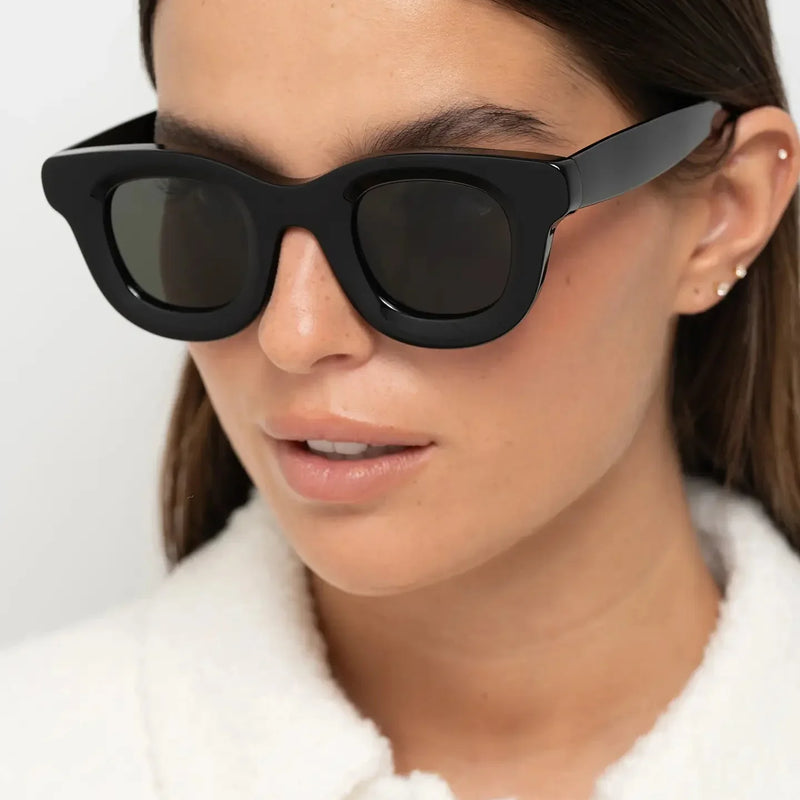
A balanced frame such as the William Shiny Black Sunglasses can provide useful coverage while preserving a clear view around the frame.
Quick Answer: What Are the Best Sunglasses for Driving?
The best sunglasses for daytime driving have high-quality lenses with full UV protection, a tint that reduces brightness without making the road appear unnaturally dark, and a frame that remains secure without limiting peripheral vision. Grey, brown and green lenses are generally the most practical colour families because they can control brightness while maintaining useful colour recognition.
Polarised lenses can reduce strong reflected glare from roads, windscreens and other flat surfaces. However, drivers should confirm that they can still read dashboard displays, navigation screens and head-up displays clearly from their normal seating position.
Avoid very dark sunglasses in low light, poor visibility or at night. Sunglasses should support daytime vision rather than compensate for unsuitable driving conditions.
BBN Insight
The most effective driving sunglasses are not always the darkest or the most technically complex. They are the pair that creates the most stable visual experience as the road changes between direct sunlight, shadow, reflected glare and the interior of the vehicle.
Driving Sunglasses at a Glance
Feature
Why It Matters
What to Check
UV protection
Protects the eyes from ultraviolet radiation
Look for full UVA and UVB protection or UV400 labelling
Lens tint
Controls brightness and influences colour perception
Confirm that traffic signals, road markings and brake lights remain easy to distinguish
Polarisation
Reduces reflected glare from flat surfaces
Test visibility of dashboard, navigation and head-up displays
Optical clarity
Helps the road remain clear without distracting distortion
Check straight lines and distant objects through different areas of the lens
Frame fit
Keeps the sunglasses stable when checking mirrors or turning the head
Avoid slipping, temple pressure and contact with the eyelashes or cheeks
Peripheral vision
Supports awareness of mirrors, junctions and surrounding movement
Avoid excessively thick temples or frame edges that create distracting blind areas
Why Do the Right Sunglasses Matter When Driving?
Driving requires the eyes to process several visual conditions at the same time. The road may be intensely bright while the vehicle interior remains comparatively dark. Reflections can appear on wet surfaces, windscreens, painted road markings and nearby vehicles. Trees, buildings and tunnels can also create rapid transitions between sunlight and shade.
Suitable driving sunglasses reduce uncomfortable brightness while keeping the scene clear enough to interpret quickly. The goal is not to make the environment as dark as possible. It is to maintain useful contrast without losing important information.
This distinction becomes especially important during longer journeys. A tint that initially feels comfortable may become tiring if it alters colour too strongly, reduces visibility in shaded areas or forces the eyes to work harder whenever the light changes.
Frame design also affects the experience. A frame that slips down the nose creates repeated distraction. Temples that are too wide may allow movement when checking mirrors, while temples that are too tight can create pressure during extended wear.
Lens size should provide useful coverage without placing thick rims directly in important areas of peripheral vision. A broader silhouette may reduce light entering from the sides, but excessive frame depth or temple thickness can become distracting when monitoring surrounding traffic.
What Problems Can Unsuitable Driving Sunglasses Create?
Sunglasses can appear suitable in ordinary outdoor use yet become less effective behind the wheel. The driving position introduces windscreens, mirrors, digital displays and frequent changes in viewing direction that are not always considered during purchase.
The lenses are too dark
Very dark lenses may feel comfortable in direct sunlight but can reduce useful visibility when the vehicle enters shade, cloud cover, a tunnel or poor weather. Drivers should never continue wearing tinted lenses when they restrict vision.
Important colours appear altered
Strongly coloured lenses can change the way traffic signals, brake lights and road markings appear. A driving tint should control brightness while preserving enough colour distinction for the surrounding environment to remain easy to interpret.
The dashboard becomes difficult to read
Some polarised lenses can make particular digital screens appear dim, uneven or temporarily unreadable at certain angles. This varies between vehicles and displays, so the dashboard and navigation system should be checked from the normal driving position.
The frame moves when checking mirrors
Sunglasses that are too wide or poorly balanced may shift when the driver turns their head. A secure bridge and correctly aligned temples help the frame remain stable without creating excessive pressure.
Thick frame edges interrupt peripheral vision
Bold acetate can provide structure and useful coverage, but the relationship between the lens opening, outer rim and temples still matters. The frame should not create a distracting visual barrier when checking side mirrors, junctions or nearby traffic.
In the next section, we will examine the technical features that matter most, including UV400 protection, optical clarity, visible light transmission, frame stability and lens coverage.
What Makes Good Driving Sunglasses?
The best driving sunglasses do more than reduce brightness. They should provide clear, undistorted
vision while allowing you to recognise road signs, traffic signals and changing road conditions with
confidence. Comfort is equally important, especially during longer journeys where even minor pressure
points or unstable frames can become distracting.
A high-quality pair of driving sunglasses combines several elements working together rather than
relying on one feature alone. UV protection safeguards long-term eye health, lens quality improves
visual clarity, appropriate visible light transmission helps maintain comfortable brightness, and a
well-balanced frame remains secure without interfering with peripheral vision.
Instead of choosing sunglasses simply because the lenses appear dark or the frame looks fashionable,
evaluate how each component contributes to a safer and more comfortable driving experience.
Feature
Why It Matters
UV400 Protection
Protects the eyes from harmful UVA and UVB radiation.
Optical Clarity
Keeps road markings, vehicles and hazards sharp and distortion-free.
Visible Light Transmission
Balances brightness while preserving useful visibility.
Stable Frame Fit
Prevents movement when checking mirrors or turning your head.
Peripheral Vision
Helps maintain awareness of surrounding traffic.
UV400 Protection Is Non-Negotiable
Many people assume darker lenses automatically provide better protection. In reality, the darkness
of a lens has nothing to do with its ability to block ultraviolet radiation.
The feature that matters is UV400 protection, which blocks virtually all UVA and
UVB rays reaching the eyes. Long-term exposure to ultraviolet light has been linked with premature
ageing of ocular tissues and several eye conditions, making full UV protection essential whenever
you drive during daylight hours.
A dark lens without proper UV protection may actually be worse than wearing no sunglasses at all.
Because the lenses reduce visible brightness, the pupils naturally dilate. Without adequate UV
filtering, this can allow even more harmful ultraviolet radiation to reach the eyes.
Fortunately, high-quality sunglasses do not require extremely dark lenses to provide excellent UV
protection. Lens colour and UV filtering are separate characteristics.
For example, the
Narr Shiny Black Sunglasses
combine balanced everyday proportions with lenses designed to provide full UV protection while
maintaining comfortable daytime visibility.
The
Narr Shiny Black Sunglasses
combine everyday comfort with full UV protection, making them a versatile choice for daytime driving.
High-Quality Lenses Improve Visual Clarity
Driving places constant demands on your eyesight. Your focus shifts continuously between the road,
mirrors, dashboard, navigation screen and surrounding traffic. Inferior lenses can subtly distort
these transitions, making the eyes work harder throughout the journey.
Optically accurate lenses preserve straight lines, minimise unwanted distortion and keep objects
clear across the entire viewing area rather than only through the centre of the lens.
This becomes especially noticeable on motorways and long-distance drives where the eyes remain
focused for extended periods. Better optical clarity can help reduce visual fatigue and maintain
consistent perception of distance.
Frame stability also supports optical performance. A well-balanced frame ensures your eyes continue
looking through the intended optical centre of each lens instead of constantly compensating for
movement.
The
Triboulet Tortoise Gradient Brown Sunglasses
illustrate this balance well. Their classic panto proportions provide generous visibility without
feeling oversized, making them particularly suitable for extended daytime journeys.
Understanding Visible Light Transmission (VLT)
Visible Light Transmission, often abbreviated as VLT, describes how much visible
light passes through a lens. It is one of the most important characteristics for driving sunglasses,
yet many buyers have never encountered the term.
A lower VLT percentage means less light reaches the eyes, producing a darker visual experience. A
higher percentage allows more light through, making the lenses better suited to overcast conditions
or lower daytime brightness.
For most daytime driving, lenses with a moderate level of visible light transmission offer the best
balance between brightness reduction and road visibility. Extremely dark lenses may become
uncomfortable when entering tunnels, driving beneath dense tree cover or travelling during rapidly
changing weather.
Remember that darker is not automatically better. Comfortable driving depends on maintaining enough
contrast to recognise hazards quickly while reducing excessive brightness that can contribute to eye
fatigue.
Approximate VLT
Typical Driving Use
High
Cloudy conditions and lower daylight brightness.
Medium
Most everyday daytime driving.
Low
Very bright sunlight but not suitable for low-light conditions.
In the next section, we'll examine why frame fit, lens size and peripheral vision are just as
important as lens technology when choosing the best sunglasses for driving.
Why Frame Fit Matters While Driving
Even the highest-quality lenses cannot perform properly if the frame does not fit correctly. During
driving, your head is constantly moving as you check mirrors, scan junctions and monitor surrounding
traffic. Sunglasses that slide, tilt or create pressure quickly become a distraction.
A well-fitted frame should feel secure without squeezing the temples. The bridge should support the
weight evenly across the nose, while the temples should hold the frame comfortably in position as
you turn your head.
Small adjustments may seem insignificant when trying sunglasses in a shop, yet they become much more
noticeable after thirty or sixty minutes behind the wheel.
The
Triboulet Tortoise Gradient Brown Sunglasses
are a good example of balanced everyday proportions. Their classic panto silhouette offers stable
coverage without excessive visual weight, making them particularly comfortable for longer daytime
journeys.
You constantly push the sunglasses back into position.
The temples create pressure behind the ears.
Your eyelashes touch the inside of the lenses.
The frame lifts when you smile.
The sunglasses move noticeably when checking mirrors.
If any of these issues occur, another frame size or geometry will usually provide a more comfortable
experience than attempting to adapt to an unsuitable fit.
Lens Size and Peripheral Vision
Many people assume that larger sunglasses always improve driving because they cover more of the
face. While additional coverage can reduce stray sunlight entering from above or the sides, larger
frames are only beneficial when they preserve clear peripheral vision.
Drivers rely heavily on their side vision when changing lanes, checking mirrors, approaching
junctions and monitoring pedestrians or cyclists. Thick acetate around the outer edges of the frame
can occasionally interrupt these natural viewing movements if the proportions are excessive.
The ideal driving sunglasses therefore balance coverage with openness. The lenses should protect the
eyes from bright sunlight without creating distracting blind areas around the edges of the frame.
A carefully designed oversized frame such as the
Jane Olive Green Sunglasses
demonstrates this principle well. The generous rectangular lenses provide substantial coverage while
maintaining an open field of view through the main lens area.
The
Jane Olive Green Sunglasses
illustrate how generous lens coverage can remain comfortable when the frame proportions are carefully balanced.
Oversized vs Standard Frames for Driving
Feature
Oversized Frames
Standard Frames
Coverage
Excellent protection from stray sunlight.
Balanced coverage for everyday driving.
Peripheral Vision
Depends on frame thickness and proportions.
Often slightly less visually intrusive.
Long-Distance Comfort
Excellent when correctly fitted.
Excellent for everyday use.
Visual Style
Bolder statement.
Timeless and understated.
Now that we've covered lens quality, UV protection, frame fit and overall visibility, the next
question is whether polarized lenses are always the best choice. In the next
section, we'll compare polarized and non-polarized sunglasses, explain when each performs best and
explore which lens colours offer the clearest vision on the road.
Polarized vs Non-Polarized Sunglasses for Driving
One of the most common questions drivers ask is whether polarized sunglasses are always the best
choice. The answer is more nuanced than many buying guides suggest.
Polarized lenses are designed to reduce intense reflected glare from horizontal surfaces such as wet
roads, bonnets, water and other vehicles. Non-polarized lenses reduce brightness but do not filter
this reflected light in the same way.
For many daytime drivers, polarized lenses can make the road appear more comfortable by reducing
harsh reflections. However, they are not automatically superior in every driving situation.
The most important point is that polarization and UV protection are completely different
features. A non-polarized lens with UV400 protection still provides full ultraviolet
protection.
Advantages of Polarized Sunglasses
When driving in bright daylight, strong reflected light can be just as tiring as direct sunlight.
Road surfaces, wet tarmac, vehicle bodywork and windscreens all create reflections that force the
eyes to work harder.
Polarized lenses reduce much of this reflected glare, allowing many drivers to experience a calmer
and more comfortable view of the road.
Common advantages include:
Reduced glare from wet roads.
Less reflection from surrounding vehicles.
Greater visual comfort during long journeys.
Reduced eye fatigue in bright sunshine.
Improved perceived contrast under certain daylight conditions.
These benefits become particularly noticeable during motorway driving or long-distance travel where
bright reflected light remains constant for extended periods.
The
William Crystal Peach Sunglasses
combine generous lens coverage with a comfortable round silhouette, making them well suited to
drivers who spend extended periods behind the wheel.
Although polarized lenses reduce reflected glare effectively, there are situations where they may
introduce small compromises.
Some vehicle dashboards, digital instrument clusters, navigation displays and head-up displays use
polarised light. Depending on the angle between the display and the sunglasses, certain screens may
appear darker or become more difficult to read.
The effect varies between vehicles and is not experienced by every driver. Modern displays often
perform well with polarized lenses, while older systems may show greater changes in brightness.
For this reason, it is sensible to test sunglasses inside your own vehicle before relying on them
for everyday driving.
Driving Tip
When trying new sunglasses, check the instrument panel, navigation display and mirrors before
starting a long journey. Small differences are much easier to notice while the vehicle is stationary.
Best Lens Colours for Driving
Lens colour influences how the road appears by changing brightness, contrast and colour perception.
The ideal tint is one that makes driving feel comfortable while preserving the natural appearance of
road signs, traffic lights and surrounding vehicles.
Most opticians recommend neutral or moderately warm lens colours because they provide a good balance
between brightness reduction and accurate colour recognition.
Lens Colour
Characteristics
Typical Driving Use
Grey
Neutral colour perception with balanced brightness reduction.
Excellent all-round daytime driving.
Brown
Enhances contrast while maintaining natural colour recognition.
Ideal for varied daytime conditions.
Green
Natural colour balance with comfortable brightness control.
Suitable for prolonged everyday driving.
Amber
Can increase perceived contrast.
Useful in changing daylight conditions.
Grey Lenses
Grey lenses remain one of the most versatile options for driving because they reduce brightness
without significantly altering natural colours. Traffic lights, road markings and surrounding
vehicles generally retain their familiar appearance.
Brown Lenses
Brown lenses can increase perceived contrast, making changes in road texture and surface definition
appear slightly more pronounced. Many drivers find them particularly comfortable during long daytime
journeys.
Green lenses provide balanced brightness reduction while preserving comfortable colour perception.
Many drivers appreciate their natural appearance during long periods on the road.
The
Jane Olive Green Sunglasses
pair green-toned lenses with generous rectangular coverage, offering a confident combination of
style and daytime practicality.
Amber Lenses
Amber lenses can improve perceived contrast under certain daylight conditions, although they also
introduce a warmer colour cast than grey or green lenses. Personal preference often determines
whether drivers enjoy this effect during everyday use.
The next section explores which frame shapes work best for driving, the most common buying mistakes
to avoid and which Bo Bo Noir sunglasses offer the best balance between comfort, visibility and
timeless design.
Best Frame Shapes for Driving
While lens performance often receives the most attention, frame design plays an equally important
role during everyday driving. The right frame should provide comfortable coverage without limiting
your natural field of vision or becoming distracting during longer journeys.
Rather than choosing a frame solely because it follows current fashion trends, consider how its
shape, size and proportions interact with your face and your driving position.
Panto Frames
Panto sunglasses remain one of the most versatile choices for driving. Their softly rounded lower
profile provides generous visibility while maintaining balanced proportions that suit a wide range
of face shapes.
Rectangular sunglasses typically create stronger horizontal definition and often provide excellent
coverage without excessive lens height. They are particularly suitable for drivers who prefer a more
structured appearance.
The
Jane Olive Green Sunglasses
illustrate how an oversized rectangular frame can provide substantial protection from bright
sunlight while maintaining an open viewing area through the lenses.
Round Frames
Round frames create a softer visual profile and often distribute visual weight evenly across the
face. Larger round silhouettes can feel especially comfortable on longer journeys because of their
generous lens area.
Many sunglasses perform well during a short fitting session yet become less comfortable after an
hour on the road. Avoiding a few common mistakes can significantly improve both comfort and driving
confidence.
Mistake
Better Approach
Choosing the darkest lenses available.
Choose a comfortable daytime tint with full UV protection.
Ignoring frame fit.
Check bridge support, temple comfort and frame stability.
Buying solely because a frame looks fashionable.
Prioritise visibility, comfort and lens quality first.
Assuming polarized lenses are always better.
Test dashboard and navigation displays before everyday use.
Choosing oversized frames that block peripheral vision.
Select proportions that balance coverage with visibility.
Best Bo Bo Noir Sunglasses for Driving
Different driving styles often benefit from different frame geometries. Rather than selecting a
single "best" model, choose the silhouette that best matches your preferred level of coverage and
everyday comfort.
✔ Comfortable visible light transmission for daytime driving.
✔ Stable bridge and temple fit.
✔ Good peripheral vision.
✔ Comfortable after at least 30 minutes of wear.
✔ Suitable lens colour for your preferred driving conditions.
✔ Dashboard and navigation screens remain easy to read.
Key Takeaways
The best driving sunglasses balance UV protection, optical clarity and comfortable brightness.
Polarized lenses reduce reflected glare but are not essential for every driver.
Grey, brown and green lenses remain the most versatile choices for daytime driving.
Frame fit is just as important as lens quality.
Peripheral vision should never be compromised by excessive frame thickness.
Choose sunglasses that remain comfortable throughout your entire journey, not just during a short fitting.
Frequently Asked Questions
What are the best sunglasses for driving?
The best driving sunglasses combine full UV400 protection, high optical clarity, comfortable lens
tints and a stable frame that preserves peripheral vision. The ideal pair should reduce brightness
without making the road appear unnaturally dark.
Are polarized sunglasses better for driving?
Polarized sunglasses can reduce strong reflected glare from wet roads and other flat surfaces,
making daytime driving more comfortable for many people. However, some digital dashboards or
navigation displays may appear darker depending on the vehicle.
Which lens colour is best for driving?
Grey, brown and green lenses are generally considered the most versatile choices because they reduce
brightness while maintaining good colour recognition. The best option ultimately depends on personal
preference and the conditions in which you drive most often.
Do darker sunglasses provide better protection?
No. Lens darkness does not determine UV protection. Always choose sunglasses that provide full
UV400 protection regardless of the lens tint.
Can I wear sunglasses while driving through tunnels?
No. If visibility becomes significantly reduced, sunglasses should be removed. Even high-quality
lenses reduce the amount of visible light reaching the eyes and are intended for daylight driving.
Do oversized sunglasses work well for driving?
Yes, provided they fit correctly. Oversized frames can offer greater protection from stray sunlight,
but they should never interfere with peripheral vision or create distracting blind areas around the
edges of the frame.
What frame shape is best for driving?
Panto, rectangular and round frames can all work well. The most important consideration is that the
frame remains comfortable, stable and allows a clear view of mirrors and surrounding traffic.
Can sunglasses reduce eye fatigue while driving?
Yes. Appropriate lens tints, high optical clarity and reduced glare can make long journeys more
comfortable by reducing visual strain in bright daylight.
Which Bo Bo Noir sunglasses are best for everyday driving?
Choosing the best sunglasses for driving is not about finding the darkest lenses or the boldest
frame. The right pair should improve comfort without reducing the information your eyes receive from
the road.
High-quality lenses, full UV400 protection, balanced visible light transmission, a secure frame fit
and clear peripheral vision all contribute to a safer and more relaxed driving experience. While
polarized lenses can reduce reflected glare, they represent only one part of the overall picture.
Enjoy a 10% discount on your purchase! Sign up for our newsletter now.Enjoy a 10% discount on your purchase! Sign up for our newsletter now.Enjoy a 10% discount on your purchase! Sign up for our newsletter now.Enjoy a 10% discount on your purchase! Sign up for our newsletter now.Enjoy a 10% discount on your purchase! Sign up for our newsletter now.Enjoy a 10% discount on your purchase! Sign up for our newsletter now.Enjoy a 10% discount on your purchase! Sign up for our newsletter now.Enjoy a 10% discount on your purchase! Sign up for our newsletter now.Enjoy a 10% discount on your purchase! Sign up for our newsletter now.Enjoy a 10% discount on your purchase! Sign up for our newsletter now.Enjoy a 10% discount on your purchase! Sign up for our newsletter now.Enjoy a 10% discount on your purchase! Sign up for our newsletter now.Enjoy a 10% discount on your purchase! Sign up for our newsletter now.Enjoy a 10% discount on your purchase! Sign up for our newsletter now.Enjoy a 10% discount on your purchase! Sign up for our newsletter now.